A Man Find was Hired as Police because of His Called “Mr. Police”

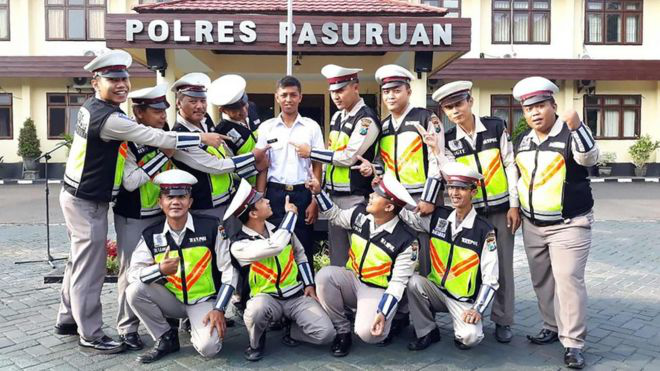
An Indonesian construction worker has been employed as police because of his name – Polisi, which is Indonesian for “Police”.

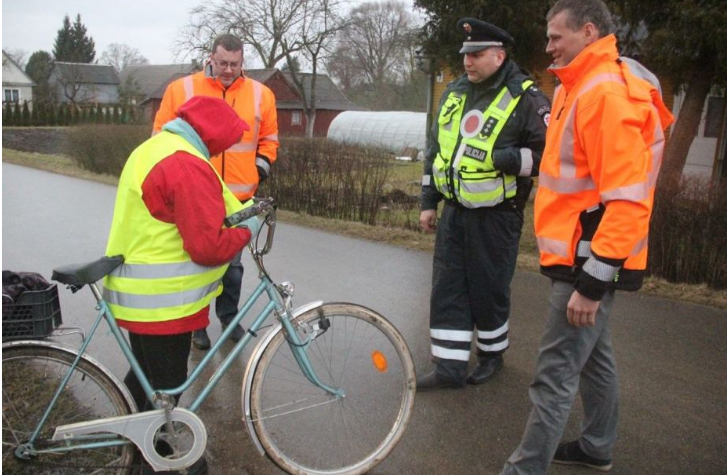
He fined by traffic police with safety uniform for riding without a license on the road. But after checking his identity card, local officers decided to adopt him as their celebrity mascot. Then buying a driving license and offering an office job in their station house for him.

Polisi said that he didn’t expect it to bring him good luck. As the breadwinner for the family after his father died, Mr. Polisi was unable to afford a driving license. Now he hopes to save money to afford his younger brother’s schooling.

Starting his office job at the police station, a renew Mr. Polisi said “It’s a new experience for me, I will try to adapt to working in an office. I will do my best to ensure people’s safety on the road.” He has passed his motorcycle test with the help of the local officers. Now he is fully road legal. He will help officers conduct driving tests from now on.

As a construction before, he has to wear a safety vest sew on reflective tape during the job. Now, he is also required to wear the safety vest during the duty. But the cloth on the body means more to him. He needs to be more responsible for his job and the public than before.

“No need to paint a child in an ideal world where everyone follows the rules”

Getting your child to travel to school or in private is a great challenge for parents. Dijokait, Chief Specialist of the Vilnius County Police Headquarters Traffic Police Board, author of the book “Road Traffic Rules for Children”, says that it is up to parents how the child will behave in the street. The official says it is not enough to discuss the traffic rules with the offspring once and hope that things have become clear – responsible behavior and potential dangers need to be spoken in a language that children can understand.

Officer A.Dijokait is known by many children not only in the capital but also in other Lithuanian cities and towns – she has been teaching them the rules of road safety at various events and special lessons for more than 10 years. Groups of toddlers and teenagers are coming to the Traffic Safety Class at the Vilnius County High Police Commissariat’s Road Police Board, where attractive traffic safety lessons are being organized. In the classroom, adults are also learning: parents, educators, students, and seniors. A 15min talk with an officer about how parents can prepare their child to break into the traffic stream. Road safety lessons are spent in kindergartens, schools, special projects, and events. Can parents expect this to give their child the most important knowledge? Although I am constantly working with children of all ages, the rules of road safety are also discussed in kindergartens and schools, but the primary responsibility for this knowledge lies with the family. After all, parents are the greatest authorities of children, the best teachers, they know the peculiarities of their child, their behavior in certain situations. The conversation between parents and children about traffic safety mustn’t be abstract and one-off, but repetitive and detailed, and comments in real-life situations help a lot – pedestrian behavior with both right and wrong can help. It is not enough for a child to wish: “Be safe!” It doesn’t mean anything. Parents must teach him how to be safe. And not just to teach, but to constantly observe how he follows the rules. Of course, there is no need to formalize everything, but let’s say the topic of yesterday’s talk maybe about how well your child has crossed the street and the safety of a child’s passenger while traveling by car. As a general rule, the child should be constantly talked about and reminded of how to stay safe in traffic.

of course, there is no need to frighten children down the street: “you are going to die!”, “You will be met!”. We need to talk about the diversity of people and situations. I think the fundamental mistake would be to teach children just the rules, but not to see the danger, not to talk about how to avoid it. After all, paying for and following a rule may mean that a child is in distress – precisely because he or she has followed the rule, but another road user – the driver of a car, bike or even an electric scooter – has failed to comply! Thus, the primary purpose of traffic safety training is to present a bouquet of knowledge and to prepare the child for the journey so that the child can see and avoid the dangers of the traffic environment. A child can’t draw only an ideal world, he must understand that even in a pedestrian crossing it may be unsafe. Of course, there is no need to frighten children down the street: “you are going to die!”, “You will be met!” We need to talk about the diversity of people and situations. For example, when traveling with a child, it is possible to notice which drivers are talking on mobile phones or with passengers, explaining that such a driver may not be noticeable in the child’s crossing. Even the various children’s poems call for courageous steps, but I would say that it is not courage but wisdom and caution. Talking with your child starts with the essentials, which are that there are two parts of the streetcars for cars, sidewalks, and sidewalks – for pedestrians, and good road traffic rules to ensure safe use and harm. After all, rules do not exist anywhere if they do not exist in our daily behavior.

By what age are children well aware of the rules of the road? Kids 3 to 5 years old are worth teaching through the rules of the game, and kids 6 to 8 are very receptive, they believe in what you say, they understand and remember well. If we spend the time when the child is receptive and trustworthy, when the adults are their true authority, talking to the teenager may already be difficult as they are already learning from the wrong examples or even from their own mistakes and those around them. I would advise you to talk about road safety with children from an early age, adding to the knowledge that is relevant to the age of the child and would be used daily in real life. It is important to understand that the rules of the road, just like the provisions in the booklet, are too abstract for children. They need a playful presentation, they need to speak his language, then it will be clear. For example, young children often do not distinguish between left and right and this is normal until a certain age. This can be taught through play – songs, exercises, reminders that we eat, write and so on with the right.

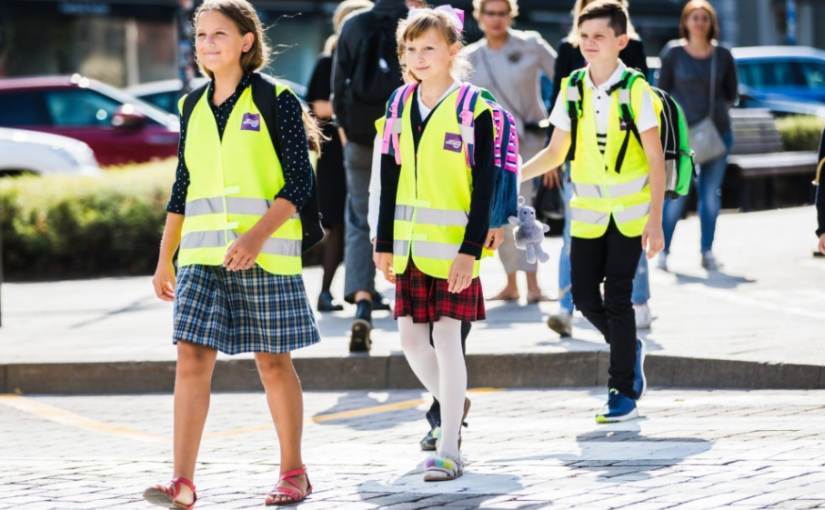
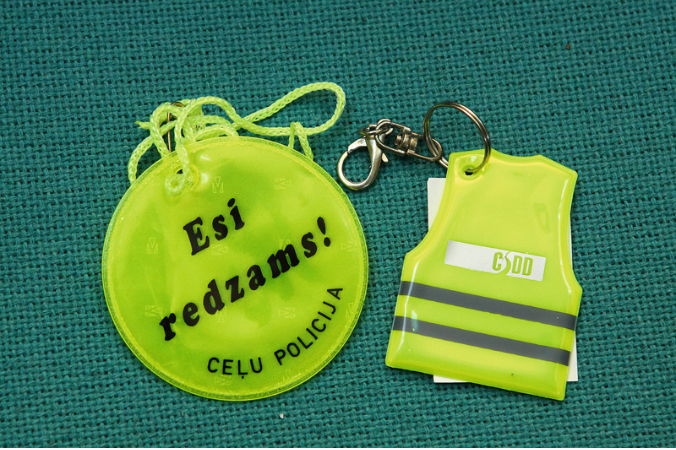
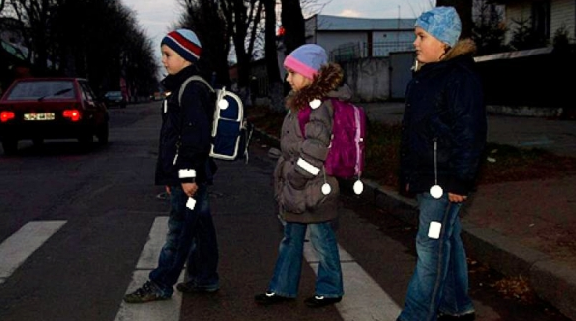
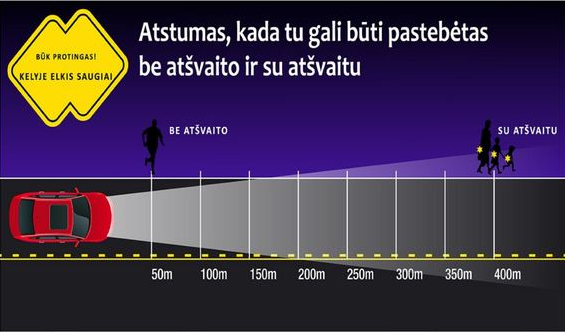
What other traffic situations are often left aside when talking to children? It is a mass event and various celebrations – it is necessary to talk to the children that in such cases it is not possible to jump between cars, it is necessary to look for the driver to notice and stop the vehicle. Children also need to be told about the stopping distance of the car, as they demonstrate during the lessons that they expect the car to stop faster than is possible. Few people talk about moving cars in reverse and after all, the accidents that happen are related. Although the driver has to be very environmentally aware while reversing, I explain to the children that everything is possible – his car windows have become dirty or frosted and he has had to clean himself, or he talks on the phone and so on. It is important to point out to the child that he can guess from the sound of moving the car backward, that he can see smoke in the winter, and finally that we all see white lights. Such signals indicate that the machine is moving. What other important things should parents take care of when allowing their child to travel to school on their own? I am glad to see more and more children wearing bright clothes, reflective vests, backpacks, accessories with reflective materials. Parents mustn’t shy away from buying such brightly colored clothing and dress their offspring with it. Adults need to ensure that not only does the child have a reflective tape, carry it, but also learn how to fasten correctly. After all, it is often the case that the only reflector on the backpack and the child is on the highway before the vehicle traffic and is invisible sides (pockets), on a long strip for knee height and free-swinging. If there is a second reflector, let it be on the other hand. The more reflectors on all sides, the more likely it is to be noticed by the driver. Reflectors are optional in cities or other illuminated areas, but I think they are necessary and very important during the dark hours of the day, especially when there is fog, rain or snow. It is safe to say that the reflector is a must, a need and a fashion.
The spikes of cyclists and road safety specialists are still crossed

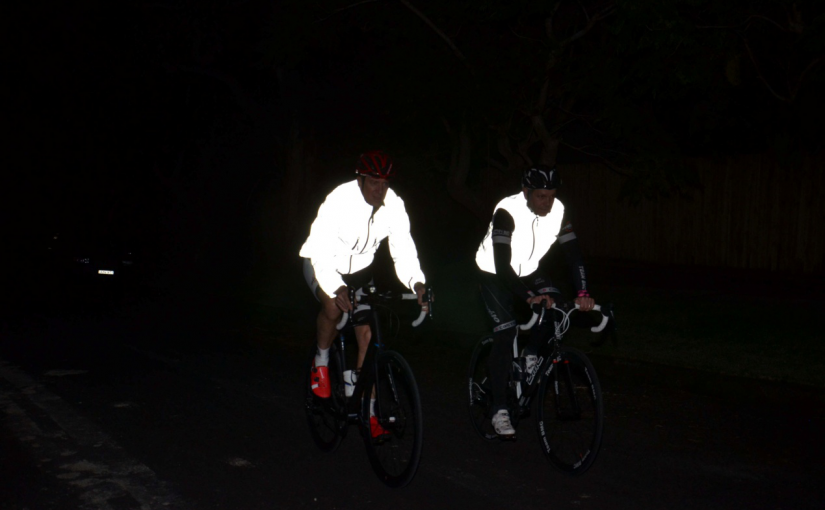
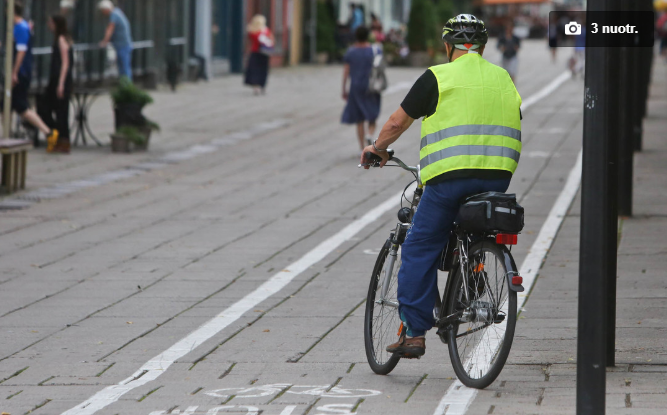
For four years, cyclists have been on the road with reflective vests or headlights on for the day. The rules quite old and dissatisfaction is still going on, but traffic safety specialists do not promise to come down. Like cyclists. Old changes Increasing the number of bicycles in cities is one of the cornerstones of sustainable mobility plans currently being prepared by Lithuanian municipalities. Many of them are likely to have phrases such as promoting clean vehicles and building infrastructure for them. Cities are trying to show, through a variety of means, that they want to become more attractive to those who drive an alternative vehicle, such as straight cycle paths, lines where they cannot be drawn, and bicycle signs. Action is underway, but by observing such work, the cycling community is pointing the finger at adopted laws and regulations governing road safety, which, they say, only make cycling worse and sometimes even discourage them from choosing this vehicle. The biggest misunderstanding cyclists cite in a 2014 government decree is the requirement to wear a high visibility vest with light reflectors or turn on white light on the front of a bicycle and a red one on the back of a bicycle during daytime driving. The combination of these three measures is a must for a cyclist when he is moving in the driveway during the dark hours of the day. Even angrier was the ban on crossing the carriageway when using pedestrian crossings.

Marius Kučinskas, an active cyclist, surveyed the social network Facebook group “Lithuanian Cyclists’ Society”, asking cyclists whether they are following the changes to the KET that took effect on October 1, 2014. When asked whether cycling through pedestrian crossings, the vast majority of cyclists answered yes. Ask whether the cyclists wear a vest or turn on the lights during daylight hours, 64%. Of those surveyed, 36% said that they travel without reflectors or a vest. claimed to have used at least one of the above tools. It is true that when looking at the results of respondents from different cities, there are differences in approach. In Vilnius, as much as 57 percent. cyclists are reluctant to wear reflective vests with reflective tapes and turn on lights; Kaunas cyclists also claimed daytime running with lights on or wearing a vest. M. Kucinskas says that this is not a representative survey, but it reveals the general attitude of cyclists towards the changes imposed on them. “I have repeatedly appealed to the Ministry of Transport to discuss changes to these rules, but the ministry’s specialists are silent on the possibility of proposing to the Government to amend a ruling made four years ago, arguing that such a change was necessary and contributed significantly to safer cyclists participation in traffic, “said M.Kucinskas. The same was confirmed to the newspaper by Vidmantas Pumputis, Senior Advisor of the Road Transport and Civil Aviation Policy Department of the Ministry of Transport and Communications. “No changes are being planned to this KET point,” he commented laconically. However, active cyclists do not stop pedaling and letting their hands down – they have put forward their suggestions to several members of the Seimas and hope that their views will be heard. As the aforementioned amendments to the KET were adopted by a Government resolution, they may be rendered irrelevant by the Seimas by adopting the relevant amendments to the Law on Road Traffic Safety. As the ruling is against the law, it should be amended or waived. Everything about safety Stasys Brundza, a Member of the Seimas last year, says he doesn’t understand cyclists’ reluctance to ride with lights on or wearing reflective vests. “After all, such decisions have been made to improve the visibility of cyclists on the road. Even when subjected to the weather, cyclists do not park their vehicles in pantries or balconies, and visibility is now extremely low, making it much easier for drivers to spot with light or bright reflective clothing. Is it so difficult to buy a light bulb costing several or ten euros to contribute to your safety and that of others on the road? ” the former MP did not hide his surprise. There’s another reason why cyclists should ride with lights on and vests on, so the driver can identify them as faster-moving road users, he said. “In poorer weather conditions, cyclists can confuse a cyclist with a pedestrian – cycling and pedestrian heights are quite similar, and speeds vary several times, so the driver, just after looking into a pedestrian circle, should understand how fast they are moving and not in between, like cyclists,” Brundza shared his thoughts.

Helmets for everyone?

He also said he did not understand why it was not accepted for many years that all cyclists should wear helmets. They are now mandatory for cyclists and cyclists under the age of 18, according to KETs, and only recommended for those over 18. “Foreign scientists have long proven that about 50% of cyclists who have been involved in accidents have head injuries that could have been avoided if cyclists were wearing helmets,” the MP said. Cyclist M.Kucinskas, who communicated with the daily newspaper, said that such regulation would also seem appropriate and necessary for him. The brand would also recommend the use of helmets for scooters, who are increasingly found on city streets.

Explained what drivers forget to do when a car crashes on the road

Drivers who stop in the event of an accident or accident on the road often underestimate the circumstances and fail to take care of their safety, confident driving professionals. Making sure they are perfectly visible, they often carelessly enter the driveway, even at dusk, which results in serious injuries or even death.

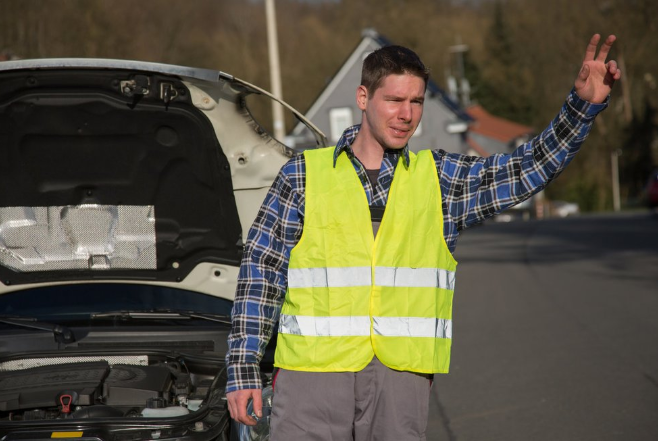
There is no shortage of cases of passing car accidentally losing drivers in the car they drive. Many accidents occur during the dark hours of the day, as although the car must have a reflective vest sew on reflective tape and be worn when leaving the vehicle, the frequent driver does not have one at all or is so far away that it is not possible to reach it quickly.

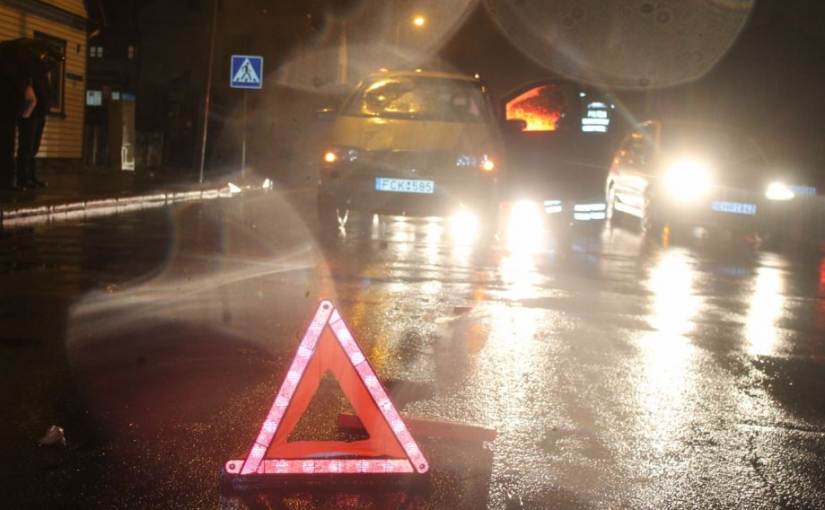
Trouble is because people do not appreciate such situations properly. Here is how I saw the accident today while driving home in Vilnius: “a small car collided with a minibus. The minibus driver stopped in the far left of the road and ran across the road to the right lane to ask if everything was OK with the other driver. And they did it all on the street, where the traffic flow is 80 km / h. and faster,” said Olga Zidovlenkova, an instructor at the driving school Amplius LT, grinning. First of all, she said, drivers need to realize that in the event of a breakdown, something should stop as far as possible. Even when the car door is stopped in the street, the instructor says, you have to check that there are no passers-by and can block the car. Finally, you should only get out of the car when it is safe to do so. The reflective vest must always be readily accessible to the driver. “And be sure to wear a vest with reflective material. This must always be in hand in the car. In the worst-case scenario, the driver should at least put on a few reflectors before driving on the street,” the interviewer said. Also, the instructor reminded that when the car is forcibly stopped, the Road Traffic Code (KET) states that it is mandatory to turn on the hazard warning light. “The car must blink, and if the emergency lights aren’t on, then a flashlight on the back of the phone can be placed so that passers-by can navigate,” she said. Forgotten Emergency Stop Signs The instructor spoke if there is no emergency light, it is defective, or if the car is stopped where the car is stopped by other road users less than 100 meters away, it is mandatory to park it on the side of the carriageway. emergency stop sign.

It is specified that in settlements such a sign should be placed at least 25 meters away from a stopped vehicle and outside settlements at least 50 meters away. If the car breaks down, you need to make sure that it is visible and wait for assistance while standing still on the sidewalk where it is safe. “However, very often people forget this rule and don’t make the triangle at all. Although I would say that sometimes two such signs would come in handy, one farther away, the other closer, because often passing cars overtake or cross the sign and are no longer visible. It turned out that truck drivers often use two signs,” commented the specialist. Not for safety, but for roadworthiness Finally, according to O. Zhidovlenkova, some accidents happen because drivers and passengers of a broken car are parked in the driveway for some reason. “Without reflective vests, especially in the weather like now, early morning or evening, they are simply invisible. If the car breaks down, you need to make sure that it is visible and wait for assistance while standing still on the sidewalk where it is safe,” the specialist emphasized.

The driving instructor also had complaints about uninhibited drivers, who do not realize that the list of must-have items on the car is not just listed on the KET itself. “It seems to everyone, for example, that the same reflective vests should be worn for maintenance and not for their safety. It has been repeatedly seen when drivers borrow everything they should have before the roadworthiness test. Probably if you stopped ten cars on the street right now, maybe only three would have everything mandatory,” a traffic safety expert predicted.

Do you know how and where to place the emergency stop sign?

Although drivers do not expect or wait for an emergency, they need to wear a reflective vest with reflective tape and an emergency stop sign in addition to a fire extinguisher, a safety kit and driving. However, do drivers know how to properly place this sign and what else to do?

Driving instructor Paulius Kazėnas says that keeping this right is not always given enough attention and that drivers who get caught in an emergency are often forgotten about how to behave. “The first thing to do in a situation like this is, of course, to turn on the emergency light. However, this alone is not enough and regardless of the time of day, it is recommended to wear a bright colored reflective vest before leaving the car for better visibility,” the specialist said.

However, before doing this, alone, again, this is not enough – you also need to put up an emergency stop sign. The Road Traffic Code (KET) stipulates that if the vehicle is parked at a standstill where the vehicle is stopped by other road users less than 100 meters away, the driver of a motor vehicle, tractor, to place an emergency stop sign immediately on the side of the carriageway on the side of the carriageway: not less than 25 m in settlements and not more than 50 m from settlements in non-settlements. potentially impaired visibility of the vehicle to other drivers. The instructor also advised that the estimated distances can be estimated in steps.

Reminded scooter drivers of where they can go and when to use a helmet

Cyclists and scooters rush through the city streets and sidewalks as the weather warms. Although the latter vehicle has taken to the streets until recently, it has become one of the favorites. However, it is noteworthy that frequent scooter drivers still forget that it is not only a vehicle for entertainment but also a vehicle, and its drivers must comply with all Road Traffic Rules (Road Traffic Rules).

Scooters, especially electric scooters, are often seen as a pastime by city dwellers, but Laurynas Jovaišas, the chief inspector of the Lithuanian Transport Safety Administration, reminds that people should remember that the requirements of the KET for bicycle riders combustion engine or electric motor, of an output not exceeding 1 kW and capable of a speed of not more than 25 km / h.

How to ride a scooter As with conventional or electric bikes, scooter riders need to be aware of and adhere to all KETs. Electric scooters can be used to cycle along bicycle lanes and lanes or, if they do not, to sidewalks or the right of the road. Electric scooter drivers must keep as close to the right edge as possible while moving in the driveway, only when turning left, turning, overtaking, or when only the right lane is allowed from the first lane.

In all cases, the scooter driver must pay attention to the KET and ensure pedestrian safety when riding the sidewalk. For example, a pedestrian scooter can only drive at pedestrian speeds of up to 6-7 km / h. speed.

When deciding to ride a scooter, it is advisable to first wear a helmet and other protective equipment, and first test the acceleration of this vehicle before driving. The choice of wearing a helmet or not is indeed restricted to persons of legal age, and those under 18 years of age must always wear a helmet. Also, when driving at night, the scooter driver should turn on the white lights on the front of the scooter and the red lights near the rear wheel. Scooter drivers must wear a bright-colored safety vest with reflective tapes, both at night and during daytime driving. Please note that the scooter can only be used on the driveway if its brakes and acoustic signal are in good working order.

Not All It is true that electric scooters, by their technical characteristics, can be classified as mopeds. If the vehicle is capable of a speed of between 25 and 45 km / h and has a maximum net power of between 1 kW and 4 kW, it is classified as a moped.

Such vehicles must be registered, have valid roadworthiness tests and civil liability insurance, and must be licensed by AM or any other relevant category. Those who disregard the order and do not have the necessary documents would be subject to administrative liability. Information prepared in cooperation with the Lithuanian Road Administration under the Ministry of Transport and Communications.

Cyclists required to wear a reflective vest

Lithuanian police point out that in recent days there has been a misrepresentation of 2014 in the public sphere. July 1 some provisions of the Republic of Lithuania Law on Road Traffic Safety have come into force.

This concerns Article 17 of this law – Requirements for bicycle riders. Cyclists must wear a bright-colored reflective vest with reflective tapes during daylight hours or have a white light at the front and a red light at the rear. It should be noted that this requirement applies only to the carriageway. When cycling, side walking or sidewalks (this innovation for sidewalks is part of the newly drafted Road Traffic Code), you do not need to wear reflective vests or ride with bicycle lights on.

Article 2 (55) of the Road Safety Law defines the term “bright-colored vest with reflective elements”. This is not only a yellow, orange or red vest but also another garment of the upper body (neck to waist) with reflective materials visible to other road users from all sides. By deliberately silencing these details, the public is encouraged to oppose these measures to improve traffic safety.

Bicycle path infrastructure in Lithuania is not yet well developed, as in most of the old EU Member States, where the main bicycle traffic is done by bicycle paths, not the driveway. Also, in such countries, road users themselves are actively concerned with their safety, which makes it a common practice for them to wear a brightly colored vest and safety helmet.

Police recalled that 9 bicycle drivers have already been killed in traffic accidents in Lithuania this year, including 7 in daylight hours, injuring 160 of them, including 135 in daylight hours. Police officers believe that the health and life of every person are more important than certain constraints or inconveniences, in the interests of road users.

Protect Children on the Road – Protect Me

Twenty years after the Protect Me campaign – twice as few children injured, four times as many killed Protect me, the longest-running social responsibility campaign in the country, will take place this year for the 20th time. As every year, its organizers invite all road users to be extremely careful on the road, thus protecting children on their way to school and home. According to the data of the Lithuanian Road Police Service, the number of killed children has quadrupled in 20 years, and twice as many were injured. The number of injured children traveling on foot alone reached 634 in 2000, and in 2018 dropped to 202 injured children. The Protect Me campaign also contributes to improving numbers. Every September, the initiative “Protect Me”, which takes care of the safety of children on the roads, is organized by Vilnius City Municipality, the largest insurance company in Lithuania “Lietuvos dramas” and its partners – Vilnius County Police and other municipalities in the country. Lietuvos Draudimas, the initiator of “Protect Me”, as well as annually ensures all schoolchildren of the country against road accidents for 5 thousand. amount of EUR. Personal insurance coverage for schoolchildren is available from September 1 to September 30 throughout the country for 24/7 hiking and cycling. In total, over 322,000 students will be covered this year. This year, in cooperation with the municipalities of twelve cities, this year the insurance company 13 thousand. elementary school students will don light reflective vests.

Traffic focus in Vilnius Every year after the summer holidays, traffic, especially in the big cities, intensifies as thousands of schoolchildren return to the streets. In the city of Vilnius, the municipality, in anticipation of the new school year, is implementing measures to improve road safety on the streets, which reduce the likelihood of accidents, encourage drivers to comply with speed requirements, and consider other road users. More than 100 speeding hills, 70 directional lights, and other road safety improvement elements have been installed in the streets, near educational institutions, pedestrian crossings and junctions and other dangerous places. Almost 100 pedestrian crossings have been newly marked with the “Protect Me” label to protect children’s safety and to draw the attention of drivers to educational institutions. By facilitating the movement of pupils, transport is improved by building cycle paths, sidewalks and restructuring existing infrastructure. Yellow lines also mark areas of street intersections, 75 intersections, update existing street signage, introduce safer and more informative traffic arrangements at the Volunteer roundabout. The municipality has bought and will distribute about 2400 signal vests and 4000 reflectors to the students of Vilnius city. “Together with our partners, we look for solutions every year to help raise awareness of child safety on the road. In recent years, we have included seniors on duty at school crossings to help children cross the streets safely. We share reflectors and reflective vests with reflective tape  for children, with an emphasis on safe cycling. These initiatives and actions bring results, but we not only have to teach children in theory, but they also have to implement practical knowledge on how to be safe. along the way. Not all adults, and especially children, know how to ride scooters correctly and safely. I want to encourage adults to set a good example for children and to behave correctly on the road, and to wish children a safe school year,” says Deputy Mayor Edita Tamošiūnaitė. Crossings near schools are marked with a special yellow campaign sign across Lithuania. There are more than a thousand of them this year. The sign is already recognized by the vast majority of drivers and pedestrians. Insured every student Lietuvos draudimas reminds that students and their parents or guardians do not need to apply for insurance to come into effect – every child is already insured. In the event of a traffic accident in which the pupil is injured, his parents or guardians should notify Lietuvos dramas at short number 1828 or via the company’s website www.ld.lt and the victim will be compensated. “The Protect Me campaign takes care of children returning to the streets and roads every year after the summer holidays. With this initiative, we encourage all adults to take responsibility for the little road users and to protect them by disciplining them for carelessly running across the street and setting the right example for themselves,” says Kęstutis Šerpytis, CEO of Lietuvos Draudimas. For the third year in the Protect Me campaign, Lietuvos Draudimas has been donating reflective vests to the beginners of smaller towns and districts. During this time, the safety of 33 district primaries has already been taken care of, with 34 thousand vests distributed to them. “This year we donated light reflective vests to make their trips safer. Light reflective vests with reflective material are one of the simplest but highly effective means of ensuring pedestrian safety on the road. They are especially needed during the autumn and winter season when it gets dark quickly – wearing a vest can protect against a severe disaster both in the city and in the country,” says Kęstutis Šerpytis, CEO of Lietuvos Draudimas.

The situation is getting better According to Saulius Gagas, Chief of Vilnius County Police Headquarters, the situation on Lithuanian roads as well as in the city of Vilnius is improving – fewer and fewer children are injured and killed in road accidents. No children died in the capital during the first half of this year, and the number of injured has decreased compared to the same period last year. As the new school year begins, officers of the Vilnius County Police Headquarters will traditionally pay special attention to ensuring traffic safety, especially near schools and preschools. Officials are urging drivers to be extra vigilant and reduce speed on the streets, especially when passing schools or preschools. “The safety of all our children also depends on an adult’s responsible approach to traffic culture. The most effective way to teach safe behavior on the streets and highways is to set an example for our children,” says Saulius Gagas, the Vilnius County Police Chief.

Don’t change your healthy lifestyle against road safety

Cycling and jogging are the most popular outdoor activities in Latvia. However, only slightly more than half of them use means to be noticeable on the road and reduce the likelihood of being involved in a road accident. Active citizens have been shown to take greater care of children by providing them with reflective vests and reflectors, while not paying as much attention to their safety.

The survey shows that 68% of active people in Latvia are engaged in cycling and 37% in jogging. Hiking (33%), dog walking (15%) and Nordic walking (5%) are also popular activities. The main reasons for these activities are people maintaining themselves in good shape, improving their health, and the bicycle is also used as a way of movement.

More than half (52%) of active people engage in outdoor activities throughout the year, regardless of the weather, while 39% opt for the warm and dry months of the year. Most, or 63%, of those surveyed, do these activities in the evening after work, and almost a third in the morning.

Less than one third, or 31%, use high visibility reflective vests with reflective tapes to enhance their safety. The most popular means are the use of luminaires (53%), the use of reflectors and other reflective accessories (46%), but 4% of the respondents rely on the reflective materials in their clothing.

Statistics from the Road Traffic Safety Directorate (CSDD) for 2018 report that 625 cyclists and 867 pedestrians were injured in road accidents in Latvia last year. By contrast, the number of fatal cyclists in 2018 was 9 and the number of pedestrians was 51. Lack of visibility is mentioned as one of the main causes of accidents, resulting in drivers noticing the cyclist or pedestrian too late.

Why in the dark the driver is always right

The new Traffic Rules, which are being promoted in the draft law on traffic and its safety, have not removed the obligation from the pedestrian to make themselves visible at the pedestrian crossing. Police investigators say this moment avoids punishment for drivers who beat a man on a “zebra” in the dark. There are many illuminated pedestrian crossings in Vinnytsia, which are known both by Vinnytsia who is traveling by transport and by those who are moving on their own two. The editorial board tried to find the most dangerous of the zebras with the help of experts. And yet – to find out whether the city authorities are going to eliminate the problem of darkness at pedestrian crossings once and for all. The blood near Ferida Plaza. A motorcyclist knocked down a girl at a crosswalk. It was in the dark. And not on the darkest zebra in town. But there are dozens like this headline in the news feed 20minut.ua. Only this year, according to the regional police, 34 people were killed in traffic accidents involving pedestrians, and 6 were killed. In the same period last year, there were twice as many people killed in road crashes with pedestrians. Drivers the journalist spoke to, exploring the problem of illumination of unregulated pedestrian crossings, said: most of them in the outskirts of the city. The center helps to see pedestrians driving the street lights. And out of town – it’s dark, though in the eye. “At the bypass, near Kurochka cafe and the police department, there the cars go off at all and never stop. The only way out is to install signs that are illuminated by lanterns in the dark, or pedestrians need to wear light-reflecting vests with reflective tape,” says Vinnytsia activist Andrei Gaidai.

The refractive elements on pedestrians’ belongings and clothing will not be overturned by the new Traffic Regulations, which are promoted in the draft law “On Traffic and its Safety”. According to one of its authors, human rights activist Volodymyr Karavaev, the new rules ask for pedestrian crossings to be marked in two ways at the same time – by a road marking and a warning sign. “The legislation now requires a pedestrian crossing with signs or markings. We insist – both signs and markings. This is a fundamental difference,” the human rights activist explains. “We bring back the practice that used to be when pedestrian crossings were safer. But he agrees that sometimes the signs are not visible – they cover up tree branches or over time lose the ability to reflect the headlights of cars.

“I drove from Vinnytsia along the Zhytomyr highway and paid attention to the signs – they are not visible. Either they do not have reflective properties at all, or they merge,” says Vladimir Karavaev. “These are not new routes! As for urban conditions, it is not necessary to say that the driver will see a pedestrian on an unlit road. 90 percent will not see, because no one simply rubs the signs. They are covered with dust and dirt and they do not reflect light properly. This is another problem,” continues the human rights activist. The police are not trained to give a clear assessment of the circumstances of the accident. If the car knocked down a pedestrian at such a crossing, as you say, the police will blame the driver. It will not be understood that the driver ran into the man because he did not see a sign that has not been wiped for ten years. If such cases were held responsible for those responsible for the state of the roads, then the situation would change. So do new rules change for pedestrian safety? What do they say about illuminating unregulated pedestrian crossings? They also oblige pedestrians to make sure there are no vehicles and make themselves visible in the dark before crossing the road. At the last moment, an investigator specializing in the investigation of resonant road accidents with deaths told the journalist that the suspected drivers could be avoided. The protection of the pedestrian-hit driver always tries to prove the victim’s mistake in this way. Like, he did not provide his visibility, as required by the rules, then he is guilty. “Physically, forcing our pedestrians to wear reflective vests is simply unrealistic,” says Vladimir Karavaev. There are traffic lights everywhere, one of them, near the former brewery, works around the clock, and has good lighting in the dark. However, students at this school are well aware of the fact that flickers (or fliers) were given to them by the reflectors of the liquidated service last year, and the children were used to wear them constantly. “I have flickered on my hen and my backpack,” says Maxim, a fourth-grade student at Gymnasium No. 6. “And my classmates all wear things that glow in the dark. It’s cool. And we also know that the drivers see us from afar. From a distance, pedestrians can also be seen on the crosswalks that are on Zodiac Street. No, the residents of Podillya do not wear flicker.”

“There is a need for lighting, but it must be done very carefully,” says human rights activist Karavayev. If you do not work out a single standard for illumination of non-regulated pedestrian crossings, then you can adjust the firewood. Someone would spin a 40-watt light bulb to shine somewhere in the transition area and assume that there was the lighting. This light bulb does not affect. There are now transitions, apparently illuminated, but there is still no pedestrian there. Have the only rules to cover “zebras”. We ask Volodymyr Karavaev if the number of transient accidents will reduce the lighting projects currently underway in Kyiv.

“If we don’t do the transition lighting, everything will be a plus. Definitely, without doing anything, we will not change the situation,” says the human rights activist. “In Europe, they have come up with a lot of novelties that can be borrowed. But everything is based on financing, as always in our country. It should also be understood that lighting is not the only problem,” continues the interlocutor. On the brightest sunny day, pedestrians also get under the cars. They arrange problems for themselves. They are beaten by the tens every month. And they cannot understand at all that they must take care of their safety. Here it will be winter, it will be slippery, and they will also go out on the carriageway in front of the car, with absolutely not even looking in the direction of the car. At the same time, there will be earphones in the ears sticking out, a hood will be worn on the head, which completely covers the inspection.