Honda holds a road safety tote bag presentation ceremony

On the 19th, Honda produced a road safety tote bag for children, “Mamata Tote on the shoulder” and held a presentation ceremony and a road safety class at a nursery school in Tokyo.

Reflective material is a strong ally that prevents accidents after the evening

Compared to midsummer, which was bright until around 19:00, it was much faster to set sun. In my area, a voice and chime broadcast “Let’s go home” is played at 17:30 for children playing in parks, but it is already dim at that time. A traffic accident while walking will increase in the time when dusk is getting much earlier. Looking at the data on the number of casualties by age, it is stunned that there are many children aged 7 years. The most common time is October, with 68% of accidents occurring between 15:00 and 18:00, just after leaving school.

My nephew was just 7 years old this month, but he entered elementary school in April this year, and for the first time he went to school on foot without his parents. Spring was still tense, but my friends increased and I became used to school life. After the summer semester, the second semester started, and now I can walk on my way to and from school. Sometimes he suddenly starts running with friends and chats without looking around.

At that time, if a driver carelessly passes by. If you think so, you will tremble, but you can imagine that many unfortunate situations often overlap the background of the sudden increase in accidents for 7-year-old children. No matter how much attention parents and teachers have, it is difficult to completely correct the behavior of free-spirited children. Therefore, what is important is to increase the accident prevention effect with clothes and goods for “protecting yourself”.

According to data from the Cabinet Office, the distance that a driver can see a pedestrian with the headlight of the car facing down at night is about 38-50m for bright clothes such as white and yellow with reflective fabric. Black clothes such as black will be shortened to about 26-30m. Since the distance that a car with a speed of 60 km / h travels in about 1 second is about 17 m, the driver will notice that the pedestrian is delayed by 1 second, which increases the risk that people in dark clothes will lead to an accident Thing.

Therefore, a powerful helper is a reflector that glows when the car’s light hits it. Wearing this, it is said that it will be visible enough even for people in dark clothes to be confirmed by drivers about 60 to 130 meters away. In addition to the accident prevention effect of such reflectors, the focus was on the psychology that the driver slowed down when looking at the uniform of the sun shining in the dark, with this time Honda wants to protect children from traffic accidents , “Mamote Tote” started free distribution in accordance with the autumn national traffic safety movement.

Thoughts on Honda’s safety

When I went to Sakai Nursery School, where I wanted to see the actual thing as soon as possible, 20 children aged 4 to 6 gathered and the traffic safety class “Ayatorii Hiyoko” was held. From the various sounds lurking in the city, the children were overwhelmed by the quiz of identifying and applying “dangerous sounds”. We listened in a friendly atmosphere, such as how to see traffic lights and how to cross pedestrian crossings.

This “Ayatorii” started in 1995. Instructors from each region trained by Honda are held approximately 4,000 times a year for nurseries and kindergartens throughout the country, and approximately 273,000 children (2018) are taking this course. A news gathering was held at the nursery school. Every child looks fun. Finally, the children were delighted when everyone received a “Tote”. You can hear the voice of “Oma-san!”

According to the catchphrase of “Omari-san on the shoulder”, reflecting material is applied in the same design as the police officer’s uniform based on dark blue fabric, and there is a part that shines red like a stick, so it is quite realistic when seen in the dark. If I saw this while driving, I realized that it would slow down first. When I talk to a five-year-old girl, my mother is picking up at 18:30, and by that time it will be already dark. What do you put in this “Tote”? He answered cheerfully, “Change of clothes!”

With the slogan “Safety for Everyone”, Honda aims to create a society where all people who use the road can live with peace of mind. He said that he made a “tote” on his shoulders in the hope that it would help. In addition to accepting free distribution at Honda Welcome Plaza Aoyama and distribution on special websites, donations will be made to some nurseries in Minato City.

As a mother of one child, this activity brings together the strong feeling of “I want to protect the lives of children” and at the same time, as a driver, “I do not want to be a perpetrator who takes the lives of future children” I feel that this is a meaningful activity to reach out. Honda also seems to have a little humor in that each child has a “My Oma-san”. Until now, my daughter had been holding bags and hats with keyring reflectors, but from now on, I would like to use “Mamote Tote” as a lesson from the evening and keep it firmly protected.

Prevent children’s traffic accidents with safety clothes

Under the theme of “Protecting children from traffic accidents with fashion,” students at the Bunka Fashion College, a vocational school, created stylish “child safety clothes” that are easy to see for drivers. On the 5th, there was a final review meeting at the same school, and “honey bee raincoat” was selected as a Grand Prix from among works using fluorescent fabrics and reflective materials.

Rainwear with the image of Sentai Heroes and vests for men and women combining denim and fluorescent fabrics. Ten teams of first-year fashion engineering basic courses presented their work at the judging panel.

Clothes using reflective fabrics and fluorescent fabrics are called “high visibility safety clothes” and there are official standards for adults such as vests worn by road workers, but there are many color and design restrictions, it is difficult to apply for children.

From May this year, students took lectures and conducted market research, and worked on clothing design and production. A popular vote was held by visitors at a cultural festival last month, and the top 10 teams faced the judging.

In the screening, eleven experts inside and outside the university, such as traffic safety education organizations and apparel-related experts, comprehensively evaluated the items that they wanted to wear and want to wear, in addition to safety and fashion.

Grand Prix raincoat designed bee color and shape. It is a conspicuous color of yellow and black. The waterproof cover on the back that can cover the school bag has an image of transparent wings and a flower on the bottom. Leader Momoka Kudo (19) said, “I wanted to make use of the features of bees, such as the roundness of the buttocks and stripes, in the design.”

The initiative is the second year this year. The school was sponsored by the Nissenken Quality Evaluation Center, which promotes the spread of safety clothing.

The most dangerous time for pedestrians is coming

“Looking over the years, pedestrian safety has improved significantly, which is undoubtedly the result of working together and the right strategy in this area,” Vesna Marinko, v. d. Director of the Agency for Traffic Safety, where they are currently working to improve pedestrian safety as part of national preventive action.

The Be Visible – Be Careful campaign will last until October 13, 2019. The campaign seeks to draw attention to the safety of pedestrians who are among the most vulnerable road users, with a focus on the safety of children and older road users.

Progress in all areas

“Pedestrian safety and traffic accidents are affected by various factors. Both vehicles and infrastructure, as well as human behavior and behavior in traffic. Looking at vehicles alone, there has been a lot of progress in recent years. We know different pedestrian detection systems, dead than freight. vehicles, not least the entire automotive industry is mainly trying to design the front of the vehicle differently,” Marinko says.

While car manufacturing and infrastructure require the participation of the masses, there is much that pedestrians can do for their safety.

Be tolerant

The AVP emphasizes the need to respect the rules of the road and, of course, the need for tolerance among all road users. It should be borne in mind that there are different groups of pedestrians on pedestrian surfaces, like children, the elderly, we also have differently impaired people, so such persons also need special attention.

Pedestrian safety is becoming especially important in the coming months. The visibility is lower, the days are shorter and the roads are much more slippery.

Pedestrian-related topic

In 2019, as many as 9 of the 11 pedestrian deaths died in the dark part of the day. Data for the five years (2014–2018) show, however, that about two-thirds of pedestrians (47 of 75 pedestrian deaths, or 63%) die in the dark part of the day when visibility is impaired. None of the pedestrian deaths in 2014 had a reflective body.

A pilot pedestrian observation was carried out at AVP is 2017, and the results showed that the proportion of use of different reflectors was extremely low – only 1.2% of pedestrians had a firefox or reflective tape, 4.2% of other reflective materials, as much as 93% of pedestrians did not use any reflector. Therefore, 16,000 reflecting bodies will be distributed during the national preventive action.

Wear fireflies

“Therefore, as the Traffic Safety Agency emphasizes in all preventive actions, the pedestrian visibility must be kept in mind. We have distributed over two million fireflies in Slovenia, which means that every Slovenian could have one firefighter by now,” adds Marinkova.

Modern times, however, put pedestrian safety at stake. Pedestrians using a mobile phone pose the greatest danger when writing text messages or posting on social networks. This is extremely dangerous when walking or crossing the road.

AVP has been told that cell phones are distracting from traffic. According to research, pedestrian reactions are reduced by as much as 60%.

Pedestrian-friendly e-scissors

They are also highlighting new forms of e-mobility, such as e-scooters and similar forms of special means of transport, which are increasingly occupying pedestrian areas. Therefore, the Agency has already proposed updating the legislation.

“The problem with electric scooters, however, is certainly their speed and their quietness,” Marinko replies to the topic Automotive.

This should not in any way be a blow to the often slightly sublime behavior of pedestrians, but it is worth remembering once again the known fact. Marinko concludes that walking is the most natural form of exercise, is emission-free, and has many positive health effects: “25 minutes of walking a day brings seven years of quality life to an individual.”

Hope for Road Workers and Careless Drivers

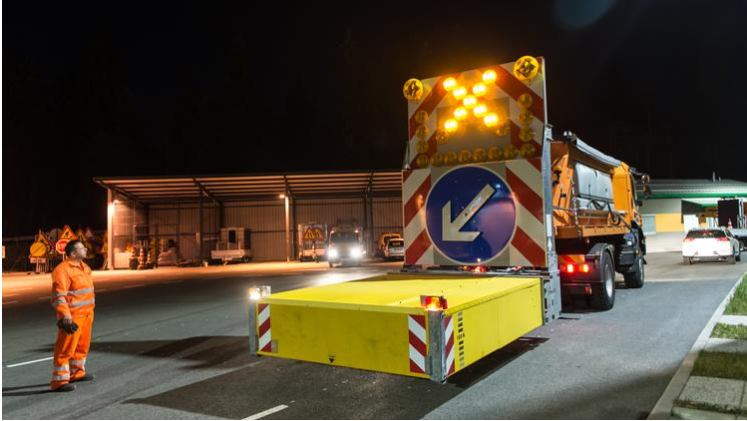
Dars now use a special collision safety bellows mounted on the back of a truck or a larger delivery truck to protect workplace lockups, as well as vehicle breakdowns on back belts and accidents. Its main role is the absorption of released energy upon impact.

The first defense pillar that protects careless drivers by overlooking all light alerts and traffic loops is the safety bellows. This safety element, whose aluminum core, embedded in panels or honeycombs, is capable of absorbing large amounts of energy upon impact, has saved many lives on our roads.

Experienced maintenance coordinator Dusan Molek from Dars Highway Base in Postojna, Dusan Molek, who is very involved in highway safety, says that in the case of a safety bellows, it is fairly effective protection:

“The onboard safety bellows are introducing a new rulebook, and are intended for highway users, drivers who make a mistake. Its technology allows a clumsy driver who overlooks all the signage and bumps up to a hundred miles per hour to save lives. Unfortunately, work barriers are too frequent, and this year alone, the oncoming security bellow has already played the role of a defensive pillar three times this year. “

1. Turn on the turn signals

We drive 130 miles an hour and all of a sudden the car breaks down. In such a case, immediately turn on all the safety indicators. Let’s not try turning the key and pressing the gas immediately. Instead, we press the clutch pedal, as this is the only way to maintain enough speed to shift the calm vehicle to the edge of the carriageway. the paragraph lane where we stop.

2. Make sure you wear a reflective vest

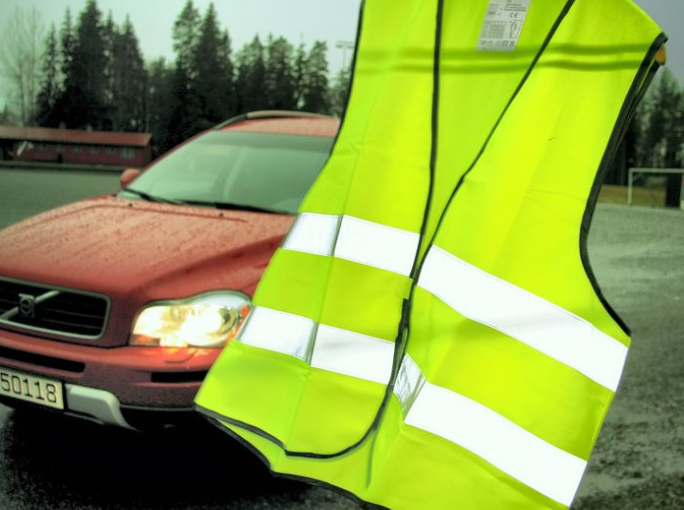
When leaving the car, all passengers in the vehicle must wear a reflective vest with reflective material. If we do not do this or we do not have a vest, we are especially visible in the mist, in the snow and at night, and present a possible risk of a vehicle colliding with us. Also, police officers can find us.

After stopping, the vehicle must be left as soon as possible, being very careful, since the remaining traffic is running smoothly. In the rear-view mirrors, we have to make sure that the carriageway is empty while holding the reflective vest with reflective tape we will put on our way out. With our vest – even at night – we are secured and visible at greater distances. Otherwise, we must get out of the vehicle as quickly as possible and retreat behind its rear. Possible passengers should exit through the right door and retreat beyond the guardrail – special caution is needed on objects and those parts where there is a gap behind the guardrail. They then wear a vest and keep an active eye on traffic.

3. Safety triangle

The following is the installation of the safety triangle. If we know where it is, we can quickly find and use it, but if we have a lot of luggage loaded in the car, we will be in big trouble, so the triangle should always be on hand for quick use. It is advisable to learn how to make a triangle at home because even in this moment of panic, even this simple act can cause problems. We need to place the triangle at least 100 meters from the vehicle. The longer the distance, the sooner drivers will be able to react and prepare for danger.

It is very important not to move around the right lane when setting the triangle, but to walk only behind the safety fence.

THE NATIONAL REFLECTION DAY IS OCTOBER 18

National Reflex Day is being organized for the 13th time in 2018. The goal of the day is to increase the use of reflex and to reduce the number of pedestrian accidents. Kyrre Gorvell-Dahl better known as Kygo is this year’s reflex designer.

Safe Traffic’s call to everyone this day is: Find out your reflections, check that they still have an effect and attach them to the outer jackets. Or go out and buy yourself a new little lifeguard this day!

The margins between a near-accident and a serious accident are small

Over 1, 7 million Norwegians have experienced near-misses due to lack of reflex use according to Trygg Trafikk. We know that reflex works, but there are still few who use reflex! In recent years, about 4 out of 10 have been using reflexes.

The effect of reflex is higher than many people think

Pedestrians are at higher risk than many other road users, especially in the dark. The risk is at least twice as high for being hit in the dark as in daylight. The accidents often happen because drivers are unable to detect dark pedestrians in the dark until it is too late. It also turns out that the chance is greater in the evening for drivers to drive with a crush or less alert due to fatigue. And when we know that pedestrians are far less protected against accidents than people in cars, it underlines the importance of reflex use.

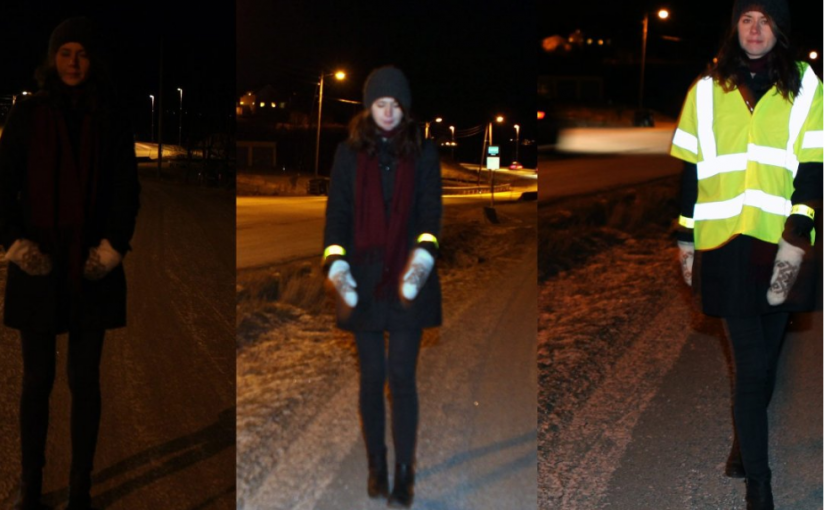
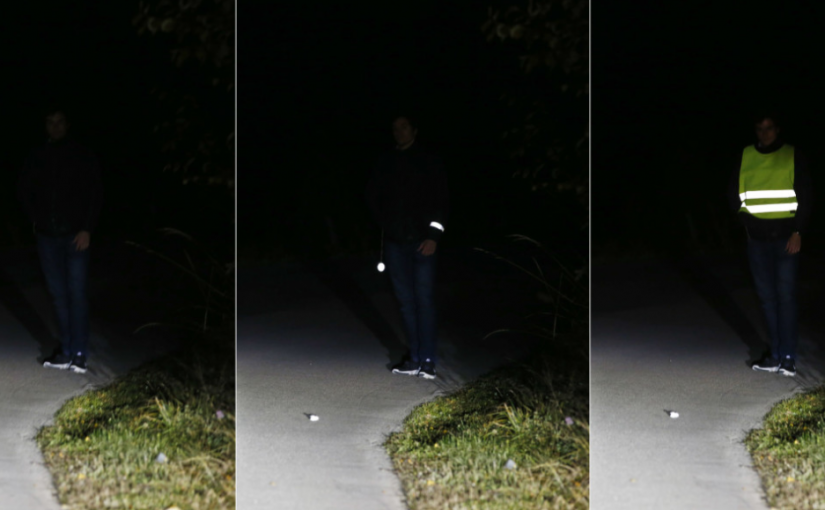
The purpose of using reflections and clothing with visible colors and reflective materials is to make you visible so that the driver can detect you more easily, even in situations where motorists do not count on any pedestrians. Reflective use reduces pedestrian accidents. Without a reflective material, you are first visible at 25 – 30 meters, while with reflective tape you appear at 140 meters when the car uses a low beam.

Converted to seconds, the driver has 10 instead of 2 seconds to respond, it can be the difference between life and death.

Street lighting creates false security, and many believe that reflexes are not necessary when walking in areas with street lights. It is wrong. Even if you see the car, the motorist does not see you. Therefore, it is cheap life insurance to always use at least one reflex when you are out in the dark.

Tips on using reflex

Safe Traffic recommends hanging the reflex at knee height. Then receive the most light from the car headlights. Reflections that move when you use them, they seem best. A strong color reflective vest will have a good effect both in the dark and in daylight. Check that the pedestrian reflex you are using is marked with CE EN 13356, it is of good quality. But reflections get worn when you retrieve the old reflectors from the drawer check that it affects! Put the reflectors in the pocket of the jackets you wear, so you don’t have to remember to bring it with you when you go out.

What you need to provide when traveling abroad in your car

Going on a trip to European countries, it is important to consider many details. A visa, an international driver’s license, motor third party liability insurance are far from all the documents that a person wishing to drive a car outside the transport routes of his native country will have to draw up.

Point One – Green Card

The Green Card is called the OSAGO analog. With the difference that the policy is valid on the territory of European states. The program ensures motor liability.

According to information received from the MTIBU insurers’ association, the number of Green Card international policies sold has increased by 48.2% since the beginning of 2019. This insurance program allows you to travel abroad in your car. Without a Green Card, a vehicle at the border will not be allowed to pass. It is also worth considering that the policyholder is allowed to drive a vehicle exclusively on the roads of the states specified in the contract.

The cost of the Green Card in Ukraine is reduced and adjusted annually by the euro. Official sources confirm that each year traveling without a visa is becoming more accessible for Ukrainians. What should be taken into account when going on a trip abroad in your car?

Point Two: Personal Documents

If you are planning a car trip around Europe, you should also prepare personal documents in advance:

International passport;

Travel insurance

Driving license of international standard;

Certificate indicating registration of the vehicle. It can be checked together with a document indicating the technical condition and condition of the machine. Therefore, if possible, pass inspection before the trip;

Inquiries from the place of work and bank statements. They are checked if there are suspicions that the family is not going on a trip, but for permanent residence in one of the countries.

And, of course, do not forget about the money. At least, because the cost of gasoline in Europe is higher.

Point Three: Additional Costs

In addition to purchasing the Green Card policy, lovers of overseas trips in their cars must also prepare for the additional costs. Firstly, it is worth checking the availability of the following equipment in the machine (if it is not there, be sure to purchase it in advance):

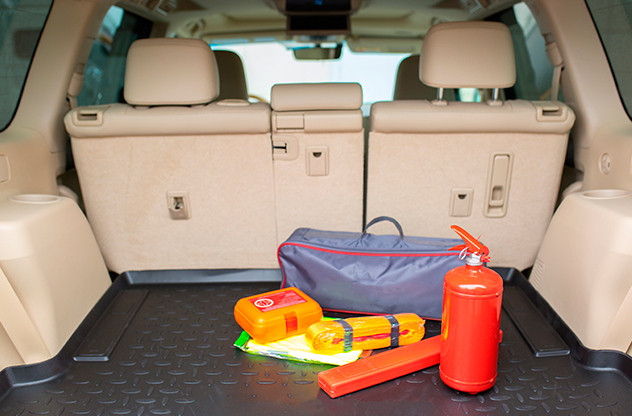
Sign of emergency stop of the vehicle;

First-aid kit with unexpired medicines;

Reflective vest with reflective tape(checked in countries such as Austria, Lingerie or Hungary);

Unexpired fire extinguisher.

In some European countries, they check the availability of a spare wheel, towing cable, a set of spare lamps for low beam.

Also, it is recommended to study in detail the rules of the DD of the countries in which the trip is planned. For example, in Austria, there are several toll highways for which a trip without payment is punishable by a fine of 120 euros. And in France, there are zones with so-called low emissions. Entrance to their territory is prohibited for those cars that run on the fuel of Euro-2 class and lower. There are also penalties for traveling with headphones and smoking while driving.

Knowing these subtleties, you will be on the alert and your auto travel will pass without unnecessary worries.

Check the difference!

In Norway, 29 percent use reflex on average. In the three northernmost counties, the average is up to 38 percent. This is confirmed by Project Manager in Trygg Trafikk, Carina Henske.

“I expect it has something to do with dark time, but we are generally too bad to use reflex in Norway,” she says.

Difficult

For this reason, Trygg Trafikk wants an order to use reflexes in the country. Some care, others don’t.

It may be a good idea, should we believe Karlsson on Jula. He is happy that many people use reflex, but have a clear idea of ​​who does not use.

“The youth gives a shit fuck. To me, it’s scary that people think so differently,” he emphasizes.

And he’s not alone in that thought. In Safe Traffic you are aware of the problem.

“Youth is a difficult target group, but I think there are just as many adults who reflex,” says Henske.

At least two reflexes

She recommends having at least one reflex on each side of the body.

“Certainly at knee height on moving parts. A hang reflex or a strap up is good, four reflexes are superb,” she says.

Henske sees no tendency that there is a new trend in reflex use, but that more and more people use the vest.

“We want an order for reflexes in traffic, but it is not unknown that people are afraid to ‘destroy’ the outfit with a reflective vest over. But there are alternatives, we should believe Henske.”

Now there are more and more garments with sewn-in reflex. Then it quickly gets a little cooler.

She also brings out the so-called “microflexes” as figures and other small objects that can be used as a reflex. Although we are better at using reflexes in Northern Norway, many believe that people are too poor to travel safely in traffic.

Led tapes

A quick visit to some of Bodo’s stores shows that it is the reflective vest with reflective tape that sells best when it comes to reflex equipment.

“Especially kindergartens want the kids most visible,” says Eldar Andrè Stendal.

He is the store manager at Europris Morkved and believes that several also swear to so-called joint bands with reflective material where there are flashing lights inside the reflex that you wrap around your arm or foot.

“People are also interested in luminous figures that are often hung on a jacket or backpack,” he continues.

This is what you need to have in your car if the crisis hits

On Tuesday, several landslides took place in Sogn and Fjordane and Hordaland, after heavy rain showers.

Over 150 were evacuated from their homes, and 1,500 households lost power.

“If dangerous weather is reported, we do not recommend that people are driving. But if you still are, it is important to be prepared,” says Haavard Stensvand, emergency manager in the county of Westland.

Here is Stensvand’s advice on what you should have in the car, should the accident occur.

1. DAB radio

It is important to get updated information about the situation you are in.

“People trust that the mobile network will work, but then we see during this incident that it can be false security. Then it is important to have an alternative,” says Stensvand.

Then a battery-powered DAB radio may be wise. At least if you can’t use the radio in the car.

NRK P1 is the official emergency channel and a good source of information for crises and accidents.

2. Warm clothes

It is not stupid to have extra clothes lying in the car if you get stuck.

“There should be clothes that allow you to either get out of the car and keep warm, or stay in the car for a few hours without the engine and heater working,” says Stensvand.

3. First Aid Box

If you or someone around you get minor cuts or injuries, it is a good thing to be able to help yourself.

“Fortunately, it comes with first aid cases in many cars. It is very good to have something like this in the car,” says Stensvand.

5. Flashlight

If it is dark outside or the power goes off, a battery-powered flashlight is your best friend.

“Everyone should have this, both at home and in the car. Maybe the lights around you are taken by the avalanche. If you have to go out and go in the dark, this is useful,” says Stensvand.

6. Antibac

It is important to take care of basic hygiene, even in the car, so that no one gets unnecessarily sick.

“In recent years I have always had Antibac with me, to be on the safe side,” says Stensvand.

7. Reflective vest with reflective tape

Everyone is required by law to have a reflective vest with reflective material in the car. If you are stuck somewhere, it is wise to make yourself as visible as possible.

“Reflective vest is important, so you can be seen if a search is made,” says Stensvand.

Use reflex, it’s a cheap life insurance

Autumnal dark and rainy roads characterize many an early morning in Norwegian cities.

The Norwegian Automobile Association (NAF) warns pedestrians who leave their homes without reflection, partly because the vision of many drivers is impaired with age.

As a 60-year-old, you have lost more than half of the night vision you had as a 20-year-old.

“Impaired vision in combination with autumn darkness can create dangerous traffic situations. The soft road users, pedestrians and cyclists, are particularly vulnerable. If you use reflex, the risk of being hit by 85 percent is reduced,” says NAF communications manager Camilla System.

Will make reflex natural

The basic rule in section three of the Road Traffic Act emphasizes that everyone “must be considerate and be cautious and cautious so that no danger or injury can be caused and so that other traffic is not unnecessarily hindered or disturbed”.

This provision applies to motorists, cyclists, pedestrians and others traveling in traffic. For the soft road users, it is important to make themselves visible by using reflex and light.

But according to Ryste in NAF, it is not natural for everyone to put on the reflex before going out in the dark.

“Over 90 percent use seat belts and the goal must be that just as many use reflexes. It’s important to bring this in as a natural part of going out in the dark,” says System.

Street lights provide false security

Figures from Trygg Trafikk show that four out of ten Norwegians use reflective material, and this means they are too few.

“We are better at using reflexes on country roads than in the cities, but the street lighting provides false security. There are more pedestrian accidents in the cities than on the road,” says communications adviser Christoffer Soland Steen to Dinside.

The gender differences in reflex use are minimal: 51 percent women and 49 percent men, Trygg Trafikks reports from last year. The most common reason for not using reflex is simply oblivion.

“We are much better at making sure our children use reflexes than we are using reflexes themselves. Also, reflexes are often fitted in children’s outerwear, which also helps the children use more reflexes than us adults,” Steen adds.

Steer clear of reflective spray

You get the best visibility by using a reflective vest with reflective fabric, according to NAF. If you use other types of reflectors, it should hang at knee height to capture as much light as possible from the headlights when you are out and about, and if you have reflections on both sides you will also be more visible.

That reflective vest is the best was also shown in the reflection test Dinside wrote about last year. Also, the reflex trading net and reflex umbrella came out well.

Reflective vest is cool

Thursday was National Reflection Day. This was highlighted by the fact that Narvik municipality and police distributed reflexes to the 1st and 6th grades.

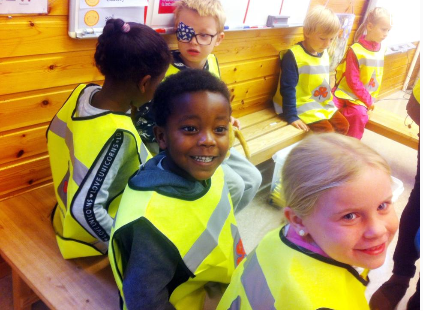
Distributed reflective vests

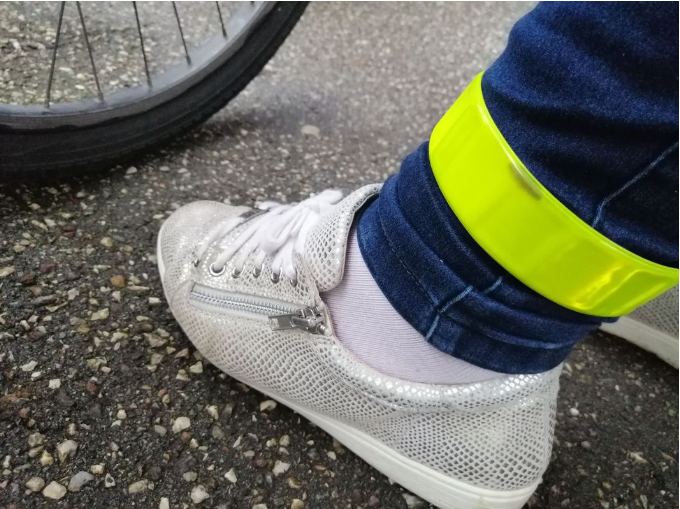
Those in the first grade were given yellow reflective vests, while those in the sixth grade were given reflective bands that can be used on arms or legs.

“Those who are in the 6th grade and who are sponsors are given the task of making sure that they use reflex in the first place. And you in the first-class must make sure that they in the sixth class also use reflex,” says Sigbjorn Normann at Vei and park in Narvik municipality.

Must use reflex

Sebastian Haugan Johansen (11) and Linnea Overbyhagen (11) are in sixth grade and are sponsors of the first.

“I’ll try to use the reflective tape, at least in the evenings,” says Sebastian.

Linnea thinks she gets to use her reflex tape often because she tends to go to several places in the street in the evening.

Áslat (5.5) and Kelian Sword (6) are both happy to get a reflective vest.

It is fun to use a reflective vest, and we are using it, the two say.

Students know well why reflex is important.

“It is important that we are not driven by cars and such,” says Linnea.

“There can also be a trailer, and it is important with reflex when we go down to the shore in the evening,” says Áslat.

Police officer Mats Aamodt thinks it’s good the students have such good attitudes.

“It is dark in the morning, evening and night, and it gets darker. So it is important to use reflex to be seen,” he says.

He has experienced meeting road users without reflex and knows they are hard to see. He recalls that it is extra dark and difficult to see walking without reflex now before the snow arrives, and especially when the asphalt is wet.

Use reflex

He encourages everyone to use reflex, both children, adolescents, and adults.

“Wear too much reflex rather than too little. Wear both reflective vest with reflective material and reflective tape. This applies to both children and adults,” he says.