European Child Safety: Schools Start to Get Reflective Vests

Vest Propagation Project Launched by National Traffic Injury Prevention Program for Children and Youth.

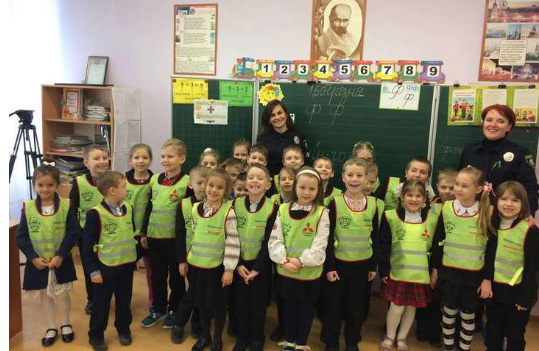
49 metropolitan schools began to receive reflective vests for children of grades 1-3 from public activists and the Patrol Police within the framework of the project “Express Yourself”. The Vest Propagation Project was initiated by the National Traffic Injury Prevention Program for Children and Youth. Information partner of the national Glavcom program.

Activists say that reflective vests are needed for schoolchildren when they go to school outside school. By dressing the toddler in such bright vests, the babies become well visible to drivers, other road users and those who accompany them. This is especially important when moving along roads, or when crossing a carriageway, dangerous intersections, and so on.

Which general educational institutions will receive reflective vests, was selected by the patrol police of Ukraine together with school administrations and representatives of the Traffic Challenge. Among the selection criteria, there should be dangerous driving areas near these schools. Such a school is, in particular, the 266th comprehensive educational institution. Police and activists handed over to the school 1 set (30 pieces) of vests. “There is a very busy track near this school. There are many pedestrian crossings, but children still run straight across the street. Now, going for walks throughout the class, children will be able to be seen at a great distance thanks to these vests,” explains patrol police inspector Louise Sidelnikov.

According to her, there are also categories of schools that have very active administrations that actively teach children road safety.

The police say that the practice of vest distribution in Ukrainian schools has not been done so far. But wearing such reflectors is a pan-European practice.

“The traffic rules state that when a pedestrian is on the roadway or moving along the road in the dark, they must stand out, that is, have reflective elements on their outer clothing. Of course, we do not follow these rules,” Siedelnikova stresses.

Traffic Challenge chairman Olga Drobysheva says the problem is that people do not even understand the importance of wearing reflectors on clothing and vests.

“It is important for people to understand that this is saving lives. When we were little, we were not taught in schools or universities, or even in driving courses, how close we are as drivers to see a pedestrian without reflective materials in their clothes. For example, a person in dark clothing can be seen from a distance of 5 to 30 meters, depending on weather conditions. But 30 meters is a very short distance for the car to brake. Because the braking distance of the car is an average of 3 seconds. This is unless we have ice and a good dry road,” Drobysheva says.

Therefore, children should be dressed in bright colors. Then they are visible in the daytime under good weather conditions up to 100 meters away.

In many European countries, wearing reflective vests by adults in adverse weather conditions is a prerequisite for traffic regulations. And it is important to have reflective fabrics on clothing in, for example, Poland and the Baltic States. Their absence is punishable by fines.

Activists argue that such vests should be in all schools. The vests have already been handed over to most of the schools planned, and the vests will be in Chernihiv next week. Messages from teachers and parents from all over Ukraine began to arrive at us. They want to have these vests to send their children on excursions, school walks and more.

In total, 8,000 light-reflecting vests will be distributed in 10 oblasts of Ukraine within the framework of the “Manifest Yourself” project.

How to choose a school bag?

From September, our child will have a daily companion bag, which, if wrongly chosen, can cause shoulder and back pain.

Quality instead of fashion

It may be tempting to get a cheap but more fashionable backpack during your bag deals but don’t. The life of such a bag will probably be only a few weeks, maybe a month, and then we have to look for another bag. So it’s better to invest now and land on a durable, quality piece. Let’s see if the material it is made of is strong enough. Doesn’t it disappear somewhere? Will, it does not easily separate along the stitches/perforations? The zipper should always be covered with fabric to protect it from the rain!

Size matters

If the size of the bag is not good, the child will be misplaced while wearing it, which is a direct way to back and shoulder pain. Therefore, when choosing a school bag, the most important consideration is perfect size and comfort! Here are some practical tips for doing this.

1. Select the appropriate size: The width of the bag should be approximately the width of the child’s back. In short, a young child should not carry an adult backpack. The upper part of the bag should ideally start 5-6 inches below the shoulder and end at the waist or slightly above the waist.

2. An ergonomically designed, well-ventilated back is important: It protects the small spine and does not sweat in warm weather.

3. Wide, padded, adjustable shoulder strap: This is important for comfort and weight reduction. It is important that we adjust the shoulder straps to equal lengths and that our child does not carry his/her schoolbag halfway.

4. Looking for a multi-pocket, multi-compartment bag: This helps ensure better weight distribution. Heavier books or objects should be placed close to the child’s back and lighter ones should be placed in the front pockets. Of course, it is not the last one in terms of organization.

5. The weight of the bag should never exceed 15% of the weight of the child: The bag and its contents should remain below this value. This means a maximum of 6 pounds for a 45 kg child. The newest models weight less than 1 kg.

6. Stable soles: For the underwear especially, but also for older children, it is advantageous to have a hard plastic soleplate so that it can be placed firmly on the floor and the books are better placed inside.

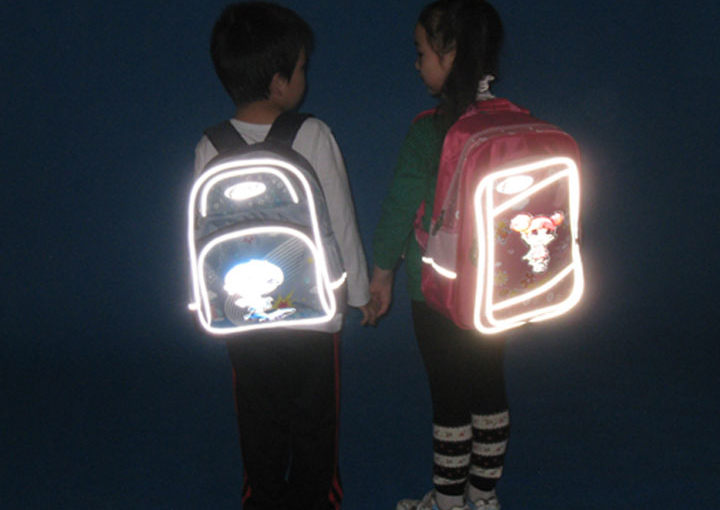
7. It does not hurt to have fluorescent reflective materials or reflective tapes on it: It is essential for the safety of our child when traveling alone in the rain or fog.

8. Before You Buy Try It Out: Take some of the things your child will normally carry in the bag, put it in the piece of choice and check the weight distribution.

Halifax cyclist uses pink pool noodle for added safety

When Ella Dodson rides her bike on the streets of Halifax, she’s easy to spot.

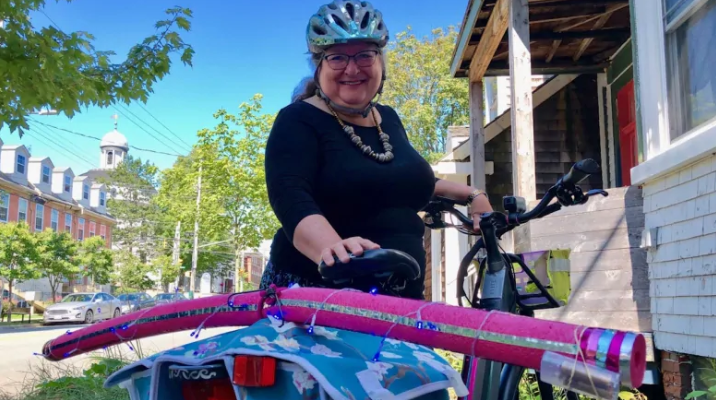
The woman from the city’s north end has strapped a bright pink pool noodle covered in reflective tape and twinkly lights to the back of her bicycle.

The noodle, she says, is a “polite reminder” of the law that cars must give at least one meter when passing cyclists.

“It’s a very cheap piece of personal protection,” Dodson said.

The idea came shortly after a close call with a car near the corner of Agricola and Charles Streets, where the city has added a pedestrian bump-out. It makes things safer for pedestrians but made the lane smaller for cars and cyclists.

“I was quite terrified,” she said. “So I was so angry. I wrote to the city complaining about the pedestrian bump-out saying that if this is a cycling street, they really ought to also provide for cyclists,” she said.

Only a week later, she was visiting a friend who was hit and injected while in a marked crosswalk over a year ago.

“Some of her injuries are never going to heal. After seeing how much was changing in her life, I decided to screw it all. I was going to become a dorky old lady with a pool noodle on the back of my bike.”

Dodson went to Canadian Tire and bought a $ 1.99 pool noodle as well as matching pink bungee cords to hold it in place.

Cyclist using a pool noodle to demonstrate Ellen’s Law says he was hit by a car

The bicycle is Dodson’s sole form of transportation.

“I’m a bit older and I’m a very slow rider and I use my bike for transporting groceries,” she said.

“As I started thinking about it, I kept hoping that other people would do it too because there seems to be a great deal of animosity between cyclists and drivers.”

She says she’d like to see wider roads and cycling lanes, but she hopes city planners will think about catering to those besides just young commuters.

“There’s a whole range of other people who aren’t cycling in Halifax because they don’t feel safe,” she said.

“And safety is going to come when we have enough people cycling on the road and enough people who are visible on the road.”

Big police action kicks off

It is an old year and many today will embark on a trip, visiting family, organized New Year’s Eve, and some people will go further, whether at home or abroad. Also, last-minute shopping can cause additional stress, resulting in a lack of concentration and nervousness in traffic, with traffic jams in shopping malls.

Also, increased traffic and congestion are expected on all major thoroughfares, as well as at border crossings.

Unfortunately, in the Old Year last year and the first hours of New 2018, we recorded an increase in the number of traffic accidents involving fatalities, more specifically in four road accidents five people were killed.

For this reason, we would like to remind you of the tips for drivers, which we always repeat during the holidays when there are crowds and congestion:

Don’t rush, take the time and go on a journey sooner rather than cause a traffic accident,

Prepare your vehicle and yourself for the journey, especially if you are going for the long haul,

Get up-to-date on road conditions and traffic flow, as well as weather conditions that may affect you while traveling,

Observe traffic rules and regulations, do not initiate risky vehicle actions (e.g., off-peak traffic, vehicle column overtaking),

Adjust the speed to the road conditions and keep to its limits,

Keep the distance you need when moving behind another vehicle,

Pass pedestrians and exercise caution and slow down when approaching pedestrian crossings.

Tips for drivers who have consumed alcohol:

Leave your car parked properly and walk away – it will benefit you and you will not endanger anyone,

Use public transit,

Use taxi services because it will be far safer and cheaper,

If you are in the company, arrange in advance who will stay sober and drive back,

Ask someone sober to drive you,

Do not sit behind the wheel for at least 24 hours after drinking a large amount of alcohol,

While driving under the influence of alcohol, you are not only endangering yourself but also other road users,

On nights of high risk (weekend), drive slower and more cautiously, whether you drink or not,

Remember that no reason is warranted for operating a vehicle under the influence of alcohol.

In addition to the driver, we also have some tips for pedestrians and cyclists:

Specifically, in winter, when days are shorter and visibility is often reduced due to weather conditions (fog, cloudy, precipitation), pedestrians are more difficult to spot for drivers.

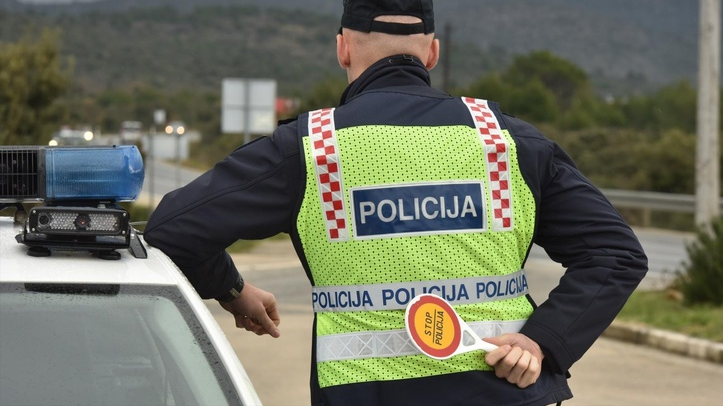
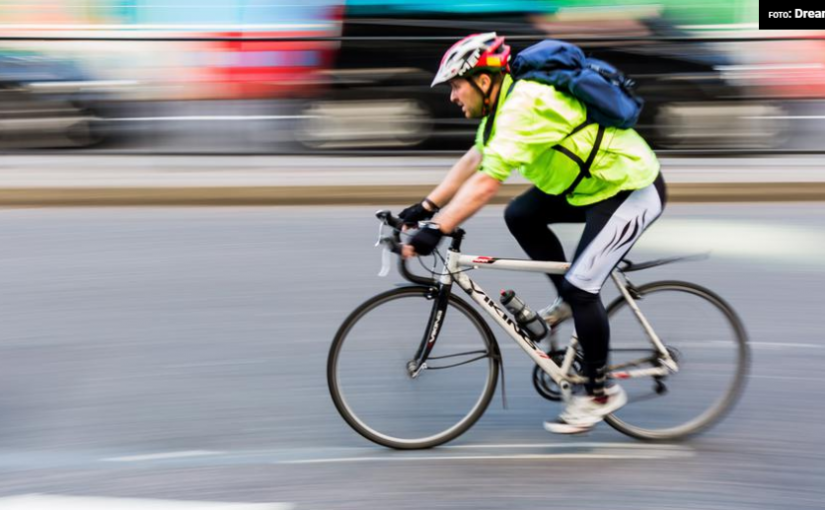
Therefore, we advise everyone, especially older pedestrians, to wear lighter clothing or at least one garment in a lighter color to increase their visibility and thus directly affect their traffic safety. In addition to lighter clothing, we also recommend the use of reflective details (reflective vests, reflective hand straps with reflective tapes or socks) for both pedestrians and cyclists, whose visibility is also reduced in the winter. Bicycle traffic has declined during the winter, however, a significant number of people continue to use it as a means of transport, which is why unlighted bikes and cyclists without reflective clothing are at increased risk of road traffic accidents.

The police have acted intensely throughout December, which will continue today, as well as throughout this week, and will focus its activities on preventing and sanctioning the most serious offenses, in particular, the so-called “offenses”. The “four major traffic killers” (alcohol, speed, seat belt, and cellphone) and, according to repeat offenders, repeat offenders.

In addition to the police, motorists, like all other road users, with their responsible behavior, can also contribute to increasing the level of road safety.

Road safety: Equipment for safer driving of HRK 150

Protective equipment is not always required, but it is good to wear it because the cyclist is more visible to others in traffic. Everything can also be purchased at shopping malls.

I often cycle and wonder if I should wear a cycling safety vest. When should I have it and do I have to wear it when I drive through the Maksimir forest, the reader asked us.

“A bicycle driver who rides a pavement must have a reflective vest sew on reflective tape, reflective cycling attire or another reflective mark at night and, if the visibility is low,” the Ministry of Interior replied. This means that the reader driving through the Maksimir Forest is not obliged to have it, but it is still better to be visible in traffic.

According to the Road Traffic Safety Act, a bicycle rider who does not wear a reflective vest with reflective material or other reflective mark is in violation and is fined HRK 300. The same penalty applies to those cyclists who do not have lights.

“At night, from the first dusk until full sunrise, and in the daytime, if visibility is low, the bike must have a white light on the front and red on the back,” says Article 101 of the Traffic Safety Act.

The Ministry of Interior replied that the technical requirements for vehicles involved in road traffic, as well as for bicycles, were laid down in the provisions of the Ordinance on the Technical Conditions of Road Vehicles.

“The bicycle must be equipped with a road light and position light, or rear light. It must also have ‘cat eyes’, cat adopters, red on the back of the bike and yellow on the pedals, reflective elements on the wheels and bells,” says Article 166 of the Regulations.

It also states that the headlamp must be adjusted to illuminate the road for at least 10 meters and at most 50. A poorly placed headlamp, especially if it is a strong LED lamp, can be a problem for anyone who comes across it. Namely, if the careless rider did not point the lamp slightly downwards but straight ahead, he would blind the cyclist coming to meet him on the cycle path.

Cyclist under 16 must wear a helmet when driving on the road. Children under the age of eight must also wear a helmet if older people ride them on a bicycle in the seat.

Highway Tips: What to do in the event of an accident

Although traveling by road is statistically one of the safest ways to travel by car, it is essential to be careful about unforeseen circumstances and unsafe drivers.

In recent weeks, we have witnessed several highway accidents where high speeds make it difficult to avoid tragic consequences.

Here are some tips to help you make your trip as safe as possible:

Turn on the dipped beam and take off your sunglasses before entering the tunnel. Pay attention to traffic lights and other traffic signs in the tunnel.

Drive at the permitted speed. Keep track of the security devices in the tunnel and places such as emergency exits and SOS phones.

Stop only in case of extreme need and at extensions.

Before traveling on the road and while driving, keep track of the weather forecast and traffic information.

Keep track of messages on traffic info displays on individual sections of highways and notifications of possible detours.

You respect the traffic signage that indicates a detour, as it will take you back to the highway again and towards your desired destination.

When driving on a wind-driven section, strictly observe the variable speed-limiting light signs and maintain a safe distance between vehicles.

When engaging in highway driving, in all cases (tolls, loops, landings), be careful and follow the traffic signs so that you do not find yourself in the opposite direction of any part of the highway.

When driving on a highway, be aware of the possibility of encountering a vehicle moving in the opposite direction, so it is advisable to check the traffic lane ahead of you, in addition to checking vehicles moving behind you.

Keep up to date with traffic information on the road, which will give you timely insights about a possible highway accident on the highway, as well as important messages and tips for safe driving.

Observe obligations and restrictions through light-variable signage and messages on information portals.

If you get traffic information in the opposite direction, reduce the speed to 40 km / h on the section of the highway you are on, and proceed with caution in the right lane without overtaking with all four direction indicators turned on. Stop the vehicle at the first stop along the highway and wait for information on the end of the hazard.

If you have spotted a vehicle traveling in the opposite direction on a highway, report the information immediately to the police.

Only when you are informed that the incident situation has ended do you continue your normal highway journey.

Procedures in the event of a traffic accident

Turn on all four direction indicators and, with extreme caution, stop your vehicle in the stop lane a safe distance. Turn off the engine, stay calm and calm.

Wear a safety reflective vest with reflective tapes and secure the crash site with a safety triangle, if not already done. Notify the police immediately.

Do not move injured persons unless they are in immediate danger of fire or explosion.

Provide first aid to injured persons in a car accident, within your knowledge and ability. Stay on the scene until police arrive.

Highway assistance

In the event of a vehicle breakdown, if there is no possibility of stopping in the parking lot along the highway, stop the vehicle in the stop lane (or SOS extension or resort) just off the edge of the roadway and switch on all four direction indicators.

Have all passengers leave the vehicle on the right and away from the car and lane. Do not stand in the lane!

Wear a reflective vest with reflective material and place a safety triangle at the prescribed distance to mark a stopped vehicle (the recommended distance is 100 meters on the highway).

Whether or not you have a subscription, call the on-the-go help desk.

In case the driver is unable to remove the car from the highway due to a breakdown of the vehicle, a specialist service will be responsible for this.

Keep your distance !!!

Driving too short a safety distance is statistically one of the most common causes of road accidents. Most of this pattern is also related to speeding.

According to the traffic rules of the Law on Traffic Safety (ZOBS), the driver is obliged to keep the vehicle at such a distance from other vehicles in traffic that, given the speed of movement of the vehicle and other traffic circumstances, it does not cause danger and does not interfere with other drivers.

Most drivers drive too close because of their lack of knowledge about the length of their vehicle’s stopping distance about changes in speed and road conditions.

What is a safe distance?

The safety distance is the rule: a driver driving another vehicle in the same lane must drive at a distance not less than the distance traveled by that vehicle in two seconds unless otherwise specified by a traffic sign.

On wet pavements, the distance should be increased to four seconds and in winter conditions to a minimum of 6-8 seconds.

On autumn roads do not forget about reflective elements

To maintain road safety in the autumn, police recommend that pedestrians use reflective materials. On the social network, the Police Force of the Slovak Republic points out that a pedestrian walking along the side of a road should have these elements on the side of the body seen from the road, not on the side of the road. Reflective tapes are best placed close to the knees, belt level and shoulder, cyclists also on helmets and bicycles.

“In addition to wearing the helmet and reflective fabrics on clothing, cyclists should also ensure that the bicycle is properly illuminated and lights are positioned. In bad weather, ice and snow, it is advisable to use other means of transport,” police said.

The pitfalls in the autumn are waiting for drivers. “On a wet road, a car can become unmanageable. To do this, remove the foot from the throttle and depress the clutch. Align the steering wheel, hold it with both hands and not risk overtaking,” recommends the police.

If there is fog, the speed should be reduced and the distance between the vehicles increased. Drivers should turn on the fog lights. However, if they are standing in the column, it is enough for them to do so first and last in line not to blind other drivers.

If drivers are at risk of encountering game, don’t hesitate to avoid the obstacle at high speed. Police warn that the consequences of shear may be greater than the crash itself, especially when driving on a highway.

Cyclists, do not underestimate the reflective elements or helmet

The most common mistakes of cyclists include riding without lights and reflective elements or cycling outside the village without a helmet. According to police spokeswoman Denisa Balogh, driving in groups side by side or driving under the influence of alcohol is not exceptional either. What rules should cyclists follow during their journeys?

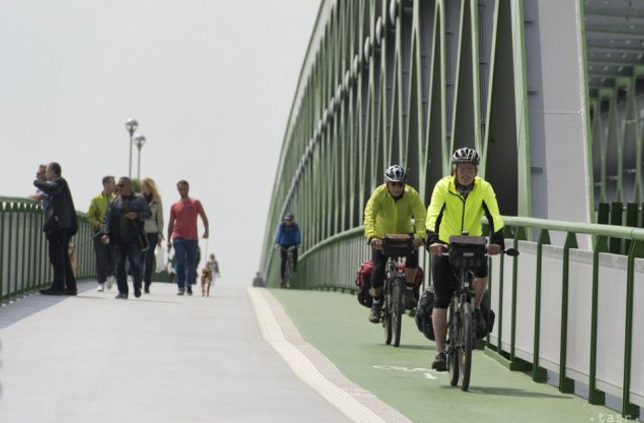
It is important, for example, to wear reflective vests, especially at night and in low visibility. “Reflective material can be seen at a distance three times longer than white clothing and more than ten times that of blue clothing. By using reflective elements, cyclists extend the distance over which the driver can see them,” the spokeswoman explains.

At the same time, Balogh recalls that children under the age of 10 can only ride a bicycle unattended on a cycling path, a dirt road, a forest road, or a residential area. Otherwise, they must be under the supervision of a person over 15 years of age who must also be sufficiently competent to supervise them. “When traveling with children, of course, there should be helmets, leg guards and reflective fabrics on clothing,” he adds.

The helmet must have children under 15 years in the village. Other cyclists are obliged to wear it only outside the village. It is important to ensure that cyclists only drive one behind the other on the side or on the edge of the road. “Two cyclists can only walk along the bicycle path, and only if they do not restrict and endanger other road users,” says Balogh.

At the same time, the police appealed to drivers to be considerate of cyclists. “We all know that in the case of a cyclist versus a car, the less protected participant always pulls the shorter end. Therefore, it is important that the driver of the motor vehicle anticipates what he can do if necessary and responds adequately,” Balogh points out.

“Maintain sufficient lateral distance from cyclists to prevent them, counting with caution, poor eyesight, and hearing, especially of older people. While driving, pay close attention to the right side of the road because of the most likely occurrence of cyclists,” he continues. At the same time, it points out that a right-hand driver is obliged to give priority to a straight-rider. This is not only for the tram driver.

Reflective elements in pedestrians, design changes

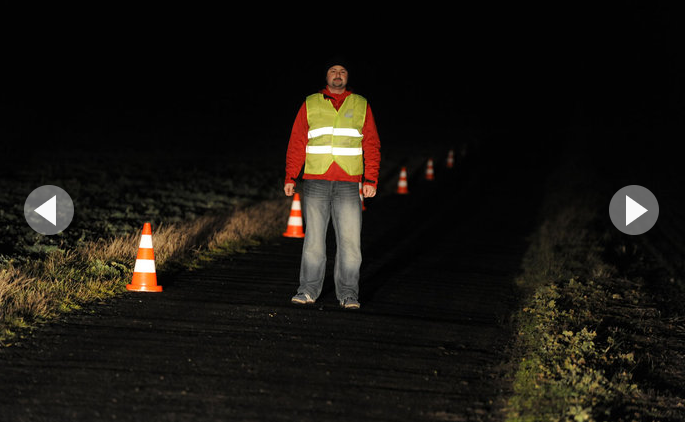
There are fatal accidents when a driver strikes a pedestrian because he overlooked it. This happens especially in the village, at night, when the pedestrian moves on the road in dark clothes and on a dark background, when it is virtually invisible. I make one of the suggestions on how to deal with this situation.

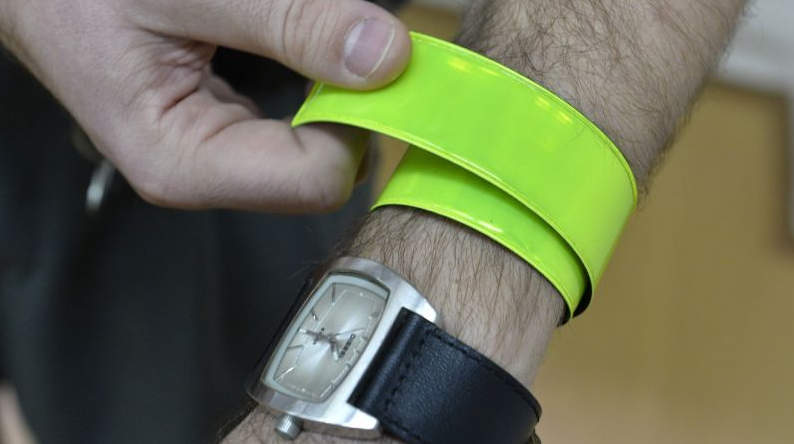
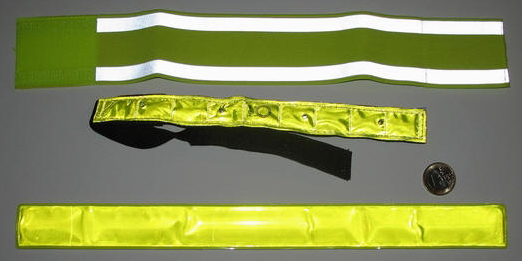
Different reflective elements for pedestrians compared to one Euro coin. Reflective velcro tape. In the middle reflective tape with own source and flashing LEDs, also with Velcro. Below is the most commonly used reflective tape with an internal spring.

Special provisions on pedestrians

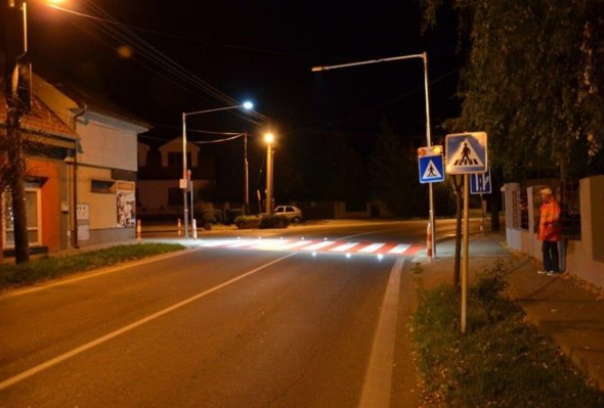
Pedestrians may walk along the side of the road or the edge of the road at most two side by side, provided that they do not endanger or restrict road traffic, especially in reduced visibility or increased traffic; this does not apply to persons moving on the shoulder or on the edge of the road on skis, skates or similar sports equipment, which can only move in a row. From sunset to sunrise and in poor visibility, a pedestrian walking on the road or the edge of the road, inside and outside the village, shall have visibly placed reflective elements or wearing reflective safety clothing, so that it can be seen by drivers coming from both sides. This obligation shall not apply in the case of the transverse passage of the road at controlled pedestrian crossings or illuminated and uncontrolled pedestrian crossings.

Rationale:

By extending the obligation of reflective elements from outside the municipality to the municipality, pedestrians will be especially visible in villages where there are no sidewalks and use the road to move.

The obligation to be seen by drivers from both sides will eliminate the deficiency when the pedestrian had a reflective element only on his back, most often on his backpack. As a result, when walking along the opposite road surface not seen for incoming drivers.

By using the terminology from sunset to sunrise, which is common in aviation, we can easily and accurately determine the time from when to when it is required to use reflective materials.

To avoid unnecessarily burdensome pedestrians in well-lit city centers, this obligation is not at pedestrian crossings, in addition to footpaths. This also means that pedestrians without reflective elements will have to use pedestrian crossings as a priority.

A year and a half with mandatory reflective elements

On Sunday it will be a year and a half since pedestrians were to start shining on our roads. Literally, on February 20, 2016, the following formula was added to the Road Traffic Act: “If a pedestrian moves outside the village on a side or roadside in a place not illuminated by public lighting, he/she is obliged to wear retro-reflective material positioned so as to be visible to other road users.”

Light Up

It’s shortly before 9 pm when we pass the sign indicating the end of Prague. We decided to see how the Czechs comply with the law. True, all kinds of reflectors, belts, and clothing strips are grim autumn and winter. But the law applies without exception even at the end of a capricious summer. Is it already dark or not? This is what we say when approaching from Radotín towards Černošice – we meet a completely unlit runner. The legislation defines reduced visibility by not recognizing other vehicles, people, animals or objects on the road. It is not only about darkness, dusk or dawn, but also heavy rain, snow, and fog.

From a statistical point of view, the new regulation looks promising. Perhaps in the first year of validity, the number of killed pedestrians at night outside the village decreased from 37 to 31, which is almost a fifth decrease. A massive communication campaign, warning of the possible consequences of invisible night walks, certainly played its role.

The fact that the reflective components make sense is further supported by other harsh numbers: “After the law came into effect, we registered a total of 24 killed pedestrians with reduced visibility. In seventeen cases, the pedestrian was not demonstrably reflective,” says Petr Habenicht of the Police Presidium.

Rather a warning

“Yes, I know I should have a flashing tape. I wear it in winter, but it is not completely dark yet,” the runner we meet at the outskirts of Hlásná Třebáň grows in front of us. At least she wears a distinctive red T-shirt – but it wouldn’t help her before the law.

“After the introduction, we announced that we would especially explain to pedestrians the meaning of this duty. At the same time, however, we pointed out that, as the end of the year, which tends to be the riskiest to pedestrians, is approaching, police officers will also apply block fines for non-compliance,” explains Habenicht.

However, not only unmarked pedestrians but also drivers behave dangerously in the dark. “Classic halogen headlamps have a range of up to 100 meters, which should be adjusted to speed. If we do not, we often do not have enough room for an adequate response. At the last minute we are not able to react to the obstacle,” says Besip’s head Martin Farář.

We know

Another problem that annoys night roads is the poor lighting of many cars. As we head to the destination of today’s journey, we chose the village in style.

Darkness near Beroun, we see for ourselves. Although traffic is minimal, the percentage of squinting or squinting cars is significant. The risk is not only for pedestrians but also for the surrounding drivers, which can unpleasantly dazzle. Beware of them, we say to each other as we approach an intersection somewhere in the fields. Five young people with a dog walk along the verge. Reflective elements nowhere, at least have well visible white T-shirts and hold much to the edge. On the right side of the road. “I know we should have tapes. But we didn’t take them with us. But we are cautious,” one of the girls surprised us with an apologetic tone. When we leave, the crew moves off the road. By law, pedestrians are allowed to walk along the side of the road or at the edge of the road no more than two side by side. In low visibility, they even have to go behind – that is if it is not a light-marked, organized formation. However, according to Besip’s experience, rainfall is regularly caused by ignorance of the rules. Pedestrians in low traffic do not care where to cross. “They go red, run off the crossing, and even across the highway. At night we are more anonymous and more often sin on rules, which can have tragic consequences,” says Farář. A repeated problem is just walking on the wrong side of the road. “The car thus arrives at the back of the infantrymen and therefore cannot react adequately. They also commonly believe that when they see the lights, the car sees them. This is a great misunderstanding and underestimation of the situation! ”Warns the pastor.

Where are they?

When we arrive in dark Tman, it is half-past eleven and there is no one on the roads. , Berounsko has fallen asleep and we are slowly going home. We are already wondering if it was necessary to make such a halo around the elements when nobody walks on the roads. Although, the strap or reflector does not have anyway. We drove the lanes over sixty kilometers and did not hit pedestrians with reflective elements.

We are now approaching the highway when we see the bright glare of the reflective tape at the edge of the Court. It’s hard to say what a grim figure in dark clothes is doing here. To meet her a little further behind the curve, we would probably be surprised without the tape – of course, it is on the wrong side, the right side of the road.

It is surprising how little we see reflective elements on Czech roads. Statistics show that their benefits are indisputable. However, it will probably take a lot of effort before the Czechs accept them.

Reflective elements from the perspective of law

As we wrote at the turn of the year, the obligation to wear reflective elements has brought a new balance between driver and pedestrian from a legal perspective. “There has been a situation where not only the driver has to focus on driving, but the pedestrian is obliged to be seen,” describes attorney Jan Černý. Before the effect of the amendment infecting pedestrians to become visible for the police and hence the prosecutor, the primary culprit of a potential collision was the driver. “I have also experienced cases of the accusation of a chauffeur, when a pedestrian walked on the wrong side of the road, was darkly dressed and even under the influence of alcohol,” explains Černý.

Experts agree that in the investigation of traffic accidents, it focuses not only on the driver but also on the possible proportion of pedestrians. “We have a duty here and it is assessed whether the pedestrian had a reflective element. If a driver with a reflective element had seen it, the driver could be fully developed,” Jan Černý continues.

Therefore, it may happen that a pedestrian who is hit by a car without a reflector will not get any compensation. “In every individual case, we examine whether the element has been used, how it was placed, and what its reflective area was,” says Libor Beran of Allianz, pointing out that if the pedestrians are to blame, it may even be he who pays.

About reflective elements with Martin Farář from Besip

It is a year and a half of our duty to wear reflective elements. How do you perceive the introduction?

When we look at the year-on-year statistics for 2015 and 2016 outside the municipality where the obligation applies, we have seen twenty fewer deaths in reduced visibility. Moreover, after a long time, legislation and a large campaign came together, which was subsequently supported by police action to check that pedestrians wear the belts.

What about this year’s first half?

The trend continues, although in the first half of the year there were no major declines. However, we expect the main season of reflective elements and the most dangerous situations only at the end of the calendar year.

There was also talk of introducing the obligation to wear reflective elements even in unlit parts of municipalities.

From the beginning, we have been for nationwide introduction in places where there is no public lighting. This would be true, for example, in the peripheral parts of municipalities where there is often no pavement. Reflective items should be worn to increase the chances of a pedestrian seeing.

The introduction was accompanied by an extensive campaign. To be continued?

Definitely. We will also continue to cooperate with the traffic police, which will again make available a large number of reflective items. The goal is to reach as many people as possible. We do not want this to be based strictly on enforcement, but for the state to bring something – elements will be distributed and we will repeat why it is important to use them. It should not be based on repression.

On the legs and wrists

If you are on the road in poor visibility, we recommend using two straps: ideally one forearm and the other over the ankle. “We always put them on the right side, because outside the villages where there is no sidewalk, we walk in the opposite direction, ie the right side of the road,” recommends Martin Farář, head of Besip. “The lights of an incoming car shine first in the lower half of the body, so it is good to have the tape as low as possible. It is important to avoid having our clothes covered, especially when we put it on the wrist,” he adds. Although the law requires use exclusively outside the municipality, we recommend this element whenever you are in unlit areas.

How to choose a reflector

Hundreds of reflective elements are available on the market – the differences in visibility are abysmal. Which one to choose? “The guideline for choosing a quality material can be a CE quality certificate or a brand of a respected manufacturer. When it comes to clothing, such as a reflective vest, there should also be information about how to wash and how many wash cycles the material will last without changing its properties,” advises Zuzana Orlichová. It is also advisable to test the product before purchasing. On the market, there are products with a lower reflectance than may seem at first glance and not every tape is well visible after lighting. “We can measure the reflectance by using a camera with a flash, for example on a mobile,” says Lukáš Pejpal.