Highway Tips: What to do in the event of an accident

Although traveling by road is statistically one of the safest ways to travel by car, it is essential to be careful about unforeseen circumstances and unsafe drivers.

In recent weeks, we have witnessed several highway accidents where high speeds make it difficult to avoid tragic consequences.

Here are some tips to help you make your trip as safe as possible:

Turn on the dipped beam and take off your sunglasses before entering the tunnel. Pay attention to traffic lights and other traffic signs in the tunnel.

Drive at the permitted speed. Keep track of the security devices in the tunnel and places such as emergency exits and SOS phones.

Stop only in case of extreme need and at extensions.

Before traveling on the road and while driving, keep track of the weather forecast and traffic information.

Keep track of messages on traffic info displays on individual sections of highways and notifications of possible detours.

You respect the traffic signage that indicates a detour, as it will take you back to the highway again and towards your desired destination.

When driving on a wind-driven section, strictly observe the variable speed-limiting light signs and maintain a safe distance between vehicles.

When engaging in highway driving, in all cases (tolls, loops, landings), be careful and follow the traffic signs so that you do not find yourself in the opposite direction of any part of the highway.

When driving on a highway, be aware of the possibility of encountering a vehicle moving in the opposite direction, so it is advisable to check the traffic lane ahead of you, in addition to checking vehicles moving behind you.

Keep up to date with traffic information on the road, which will give you timely insights about a possible highway accident on the highway, as well as important messages and tips for safe driving.

Observe obligations and restrictions through light-variable signage and messages on information portals.

If you get traffic information in the opposite direction, reduce the speed to 40 km / h on the section of the highway you are on, and proceed with caution in the right lane without overtaking with all four direction indicators turned on. Stop the vehicle at the first stop along the highway and wait for information on the end of the hazard.

If you have spotted a vehicle traveling in the opposite direction on a highway, report the information immediately to the police.

Only when you are informed that the incident situation has ended do you continue your normal highway journey.

Procedures in the event of a traffic accident

Turn on all four direction indicators and, with extreme caution, stop your vehicle in the stop lane a safe distance. Turn off the engine, stay calm and calm.

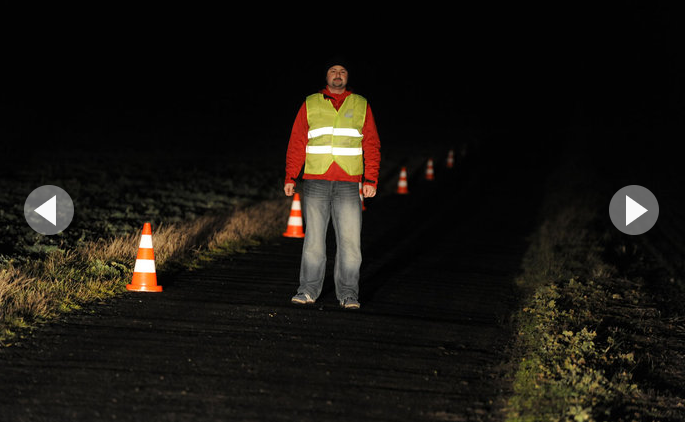
Wear a safety reflective vest with reflective tapes and secure the crash site with a safety triangle, if not already done. Notify the police immediately.

Do not move injured persons unless they are in immediate danger of fire or explosion.

Provide first aid to injured persons in a car accident, within your knowledge and ability. Stay on the scene until police arrive.

Highway assistance

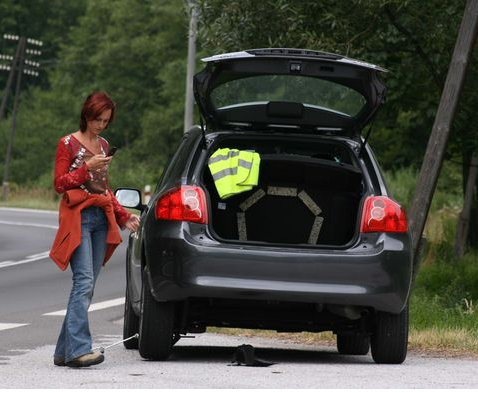
In the event of a vehicle breakdown, if there is no possibility of stopping in the parking lot along the highway, stop the vehicle in the stop lane (or SOS extension or resort) just off the edge of the roadway and switch on all four direction indicators.

Have all passengers leave the vehicle on the right and away from the car and lane. Do not stand in the lane!

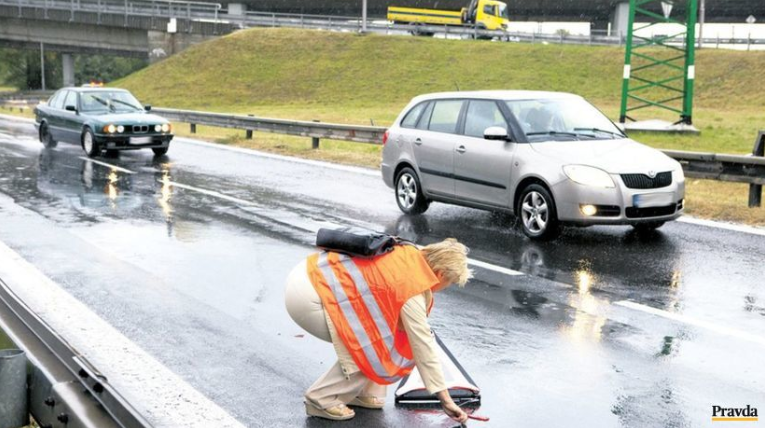
Wear a reflective vest with reflective material and place a safety triangle at the prescribed distance to mark a stopped vehicle (the recommended distance is 100 meters on the highway).

Whether or not you have a subscription, call the on-the-go help desk.

In case the driver is unable to remove the car from the highway due to a breakdown of the vehicle, a specialist service will be responsible for this.

Keep your distance !!!

Driving too short a safety distance is statistically one of the most common causes of road accidents. Most of this pattern is also related to speeding.

According to the traffic rules of the Law on Traffic Safety (ZOBS), the driver is obliged to keep the vehicle at such a distance from other vehicles in traffic that, given the speed of movement of the vehicle and other traffic circumstances, it does not cause danger and does not interfere with other drivers.

Most drivers drive too close because of their lack of knowledge about the length of their vehicle’s stopping distance about changes in speed and road conditions.

What is a safe distance?

The safety distance is the rule: a driver driving another vehicle in the same lane must drive at a distance not less than the distance traveled by that vehicle in two seconds unless otherwise specified by a traffic sign.

On wet pavements, the distance should be increased to four seconds and in winter conditions to a minimum of 6-8 seconds.

A year and a half with mandatory reflective elements

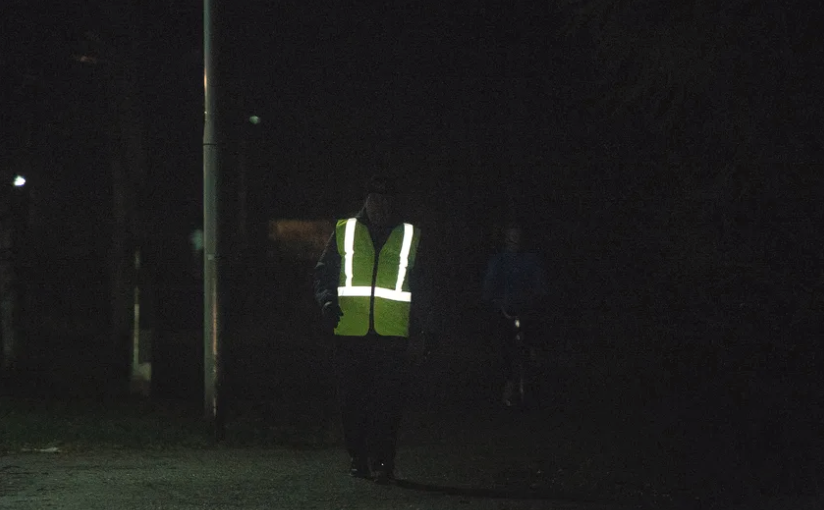
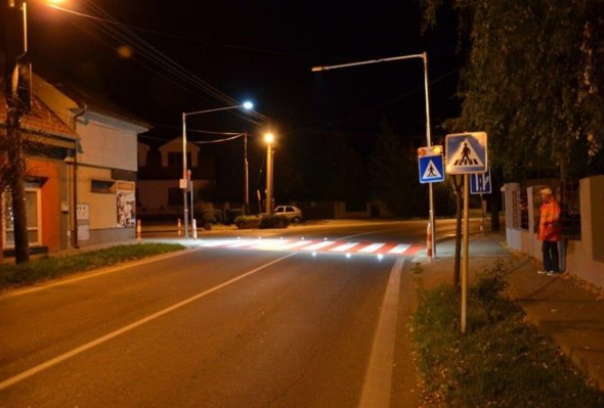
On Sunday it will be a year and a half since pedestrians were to start shining on our roads. Literally, on February 20, 2016, the following formula was added to the Road Traffic Act: “If a pedestrian moves outside the village on a side or roadside in a place not illuminated by public lighting, he/she is obliged to wear retro-reflective material positioned so as to be visible to other road users.”

Light Up

It’s shortly before 9 pm when we pass the sign indicating the end of Prague. We decided to see how the Czechs comply with the law. True, all kinds of reflectors, belts, and clothing strips are grim autumn and winter. But the law applies without exception even at the end of a capricious summer. Is it already dark or not? This is what we say when approaching from Radotín towards Černošice – we meet a completely unlit runner. The legislation defines reduced visibility by not recognizing other vehicles, people, animals or objects on the road. It is not only about darkness, dusk or dawn, but also heavy rain, snow, and fog.

From a statistical point of view, the new regulation looks promising. Perhaps in the first year of validity, the number of killed pedestrians at night outside the village decreased from 37 to 31, which is almost a fifth decrease. A massive communication campaign, warning of the possible consequences of invisible night walks, certainly played its role.

The fact that the reflective components make sense is further supported by other harsh numbers: “After the law came into effect, we registered a total of 24 killed pedestrians with reduced visibility. In seventeen cases, the pedestrian was not demonstrably reflective,” says Petr Habenicht of the Police Presidium.

Rather a warning

“Yes, I know I should have a flashing tape. I wear it in winter, but it is not completely dark yet,” the runner we meet at the outskirts of Hlásná Třebáň grows in front of us. At least she wears a distinctive red T-shirt – but it wouldn’t help her before the law.

“After the introduction, we announced that we would especially explain to pedestrians the meaning of this duty. At the same time, however, we pointed out that, as the end of the year, which tends to be the riskiest to pedestrians, is approaching, police officers will also apply block fines for non-compliance,” explains Habenicht.

However, not only unmarked pedestrians but also drivers behave dangerously in the dark. “Classic halogen headlamps have a range of up to 100 meters, which should be adjusted to speed. If we do not, we often do not have enough room for an adequate response. At the last minute we are not able to react to the obstacle,” says Besip’s head Martin Farář.

We know

Another problem that annoys night roads is the poor lighting of many cars. As we head to the destination of today’s journey, we chose the village in style.

Darkness near Beroun, we see for ourselves. Although traffic is minimal, the percentage of squinting or squinting cars is significant. The risk is not only for pedestrians but also for the surrounding drivers, which can unpleasantly dazzle. Beware of them, we say to each other as we approach an intersection somewhere in the fields. Five young people with a dog walk along the verge. Reflective elements nowhere, at least have well visible white T-shirts and hold much to the edge. On the right side of the road. “I know we should have tapes. But we didn’t take them with us. But we are cautious,” one of the girls surprised us with an apologetic tone. When we leave, the crew moves off the road. By law, pedestrians are allowed to walk along the side of the road or at the edge of the road no more than two side by side. In low visibility, they even have to go behind – that is if it is not a light-marked, organized formation. However, according to Besip’s experience, rainfall is regularly caused by ignorance of the rules. Pedestrians in low traffic do not care where to cross. “They go red, run off the crossing, and even across the highway. At night we are more anonymous and more often sin on rules, which can have tragic consequences,” says Farář. A repeated problem is just walking on the wrong side of the road. “The car thus arrives at the back of the infantrymen and therefore cannot react adequately. They also commonly believe that when they see the lights, the car sees them. This is a great misunderstanding and underestimation of the situation! ”Warns the pastor.

Where are they?

When we arrive in dark Tman, it is half-past eleven and there is no one on the roads. , Berounsko has fallen asleep and we are slowly going home. We are already wondering if it was necessary to make such a halo around the elements when nobody walks on the roads. Although, the strap or reflector does not have anyway. We drove the lanes over sixty kilometers and did not hit pedestrians with reflective elements.

We are now approaching the highway when we see the bright glare of the reflective tape at the edge of the Court. It’s hard to say what a grim figure in dark clothes is doing here. To meet her a little further behind the curve, we would probably be surprised without the tape – of course, it is on the wrong side, the right side of the road.

It is surprising how little we see reflective elements on Czech roads. Statistics show that their benefits are indisputable. However, it will probably take a lot of effort before the Czechs accept them.

Reflective elements from the perspective of law

As we wrote at the turn of the year, the obligation to wear reflective elements has brought a new balance between driver and pedestrian from a legal perspective. “There has been a situation where not only the driver has to focus on driving, but the pedestrian is obliged to be seen,” describes attorney Jan Černý. Before the effect of the amendment infecting pedestrians to become visible for the police and hence the prosecutor, the primary culprit of a potential collision was the driver. “I have also experienced cases of the accusation of a chauffeur, when a pedestrian walked on the wrong side of the road, was darkly dressed and even under the influence of alcohol,” explains Černý.

Experts agree that in the investigation of traffic accidents, it focuses not only on the driver but also on the possible proportion of pedestrians. “We have a duty here and it is assessed whether the pedestrian had a reflective element. If a driver with a reflective element had seen it, the driver could be fully developed,” Jan Černý continues.

Therefore, it may happen that a pedestrian who is hit by a car without a reflector will not get any compensation. “In every individual case, we examine whether the element has been used, how it was placed, and what its reflective area was,” says Libor Beran of Allianz, pointing out that if the pedestrians are to blame, it may even be he who pays.

About reflective elements with Martin Farář from Besip

It is a year and a half of our duty to wear reflective elements. How do you perceive the introduction?

When we look at the year-on-year statistics for 2015 and 2016 outside the municipality where the obligation applies, we have seen twenty fewer deaths in reduced visibility. Moreover, after a long time, legislation and a large campaign came together, which was subsequently supported by police action to check that pedestrians wear the belts.

What about this year’s first half?

The trend continues, although in the first half of the year there were no major declines. However, we expect the main season of reflective elements and the most dangerous situations only at the end of the calendar year.

There was also talk of introducing the obligation to wear reflective elements even in unlit parts of municipalities.

From the beginning, we have been for nationwide introduction in places where there is no public lighting. This would be true, for example, in the peripheral parts of municipalities where there is often no pavement. Reflective items should be worn to increase the chances of a pedestrian seeing.

The introduction was accompanied by an extensive campaign. To be continued?

Definitely. We will also continue to cooperate with the traffic police, which will again make available a large number of reflective items. The goal is to reach as many people as possible. We do not want this to be based strictly on enforcement, but for the state to bring something – elements will be distributed and we will repeat why it is important to use them. It should not be based on repression.

On the legs and wrists

If you are on the road in poor visibility, we recommend using two straps: ideally one forearm and the other over the ankle. “We always put them on the right side, because outside the villages where there is no sidewalk, we walk in the opposite direction, ie the right side of the road,” recommends Martin Farář, head of Besip. “The lights of an incoming car shine first in the lower half of the body, so it is good to have the tape as low as possible. It is important to avoid having our clothes covered, especially when we put it on the wrist,” he adds. Although the law requires use exclusively outside the municipality, we recommend this element whenever you are in unlit areas.

How to choose a reflector

Hundreds of reflective elements are available on the market – the differences in visibility are abysmal. Which one to choose? “The guideline for choosing a quality material can be a CE quality certificate or a brand of a respected manufacturer. When it comes to clothing, such as a reflective vest, there should also be information about how to wash and how many wash cycles the material will last without changing its properties,” advises Zuzana Orlichová. It is also advisable to test the product before purchasing. On the market, there are products with a lower reflectance than may seem at first glance and not every tape is well visible after lighting. “We can measure the reflectance by using a camera with a flash, for example on a mobile,” says Lukáš Pejpal.
Mandatory equipment does not change

The mandatory equipment of the car does not change with the arrival of the new Traffic Act, as it is determined by another regulation. The spare wheel does not have to have every car and a reflective vest with reflective tape is included.

The panic around the color of the reflective vest is unfounded. The new law orders it to be used.

The new regulations on the mandatory equipping of vehicles came into force three years ago and were not changed by the new Road Traffic Act. It only determines how and when to use individual equipment elements on the road. This is particularly true of the reflective vest, which must be within a comfortable and fast reach of the driver. He should get out of the car dressed if possible. Owners of vehicles with xenon lamps do not have to have spare lamps, but they must not lack other bulbs used for the exterior lighting of the car. At least one of each species. The fire extinguisher does not belong to the mandatory equipment of the car in Slovakia, but it is necessary and recommended. Many modern cars might not burn completely if the driver had a fire extinguisher in their car.

Panic with vests

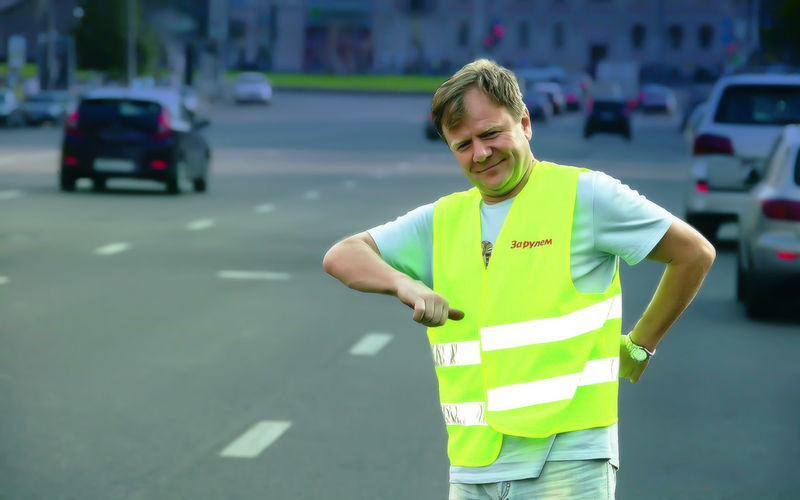
The new law imposes an obligation on the driver to wear safety clothing if he/she is on a road outside the vehicle during an emergency. Failure to comply can result in a fine of up to € 60.

No penalties shall be imposed for green or yellow-green. Although the new law provides that a driver may not wear a vest that is interchangeable with safety clothing used by armed forces or armed security forces, the type and color of the reflective vest are determined by a decree of the Ministry of Transport on compulsory car equipment.

Police vests have an inscription on the back and a different fastening than the vests available on the market, so there should be no confusion. “We chose other vests for police officers, which have several reflective elements, are shorter and designed to have access, for example, to weapons,” said Eva Uhliarikova of the Ministry of the Interior. The reflective vest in the car is designed to give visibility and protection to the driver of the car, so its use will be monitored.

There is not always a reserve

The spare wheel to be used in the event of a puncture must have only cars that not equipped with a special adhesive kit or Runflat tires that allow the puncture to travel. This also applies to the jack and wheel removal tools. Tires with Runflat technology have long been used by BMW vehicles. Their owners do not have to carry the spare wheel until they have ordinary tires on their car. “We have no problem with the Slovak regulations because it is homologated by the manufacturer and we use Runflat throughout Eastern Europe,” confirmed Milan Stupka of the BMW Group. Since February, winter tires on snow and ice are mandatory. This does not apply to the spare wheel, which may not have a winter tread pattern and can be used in an emergency even on snow and ice.

The late arrival of winter, along with the new traffic law, should force drivers who have not used these winter tires to buy or not to drive after the snow. In the tire repair shops after the first of February, there was no increase in interest, even though the spring break of the Bratislava region was approaching and it is snowing in the Orava and the Tatras. “Those who want to use winter tires have bought them,” said Marin, tire service owner. Some sizes of winter tires are a problem to get because they just sold out. In that case, the alternative dimension of the technical license must be looked at.

Reflective vests designed to protect pedestrians

Without reflective waistcoat or reflective tape either to the store or to the neighbor. This may look like this year in Slovak villages and towns. In an amendment to the Road Traffic Act, the Ministry of the Interior suggests that pedestrians walking along the road should wear protective features in poor visibility if they do not walk on the sidewalk. Today they need to have reflective fabrics on their clothes only when they are outside the village.

With this measure, the Ministry wants to prevent traffic accidents, which usually end to the detriment of pedestrians. Of the 442 accidents caused by pedestrians last year, up to 384 have occurred in the village. If they do not have them, they can be fined 60 euros.

“I consider it stupid. In my opinion, it would be sufficient if only cyclists were to have a reflective sign. I cannot imagine that I should always wear such a vest. And there is also a financial factor. In our country, there are ten-member households who live in poor social conditions. I can’t imagine buying a reflective vest for everyone in the family,” says Silvia Juhászová, a 33-year-old resident of Čamoviec in the Lučenec district.

Thirty-seven-year-old Fiľakovčan Tomáš Csík understands the effort to protect pedestrians but does not agree with fines if they do not have reflective elements. “In the evening I use to walk a few meters to the neighbors. I am careful about cars. When any goes, I step aside to keep my eyes off. I cannot agree with the draft of such a law,” said 64-year-old Ján Horňan from Trebeľovce near Lučenec.

The mayor of Liptovský Ján Juraj Filo cannot imagine how he explains the new duty to tourists. The village is visited annually by about 500 thousand. “If a foreign visitor gets such a fine for something, he won’t come anymore,” says Filo. The mayor of Štrba, Michal Sýkora, says there is no need to worry about the reflective elements. “I also try to explain to young people that it is not just a reflective vest, and these reflective elements can also look modern.”

The ministry points out that stricter rules for pedestrians have necessitated a negative trend in the number of accidents in which the most vulnerable road users die or suffer serious injuries. Last year, according to police statistics, 15 people were killed in roads, two of them children. “Pedestrians caused a total of 442 traffic accidents last year, of which 384 were in the village,” police spokeswoman Denisa Balogh said.

On the side of stricter regulations is also favored traffic analyst Jozef Drahovský, according to which drivers do not have many possibilities to deal with unmarked pedestrians or cyclists. “They only have to anticipate and think that there may be someone on the road,” he says, not even street lighting helps in dense fogs.

Marián Čabák from the School of Safe Driving says that people are often reluctant to invest even a few euros in reflective things unless they are explicitly ordered to do so. The price for a reflective vest ranges from three euros upwards. Similarly, there are other elements, as the law permits them. They can also be reflective belts on the sleeve, smileys on school bags or various other iron-on transfers.

If the proposed amendment passed, the mandatory labeling in the municipality would become the same offense as the non-marking of a pedestrian outside the municipality today. This is subject to a fine of up to EUR 60.

Slovakia is not the only country trying to protect pedestrians with protective features. Czech transport police chief Tomáš Lerch said last week that he wanted to create a discussion on mandatory reflective elements for all who would go on the road at night. He also wants to find a compromise whether it should be in the village, outside or everywhere.

“Without reflex, you are like a gray spot”

“It doesn’t matter if you look like a Christmas tree, only you can see,” says Camilla Fri-Bergström at the Raseborg police. Without reflex, you blend into the surroundings, at least sixth-graders in the Katarina School in Karis know.

The darkness came so suddenly that Freija Kauranen did not react. By the next week when it seals further, she will dig out reflex tapes and trays. Also, she sometimes wears a reflective vest sew on reflective tape.

“But only when mom forces,” she adds whispering.

Here at the Katarina School in Karis, it is obvious to use reflex. Sixth graders Freija Kauranen, Linus Wiklund and Arvid Hanell do not show the slightest hint of attitude problems when it comes to being safe in traffic. It’s cool to be safe. But what about the external requirements?

“The use of reflex is a matter of course, but it should not look anyhow,” says Kauranen.

Both Arvid Hansell and Linus Wiklund are both good users of reflective vests and other smaller reflexes. What one looks like is secondary when it is the issue of security.

It is dark after all so no one sees one.

At the Katarina School, the attitude is admirable, but everywhere people are not as positively inclined to use reflexes. For older Constable Camilla Fri-Bergström at the Raseborg Police, darkness is a yearly recurring theme, if possible even higher than for the rest of us.

“Situational speed. Deer. Moose. Dark. Driving lights. Schoolchildren. Reflex. Raceborg. My thoughts this morning.”

So Fri-Bergström writes on the Raseborg Police’s Facebook page one Tuesday morning in October. The rain, the fog, and the darkness have made their way into classic October manners, and this is evident in the traffic.

The children’s reflections are extra important to think about, she says – the family’s smallest can behave erratically in traffic. Here, the constable points to parents’ responsibilities. Regardless of whether or not reflex is considered a bargaining factor, it is a must for anyone who wants to be different from the environment.

It doesn’t matter if you look like a Christmas tree, only you can see.

Darkness is a national phenomenon but touches on a local level. In Raseborg, taxi drivers who pick up school children in the mornings have wanted all children to wear reflexes to appear better.

But also as an adult, it is important to think about your safety. Fog and bad before, like the dark, affect how you look – and street lighting does not help the situation significantly, although many believe it. Something should be flashing for you to be seen, says the constable.

Without a reflex, you often become a small, gray spot in the surroundings.

A citizen informed the police of an adult who was cycling along the country road – without reflex. According to Camilla Fri-Bergström, this is a common attitude problem – you think you will be seen but the reality is another. In the darkness only what is illuminated by the headlights.

The truth is also a crunch in numbers. The driver of a car with turned on dipped beams can see a pedestrian at an average of fifty meters distance. If the pedestrian wears reflective clothing, they are visible at a distance of 350 meters. With the main beam turned on, the reflex is even more efficient. The law states that pedestrians should use reflex – yet half of the Finns do not, according to data from the Swedish Transport Safety Agency.

“This applies to common sense: use reflexes for others in the traffic to see you,” says Camilla Fri-Bergstrom.

Cyclists and pedestrians can also find it difficult to see in an illuminated urban environment. Immense windows, shadows from shrubs and trees as well as various light sources can affect the field of view. Dirty windshields and bad lanterns can further aggravate the situation.

Since 2003, it has been mandatory by law to use reflexes also in an enlightened urban environment. In a new proposal for the Road Traffic Act, however, the reflex clause shines with its absence – something that caused the Swedish Transport Administration to shudder.

“The statutory code is also a guideline for media and education, private individuals and municipalities. Nobody has been disturbed by the rule for 35 years,” says CEO Anna-Liisa Tarvainen in a press release.

And even though the law recommends the use of reflexes, the one who does not avoid any penalties is met.

“Toothless,” says Ola Lindholm from the insurance company Lokaltapiola South Coast.

“If you are hit, it does not matter whether you wear reflex or not, when looking for potential substitutes. Circumstances determine: has the person gone on the right side of the road? Everyone must follow the rules in that regard,” says Ola Lindholm, whoever goes on the wrong side of the road may have been involved and caused the accident.

Fortunately, such accidents are relatively few and point out that generalizing rules are difficult to give when nothing is black and white.

Ola Lindholm himself thinks that a single reflex is not worth much – here is the reflective vest that applies.

It is quite lean with a reflex that dangles at knee height when moving on a dark road.

Many walkers and cyclists without a reflector in the autumn dark

On the streets and roads of Lappeenranta, here and there, you come across spots of joy, people with fair-looking reflectors.

The first quarterback in downtown Lappeenranta on Sunday evening predicts poor performance in reflector spotting.

Several dark-skinned pedestrians are walking down the street from the park, which the driver often notices until the last drop.

Few bicycles have lights when they flash.

Wouldn’t it be good for an evening stroll downtown not to hang a reflector hanging around? On the other side of Korkkitehtta, the beach is better.

The Salli Kortelainen of Lappeenranta can be distinguished from afar since the anorak’s front covered by a reflective vest with reflective tape. It came from a hint as a gift from a man.

One would not think that Taipalsaarentien would be crossed at night without a reflector. There is no danger of cars on the jogging path here.

The reflective vest is not only for personal protection but also for a child.

In Kortelainen’s opinion, behind the wheel, you notice pedestrians and cyclists squinting in reflectors.

Miniature Schnauzer Hampus has a red light that he has come up with from far away. The dog still alienates the reflector, but Maiju Nurmela believes that it will be used.

The reflector is convenient as the light can be recharged on the computer.

The reflector should also be flashing. This function is not used because it seems that a flashing light would cause migraine.

Nurmela has equipped his dog for a walk on a dark November evening better than himself.

You have to invest in your reflector. Today we still have to trust that it will be enough for the dog to be noticed first.

Cyclist in the dark

Around Tirilä and Lapvesi the driver is startled. From somewhere on the left side of the road, a dark-skinned bike crosses the road again.

Doesn’t a young man realize what kind of danger he exposes himself to?

Expected bright spots appear in the direction of Hakal and Lauritsala. Powerful reflective vests with reflective material make joggers stand out from the crowd.

In the meantime, downtown walkers have also changed. In addition to the traditional hanging reflector, Tuire Hakasen has reflective stripes on both wrists.

These are easy to take with the door handle when going out for an evening stroll. It is just hard to know whether these appear.

Yes, they are. Hakanen is easy to spot both in the twilight of the street and on the sidewalk.

Reflective Belts Aren’t Needed In Daylight

The standard-issue Army reflective belt, formally known as “Belt, High Visibility,” is one of the most enduring symbols of the Global War on Terror. It is also the most indisputably reviled piece of gear in any US service member’s kit. Don ‘t let Russian spies or Urban Outfitters convince you otherwise: the reflective flat might be the aesthetic version of a “Kick Me” sign.

Yet despite the previous requirement by the Army Safety Program that all U.S. soldiers are only required to don these heinously brash accessories during nighttime road operations, the use of reflective belts sew on reflective tape in the daylight somehow persists.

Luckily, Secretary of the Army Mark Esper is here with a shocking, yet brilliant idea: Maybe you don’t need a reflective belt in broad daylight.

That’s at least the underlying message in one of the several new directives signed by Esper as part of the service’s ongoing campaign against bureaucratic time-sucks, per Stars and Stripes:

This month’s memo, the first of 2019 in the series, amends the Army safety program policy to state that the service “does not require the wear of the reflective training belt or reflective vest during daylight hours, or while conducting physical training on closed roads or dedicated Physical training routes.”

The change appears to highlight the glaringly obvious — that a chair to increase a soldier’s visibility to drivers of cars and other vehicles on predawn or nighttime runs would not normally be needed in broad daylight or where vehicles generally can’t go.

Congratulations to Mark Esper for taking the world’s dumbest, pettiest safety requirement outback and unloading two barrels of logic into its rotten little heart. Now get Marine Corps Commandant Gen. Robert Neller to do “no hands in your pockets” next.

Flagger Safety 101

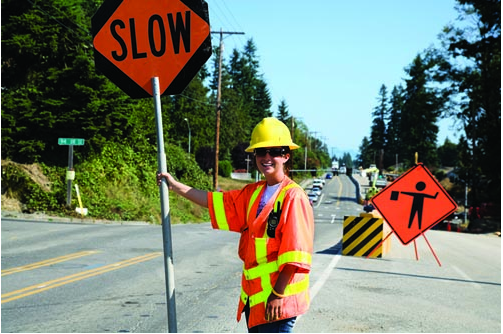
Workers who help control the flow of traffic in work zones are at particular risk of injury or death. According to the Center for Construction Research and Training, also known as CPWR, flaggers’ safety risks include motorists driving at high speeds and aggressive Drivers.

Although working as a flagger is dangerous, workers can take steps to make sure they are seen by drivers. CPW notes that flaggers should wear high- visibility clothing. If working at night, add a reflective vest with reflective tape. Workers also should wear long-sleeved shirts and pants, a hard hat, and other clothing designed for adverse weather.

Also, according to CPWR, flaggers should follow some do’s and don’ts when working.

Do:

Pay attention to the surrounding conditions.

Have an escape route plan in case of an emergency.

Stay in communication with other flaggers.

Don’t:

Stand within a lane of open traffic.

Use hand signals that conflict with traffic signals.

React to aggressive drivers.

Stand in the shade, around a sharp curve or over the crest of a hill.

Listen to music or use earphones.

Turn your back to traffic.

A project that regulates motorbikes foresees 3,000 permits, standardization, and areas of operation

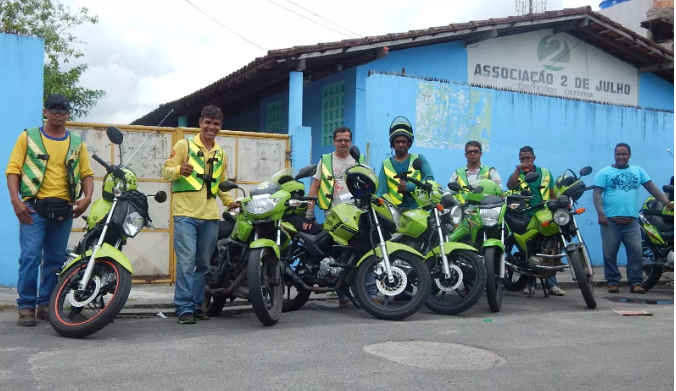
At the motorcycle taxi station set up eight years ago by Marisérgio Melo, 33, in Vale das Pedrinhas, rules must be followed. No sandals, no working without a helmet or no reflective vest. The price of the race is fixed: within the neighborhood, any route costs $ 4; further afield, it increases. “Even Iguatemi gives $ 10,” he says. And the ten motorcycle taxi drivers who work there need to walk the line. “You can’t drink, you can’t get high. If you take a drug to give someone takes eight days suspension,” says Marisérgio.

He and his colleagues are among the approximately 5,000 motorcycle taxi drivers in Salvador who have been waiting for years to regulate the activity. If the executive bill, which is due to reach the House on Wednesday, is passed, they will have to comply with new rules.

The MAIL had first-hand access to the points discussed by the Municipal Mobility Secretariat with the category for regulation. Among them, highlights for the maximum age of five years of the motorcycle and minimum of 21 for the driver, the standardization of the vehicle in yellow, two years of qualification, training, and a limited number of permits: 3 thousand.

The rules, which follow the authorization of passenger transport on motorcycles in the city, will be discussed between the city and the category definitively within 180 days after approval by the legislature, during which there will be further discussions in public hearings. From there, professionals will have a deadline to comply with the rules and then start working legally.

The initial idea is for Salvador to authorize the accreditation of 3,000 riders – an average, according to IBGE data, of one motorcycle taxi driver per 1,000 inhabitants. “We are talking to the three associations in the city. Today, 5,000 motorbikes operate because people are operating without a license,” says Semob holder Fábio Mota.

The motorcycle taxi drivers that will be accredited, if the law is approved, will be distributed between 200 and 300 motorcycle taxi points that will be created, subdivided by areas. Each point will have a leader, kind of area delegate, who is responsible for interacting with Semob. Motorized taxi drivers registered at one point will not be able to act in others. Nevertheless, the user of the service can perform long runs if desired.

The motorcycle taxi driver Luiz Carlos de Souza, 56, who has been working for almost two years at a point in Rio Vermelho, says most races are in the region itself. “We take the people who jump from the bus to the college, to the slopes that go to the Northeast, Santa Cruz, where the buses don’t go up,” he says.

Even so, some do longer runs. Some of the professionals who work in Vale das Pedrinhas report that they have already races to neighboring cities.

The president of the Bahia Motorcyclists, Motoboys and Mototaxists Union, Henrique Baltazar, said that he discussed points of the project with the portfolio and with the Chamber Commission and Transportation, chaired by Councilor Euvaldo Jorge. “If the regulation is made according to the negotiation we made, we accept. What can’t be a lot of change,” he says.

According to Baltazar, before talking about 3,000 permits, the city had stipulated 3,500 licenses. “This number of 3,500 is reasonable for us because we know that today there are 5,000 runnings, but many people will not fit the requirements,” he admits.

Osvaldam Tupyassu, president of the Association of Motorcycle Riders in Salvador, finds the number insufficient and draws attention to fake motorcycle taxi drivers. “We know there are many who say they are, but not really, do not depend on it as a profession. I think it’s not enough, but if you have the regulation, you can ensure it,” he assumes.

Also according to Tupyassu, there have been talks with councilors who have studied the situation in other cities that have already regulated the activity.

As with vehicles that are allowed to drive as taxis, motorcycles will also have to be standardized. They will have yellow paint, identification as a motorcycle taxi and will need to have a maximum of five years of use. They should also have between 125 and 160 displacements, plus safety equipment. The Taxis and Special Transport Coordination, linked to Semob, will be responsible for this standardization.

They will be positioned so as not to disturb bus or taxi stops. “We are mapping and establishing the points according to the demand of each location. Regulation has to standardize and make them complementary, not one competitor of another,” explains Fábio Mota.

Henrique Baltazar, from Sindimoto-BA, says that the points need to be close to the bus – after all, they often catch passengers who jumped or take a bus afterward. He also charges that permits be issued in the name of the motorcycle taxi driver and allowed to work with a motorcycle that is in someone else’s name, such as a relative. “Sometimes the motorcycle taxi driver doesn’t have the bike in his name. If this issue is resolved, the project is not so bad,” says Baltazar.

Even before regulation, there are already standardized motorcycle taxi drivers. This is the case of those who work with the shirt of the Association of Professional Motorcyclists of the State of Bahia. Gibson Campelo, 43, started running standardized in February this year. “When the customer sees it, they call us. The inspectors also know that we are serious, we have a document, everything is fine,” he says. On Gibson’s shirt, in addition to a hallmark and Semob, is his code with the association.

House must vote bill in the second half

According to the Mayor, City Councilor Paulo Câmara, if the Executive bill reaches the House later this April, the matter is expected to go to a plenary vote in the second half of this year.

“This is a project that has been guided by Casa for almost two years. We will wait for this project that will come from the Executive, a partnership, which is already more or less shaped according to what the House has been discussing as well. When the bill arrives, the House will propose four or five public hearings to debate and put to the vote starting in the second half,” he said.

For the president, because 2016 is an election year, the situation should only be defined towards the end of the year. “If it wasn’t for the election year, we would do that before,” he said. According to the House, the bill will not immediately go to the vote because councilors will prioritize, in May and June, the vote on the Master Plan for Urban Development.

Bike accidents reduced by 56%

Accident reduction is a constant concern for road concession companies. In May Yellow, a road safety awareness campaign, Arteris Regis Bittencourt announces that it registered a 56% reduction in cyclist accidents in the 2017/2018 comparison.

But it is not only during the campaign that Arteris, one of the largest road concession companies in Brazil, with about 3,400 km managed, conducts actions aimed at road awareness and education. Some of them, such as Viva Ciclista, happen throughout the year. The initiative promotes educational actions aimed at cyclists who travel on the roads near the highways, especially on the sections with the highest occurrence of accidents. In addition to promoting good practices for safe behavior, it contributes to reducing the number of bicycle accidents on the highway.

In addition to serving residents who use the bike to and from work and schools in the Régis Bittencourt sections, Viva Ciclista also reaches athletes and groups that use the highway to practice the sport. “When we do awareness actions, we go to the edge of the slopes to talk to these people and teach them the right and least dangerous way to traffic safety. We also delivered the View and Be Seen kit with reflective jackets and flashlights that increase the visibility of the rider and collected data on the route and frequency of traffic on the highway,” says Arteris Operations Superintendent Ricardo Grab.

During meetings, company representatives share tips for pedaling responsibly. Check out some:

Always wear the reflective helmet. In addition to protecting, it also increases driver visibility

Traffic following the direction of the road and look for roads with fewer vehicles

Check the traffic conditions and highway climate

Wear light and reflective clothing

Make a checklist of equipment

Wear a reflective vest

Watch out for objects on the track

Watch out for curves

Sustainability and community support

Through its sustainability strategy and support to communities, Arteris supports the surrounding areas where it operates with environmental, awareness, road education, volunteering, culture, health, and sports support activities. There are several programs developed focusing on reducing deaths, accidents and minimizing social and environmental impact. Among his programs are Project School, Seal Friend, Live Environment, Live Cyclist, Live Motorcyclist, Health on the Ride and Wake Up Driver.