10 road rules you must follow this fall

Summer has said “no” to the sunny and warm day, giving the relay to the next season. In autumn, lower temperatures are often associated with ground frost, fog, and reduced visibility.

All road users must be prepared for difficult road conditions by more frequent fogs, rain and, as a result, on wet or icy roads. It is better to be prepared than surprised, so the police are bringing ‘ten’ useful tips that will help to drive safely and reach a happy destination.

1. The most common mistakes of pedestrians – sudden entry into the road from the sidewalk without looking around, poor estimation of the distance and speed of the vehicle, crossing off the passage (often even cross four lanes), underestimating reflective tapes on clothing.

The right response – to anticipate, to cross the road at designated locations, to avoid risky sections, not to climb over railings, not to risk. The obligation of pedestrians walking on the side of the road or on the edge of the road to wear reflective elements or wearing reflective safety clothing not only outside the village but also in the village in low visibility.

2. Police Recommendation – Use reflective elements on the side of the body that faces the road (not the shoulder). Reflective items should be placed best close to the knees and at waist level, on the shoulders, cyclists also on helmets and bicycles. Reflective stickers stick to shoe soles, bikes, skates, helmets, scooters, school bags, crutches or strollers. Children’s clothing, school bags, and accessories equipped with reflective and fluorescent safety features.

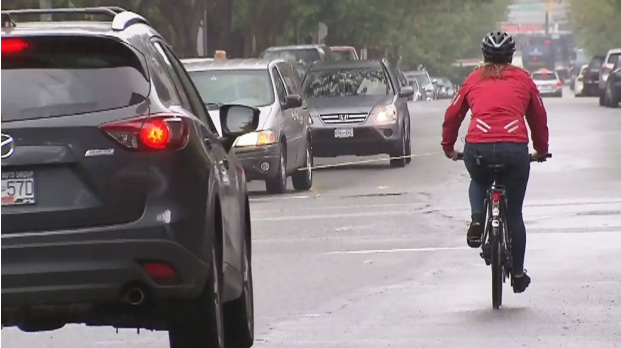
3. The most frequent mistakes of cyclists – without lights, without reflective elements, cycling outside the village without a helmet (under 15 years also in the village), on the wrong side of the road and driving in groups side by side and driving under the influence of alcohol.

The right response – to keep track of what is happening around you and always make sure of safe passage, to give you a visible and timely signal of your hands-on changing direction, use of helmets and protectors, reflective elements.

4. Police recommendation – if parents take a child on a bicycle trip, the child must always be in front of them to be able to influence their driving by giving them a warning. Care must be taken to ensure that his health is adequately protected – by a helmet, limbs, reflective elements on clothing. In case of bad weather (iceberg, snow) use other means of transport.

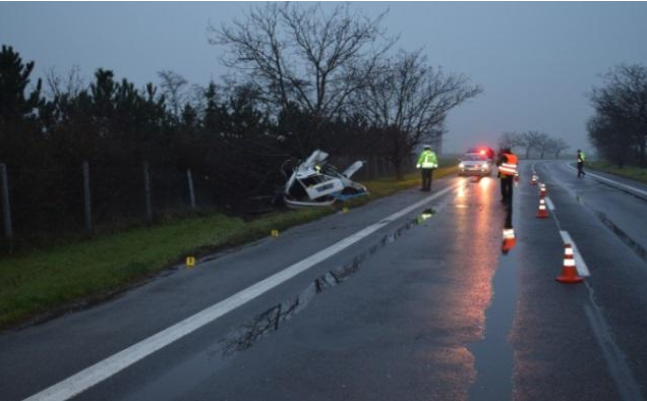
5. Aquaplaning – there is more water between the tire and the road than the tread can handle, the car “floats” and becomes unmanageable.

Correct response – leg out of gas, depress the clutch. Align the steering wheel until the tire touches the road. Hold the steering wheel with both hands and do not risk overtaking.

6. Fog – difficult driving conditions with reduced visibility, wet road.

Correct response – reduce speed, increase the distance between vehicles. Switch on the fog lights, while driving in the columns, the first and the last in the row are sufficient to avoid blinds of other drivers.

7. Beast – risk especially at night and in the morning, unexpectedly and unpredictably.

The right response – avoid the obstacle at high speed. The consequences of skidding may be greater than the collision itself, especially when driving on a motorway.

8. Agricultural machinery – dirty road from mud and leaves, increased risk of skidding.

The right response – anticipate, reduce speed, pay particular attention to preventing heavy machinery.

9. Fruit pickers – trees on the roads attract “pickers”, comfortable bikes on the road, bikes, running children and adults in dark clothes.

The correct reaction of drivers – increase caution, monitor the situation, reduce speed.

The correct reaction of pantographs – reflective vests, belts, caps, whatever makes them visible to the driver and ensures that their “vehicles” do not endanger others.

10. Police recommendation – in difficult weather conditions to predict in particular, adjust speed to weather and your abilities, monitor the situation especially around stops, schools and shopping centers, where the movement of pedestrians and cyclists is increased. Give them a preference where they have it.
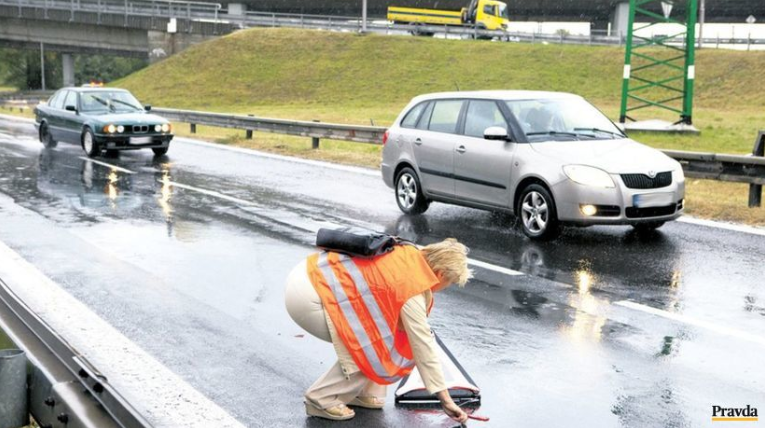
Mandatory equipment does not change

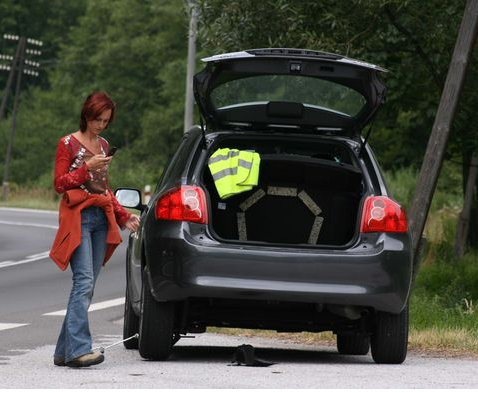
The mandatory equipment of the car does not change with the arrival of the new Traffic Act, as it is determined by another regulation. The spare wheel does not have to have every car and a reflective vest with reflective tape is included.

The panic around the color of the reflective vest is unfounded. The new law orders it to be used.

The new regulations on the mandatory equipping of vehicles came into force three years ago and were not changed by the new Road Traffic Act. It only determines how and when to use individual equipment elements on the road. This is particularly true of the reflective vest, which must be within a comfortable and fast reach of the driver. He should get out of the car dressed if possible. Owners of vehicles with xenon lamps do not have to have spare lamps, but they must not lack other bulbs used for the exterior lighting of the car. At least one of each species. The fire extinguisher does not belong to the mandatory equipment of the car in Slovakia, but it is necessary and recommended. Many modern cars might not burn completely if the driver had a fire extinguisher in their car.

Panic with vests

The new law imposes an obligation on the driver to wear safety clothing if he/she is on a road outside the vehicle during an emergency. Failure to comply can result in a fine of up to € 60.

No penalties shall be imposed for green or yellow-green. Although the new law provides that a driver may not wear a vest that is interchangeable with safety clothing used by armed forces or armed security forces, the type and color of the reflective vest are determined by a decree of the Ministry of Transport on compulsory car equipment.

Police vests have an inscription on the back and a different fastening than the vests available on the market, so there should be no confusion. “We chose other vests for police officers, which have several reflective elements, are shorter and designed to have access, for example, to weapons,” said Eva Uhliarikova of the Ministry of the Interior. The reflective vest in the car is designed to give visibility and protection to the driver of the car, so its use will be monitored.

There is not always a reserve

The spare wheel to be used in the event of a puncture must have only cars that not equipped with a special adhesive kit or Runflat tires that allow the puncture to travel. This also applies to the jack and wheel removal tools. Tires with Runflat technology have long been used by BMW vehicles. Their owners do not have to carry the spare wheel until they have ordinary tires on their car. “We have no problem with the Slovak regulations because it is homologated by the manufacturer and we use Runflat throughout Eastern Europe,” confirmed Milan Stupka of the BMW Group. Since February, winter tires on snow and ice are mandatory. This does not apply to the spare wheel, which may not have a winter tread pattern and can be used in an emergency even on snow and ice.

The late arrival of winter, along with the new traffic law, should force drivers who have not used these winter tires to buy or not to drive after the snow. In the tire repair shops after the first of February, there was no increase in interest, even though the spring break of the Bratislava region was approaching and it is snowing in the Orava and the Tatras. “Those who want to use winter tires have bought them,” said Marin, tire service owner. Some sizes of winter tires are a problem to get because they just sold out. In that case, the alternative dimension of the technical license must be looked at.

Reflective vests designed to protect pedestrians

Without reflective waistcoat or reflective tape either to the store or to the neighbor. This may look like this year in Slovak villages and towns. In an amendment to the Road Traffic Act, the Ministry of the Interior suggests that pedestrians walking along the road should wear protective features in poor visibility if they do not walk on the sidewalk. Today they need to have reflective fabrics on their clothes only when they are outside the village.

With this measure, the Ministry wants to prevent traffic accidents, which usually end to the detriment of pedestrians. Of the 442 accidents caused by pedestrians last year, up to 384 have occurred in the village. If they do not have them, they can be fined 60 euros.

“I consider it stupid. In my opinion, it would be sufficient if only cyclists were to have a reflective sign. I cannot imagine that I should always wear such a vest. And there is also a financial factor. In our country, there are ten-member households who live in poor social conditions. I can’t imagine buying a reflective vest for everyone in the family,” says Silvia Juhászová, a 33-year-old resident of Čamoviec in the Lučenec district.

Thirty-seven-year-old Fiľakovčan Tomáš Csík understands the effort to protect pedestrians but does not agree with fines if they do not have reflective elements. “In the evening I use to walk a few meters to the neighbors. I am careful about cars. When any goes, I step aside to keep my eyes off. I cannot agree with the draft of such a law,” said 64-year-old Ján Horňan from Trebeľovce near Lučenec.

The mayor of Liptovský Ján Juraj Filo cannot imagine how he explains the new duty to tourists. The village is visited annually by about 500 thousand. “If a foreign visitor gets such a fine for something, he won’t come anymore,” says Filo. The mayor of Štrba, Michal Sýkora, says there is no need to worry about the reflective elements. “I also try to explain to young people that it is not just a reflective vest, and these reflective elements can also look modern.”

The ministry points out that stricter rules for pedestrians have necessitated a negative trend in the number of accidents in which the most vulnerable road users die or suffer serious injuries. Last year, according to police statistics, 15 people were killed in roads, two of them children. “Pedestrians caused a total of 442 traffic accidents last year, of which 384 were in the village,” police spokeswoman Denisa Balogh said.

On the side of stricter regulations is also favored traffic analyst Jozef Drahovský, according to which drivers do not have many possibilities to deal with unmarked pedestrians or cyclists. “They only have to anticipate and think that there may be someone on the road,” he says, not even street lighting helps in dense fogs.

Marián Čabák from the School of Safe Driving says that people are often reluctant to invest even a few euros in reflective things unless they are explicitly ordered to do so. The price for a reflective vest ranges from three euros upwards. Similarly, there are other elements, as the law permits them. They can also be reflective belts on the sleeve, smileys on school bags or various other iron-on transfers.

If the proposed amendment passed, the mandatory labeling in the municipality would become the same offense as the non-marking of a pedestrian outside the municipality today. This is subject to a fine of up to EUR 60.

Slovakia is not the only country trying to protect pedestrians with protective features. Czech transport police chief Tomáš Lerch said last week that he wanted to create a discussion on mandatory reflective elements for all who would go on the road at night. He also wants to find a compromise whether it should be in the village, outside or everywhere.

What to consider when buying a life jacket for dog

It might be an odd thing to consider. Why does my dog need a life jacket? Can’t dogs swim?

We seem to think that our pets have retained all of their wild instincts, but the fact is that they simply aren’t true. Many dogs would have no better means to swim to safety in the event of a water-based emergency than we would. Therefore, your dog must be as well-equipped as they can be when venturing out into the great blue sea. Or just the nearby lake, even.

If you are looking to play it safe while boating, sailing, swimming, or playing near the water with your pooch, you should invest in a dog life jacket. Here’s what you should know if you want to buy a life vest for your dog.

Four things are critical in a good doggy life safety vest. The first is buoyancy. This is the jacket’s natural ability to float, which is a pretty important aspect of the life vest. You want to make sure that the vest can hold your dog’s weight to ensure its success. Dog life jackets are rated for weight, so check before you buy.

The next thing to consider is color. You want the vest to be a very bright color. In the event your pup is knocked overboard or lost in the water, this will make them easier to spot. Some even have reflective tape to catch the light better and make your dog more visible.

Strong handles will be the third important detail. If you have to haul your pet out of the water, ensuring that the handles can withstand the dog’s weight is a must. Test the handles before you bring your dog to the water. Make sure they can hold your pup’s full weight.

Lastly, you want to make sure the vest fits properly. This is as crucial with a dog as it is with a human child. An improperly fitting vest can be almost as dangerous as no vest at all. If you can, bring your dog into the store to make sure it fits both safely and comfortably. Check that your dog can sit and lie down while in their vest. If your pup is a bit on the heavy side, make sure nothing is being pinched or pulled, too.

Is a doggy life vest really necessary? Yes! Your dog should wear a life jacket on or near the water – as should you, and everyone on your boat.

While every dog should be properly equipped for safety, certain dogs must be given life vests with reflective materials. Dogs with low body fat such as the Greyhound, senior animals, and dogs with health or mobility issues should always be properly secured when going out into the water. They are our family members, after all!

“Without reflex, you are like a gray spot”

“It doesn’t matter if you look like a Christmas tree, only you can see,” says Camilla Fri-Bergström at the Raseborg police. Without reflex, you blend into the surroundings, at least sixth-graders in the Katarina School in Karis know.

The darkness came so suddenly that Freija Kauranen did not react. By the next week when it seals further, she will dig out reflex tapes and trays. Also, she sometimes wears a reflective vest sew on reflective tape.

“But only when mom forces,” she adds whispering.

Here at the Katarina School in Karis, it is obvious to use reflex. Sixth graders Freija Kauranen, Linus Wiklund and Arvid Hanell do not show the slightest hint of attitude problems when it comes to being safe in traffic. It’s cool to be safe. But what about the external requirements?

“The use of reflex is a matter of course, but it should not look anyhow,” says Kauranen.

Both Arvid Hansell and Linus Wiklund are both good users of reflective vests and other smaller reflexes. What one looks like is secondary when it is the issue of security.

It is dark after all so no one sees one.

At the Katarina School, the attitude is admirable, but everywhere people are not as positively inclined to use reflexes. For older Constable Camilla Fri-Bergström at the Raseborg Police, darkness is a yearly recurring theme, if possible even higher than for the rest of us.

“Situational speed. Deer. Moose. Dark. Driving lights. Schoolchildren. Reflex. Raceborg. My thoughts this morning.”

So Fri-Bergström writes on the Raseborg Police’s Facebook page one Tuesday morning in October. The rain, the fog, and the darkness have made their way into classic October manners, and this is evident in the traffic.

The children’s reflections are extra important to think about, she says – the family’s smallest can behave erratically in traffic. Here, the constable points to parents’ responsibilities. Regardless of whether or not reflex is considered a bargaining factor, it is a must for anyone who wants to be different from the environment.

It doesn’t matter if you look like a Christmas tree, only you can see.

Darkness is a national phenomenon but touches on a local level. In Raseborg, taxi drivers who pick up school children in the mornings have wanted all children to wear reflexes to appear better.

But also as an adult, it is important to think about your safety. Fog and bad before, like the dark, affect how you look – and street lighting does not help the situation significantly, although many believe it. Something should be flashing for you to be seen, says the constable.

Without a reflex, you often become a small, gray spot in the surroundings.

A citizen informed the police of an adult who was cycling along the country road – without reflex. According to Camilla Fri-Bergström, this is a common attitude problem – you think you will be seen but the reality is another. In the darkness only what is illuminated by the headlights.

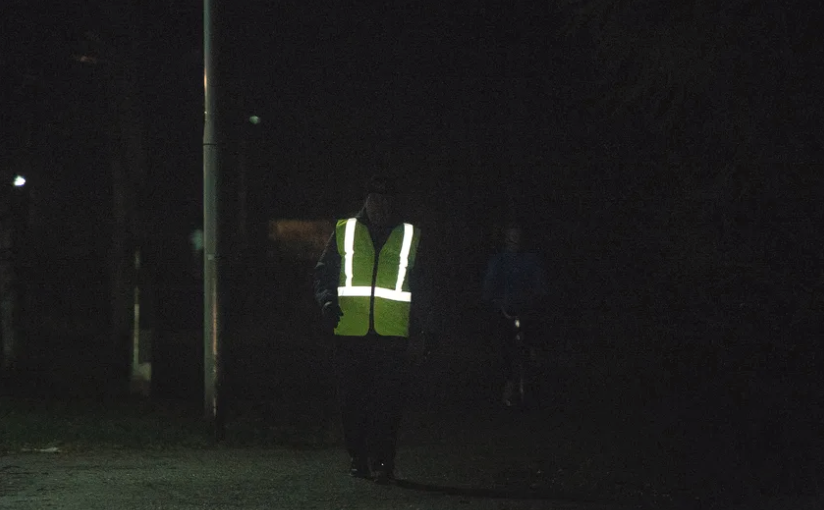
The truth is also a crunch in numbers. The driver of a car with turned on dipped beams can see a pedestrian at an average of fifty meters distance. If the pedestrian wears reflective clothing, they are visible at a distance of 350 meters. With the main beam turned on, the reflex is even more efficient. The law states that pedestrians should use reflex – yet half of the Finns do not, according to data from the Swedish Transport Safety Agency.

“This applies to common sense: use reflexes for others in the traffic to see you,” says Camilla Fri-Bergstrom.

Cyclists and pedestrians can also find it difficult to see in an illuminated urban environment. Immense windows, shadows from shrubs and trees as well as various light sources can affect the field of view. Dirty windshields and bad lanterns can further aggravate the situation.

Since 2003, it has been mandatory by law to use reflexes also in an enlightened urban environment. In a new proposal for the Road Traffic Act, however, the reflex clause shines with its absence – something that caused the Swedish Transport Administration to shudder.

“The statutory code is also a guideline for media and education, private individuals and municipalities. Nobody has been disturbed by the rule for 35 years,” says CEO Anna-Liisa Tarvainen in a press release.

And even though the law recommends the use of reflexes, the one who does not avoid any penalties is met.

“Toothless,” says Ola Lindholm from the insurance company Lokaltapiola South Coast.

“If you are hit, it does not matter whether you wear reflex or not, when looking for potential substitutes. Circumstances determine: has the person gone on the right side of the road? Everyone must follow the rules in that regard,” says Ola Lindholm, whoever goes on the wrong side of the road may have been involved and caused the accident.

Fortunately, such accidents are relatively few and point out that generalizing rules are difficult to give when nothing is black and white.

Ola Lindholm himself thinks that a single reflex is not worth much – here is the reflective vest that applies.

It is quite lean with a reflex that dangles at knee height when moving on a dark road.

Winter biker, here are easy tips for safe riding

Cycling is the best utility exercise, an ecological choice, and often, especially in cities, the fastest way to get from one place to another instead of standing in a traffic jam. So why take a running game into storage for the winter?

“You don’t have to do that,” says Aki Tyynelä, the store manager of Lahti Bicycle Maintenance.

With the right framework and attitude, cycling is a success all year long. Peaceful lists a few practical tips to make winter biking fun.

1. Pins Below!

When the thermometer drops to zero or the front side, it is advisable to replace the studs with tires that increase traction on ice and snow. Even tread grips will improve when a little air is released.

The bike is equipped with stud tires and more than a hundred.

“Tires can withstand many winters. If you drive a lot, they will pay off,” says Tyynelä.

2. Make sure you wear regular clothing – layering works best

Layered clothing helps to keep heat inside as well as moisture and the latter outside.

It is especially important to keep your hands warm. Wind gloves protect your hands from the worst wind.

3. The right helmet will always protect you

Statistics show that cycling in winter is no more dangerous than in summer. However, only a cycling helmet can protect your head no matter what the season.

4. Appear in the dark

The bicycle must by law, have light permanently attached to the bicycle. The front light must be light. The light should not be too bright, but not too dim.

Flashing light is not prohibited by law but is not recommended because flashing light usually indicates a hazard, not an oncoming vehicle.

The rear light is not mandatory, but the red light on the back significantly improves visibility.

Good reflectors ensure motorists can detect the cyclist.

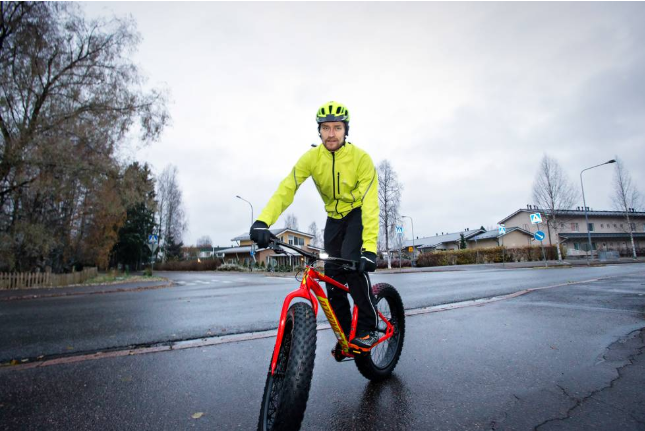
Pedal reflectors are not mandatory, but the bike must have side reflectors or reflective tires. Also, the cyclist should wear reflective clothing, like reflective vest sew on reflective tape or reflective jacket to improve your visibility in the night. This way the cyclist can be seen well when crossing the road.

Many walkers and cyclists without a reflector in the autumn dark

On the streets and roads of Lappeenranta, here and there, you come across spots of joy, people with fair-looking reflectors.

The first quarterback in downtown Lappeenranta on Sunday evening predicts poor performance in reflector spotting.

Several dark-skinned pedestrians are walking down the street from the park, which the driver often notices until the last drop.

Few bicycles have lights when they flash.

Wouldn’t it be good for an evening stroll downtown not to hang a reflector hanging around? On the other side of Korkkitehtta, the beach is better.

The Salli Kortelainen of Lappeenranta can be distinguished from afar since the anorak’s front covered by a reflective vest with reflective tape. It came from a hint as a gift from a man.

One would not think that Taipalsaarentien would be crossed at night without a reflector. There is no danger of cars on the jogging path here.

The reflective vest is not only for personal protection but also for a child.

In Kortelainen’s opinion, behind the wheel, you notice pedestrians and cyclists squinting in reflectors.

Miniature Schnauzer Hampus has a red light that he has come up with from far away. The dog still alienates the reflector, but Maiju Nurmela believes that it will be used.

The reflector is convenient as the light can be recharged on the computer.

The reflector should also be flashing. This function is not used because it seems that a flashing light would cause migraine.

Nurmela has equipped his dog for a walk on a dark November evening better than himself.

You have to invest in your reflector. Today we still have to trust that it will be enough for the dog to be noticed first.

Cyclist in the dark

Around Tirilä and Lapvesi the driver is startled. From somewhere on the left side of the road, a dark-skinned bike crosses the road again.

Doesn’t a young man realize what kind of danger he exposes himself to?

Expected bright spots appear in the direction of Hakal and Lauritsala. Powerful reflective vests with reflective material make joggers stand out from the crowd.

In the meantime, downtown walkers have also changed. In addition to the traditional hanging reflector, Tuire Hakasen has reflective stripes on both wrists.

These are easy to take with the door handle when going out for an evening stroll. It is just hard to know whether these appear.

Yes, they are. Hakanen is easy to spot both in the twilight of the street and on the sidewalk.

A new training ground for safe road traffic donated by EKO petrol stations

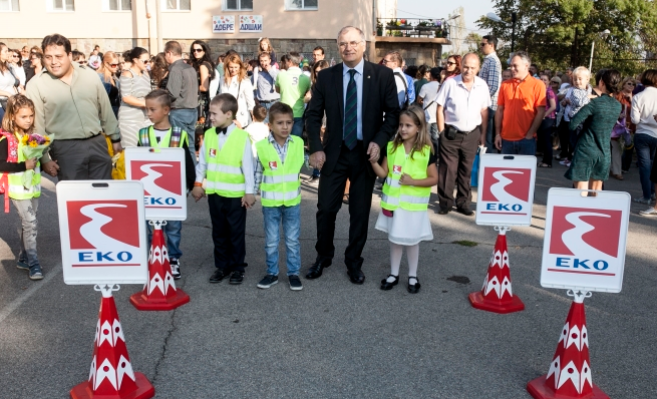
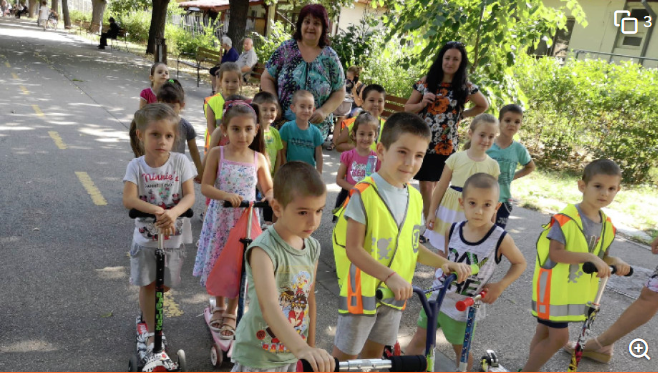
The good mood of the first-graders was enhanced by the introduction of their new road safety training ground.

The facility is a donation from EKO Bulgaria and is an expression of the company’s long-standing traditions to familiarize the youngest road users with the rules of road safety.

The site is 10×4 meters in size and is a small town whose streets are equipped with road signs, pedestrian paths, and traffic lights. In addition to becoming a favorite playground for kids, the playground’s main function is to educate and prepare them for the challenges of the road environment.

The Executive Director of EKO Bulgaria Georgi Deyanov is pleased to participate in the official opening of the new school year. He addressed the first graders with the words: “The road ahead is a long way in both literal and figurative sense. For this reason, it is extremely important that you are well versed in traffic rules along with this and all other roads. Good luck!”.

After the introductory ceremony, Mr. Deyanov personally led the first students to the newly opened training ground. With his help, they made it through all the makeshift intersections and made an excellent demonstration to their peers.

The first-graders also received many practical and educational gifts, such as reflective vests, a safe road guide for Class Hours, greeting cards and color pencils.

Children from Vidin celebrated the road safety day

Under the slogan “Life is an advantage,” the children from Zornitsa Kindergarten in Vidin toured the park of Vidin and crossed the street, acquainted with the basic rules for road traffic. The initiative is from the Regional Health Inspectorate – Udine, in connection with the European Road Safety Day, which is celebrated on 25 July.

According to statistics, the elderly and children are the most at-risk groups of pedestrians, especially in the dark part of the day. “Many of the crashes with children are due to the management of mopeds, bicycles, and four-wheelers purchased from their parents. They must be more responsible when they are put on the road by these vehicles,” Dr. Mariana Chavdarova.

“We decided to have a holiday together with the kids today. We left kindergarten, we wanted to have some vehicles, but since the children are 4-5 years old, we chose drones, drove around, crossed a street where I explained to them how the street is crossed and what are the traffic rules. We were joined by SBA representatives who gave them reflective vests and key chains. To my great pleasure, the children know the basic rules for crossing ” added Dr. Chavdarova.

Teaching our children important rules and norms of behavior is a primary responsibility of every parent. Some of them are the rules of the road. Safe movement is a way of saving the lives of our children as well as our own lives.

Today’s initiative ended with wishes for a carefree and safe summer.

Adding arrow to cyclists’ vests reduced number of crashes

Cyclists who are concerned about their safety should don a specially designed high-visibility vest with an arrow to help stay safe on the road, according to new research from UBC Okanagan.

Gordon Lovegrove, an associate professor in the engineering department, and collaborator Takuro Shoji say they were interested to see if communication was more important than visual aids when it comes to bike safety. They added an arrow to a reflective vest to convey a message to Drivers: move over.

Their study, published in the journal Sustainability, claims to be the first paper in the world to study the role communication aids can play to help vulnerable road users.

Researchers gave cyclists high-visibility vests with different designs, as well as no vests, and discovered that a vest with an arrow design pointing left was the most effective.

The study discovered that the arrow vest with reflective tape design reduced the number of traffic accidents between cyclists and drivers.

“Vehicles passing VRU test subjects wearing the arrow vest design showed more respect, and participants’ perceptions generally agreed,” the study reads.

Part of their research, Lovegrove says, was fuelled by an interest in examining whether the advice of “Be safe, be seen” actually helped cyclists.

He notes that bikers are recommended to have front and rear lights, reflectors and brightly-colored reflective clothing, but it doesn’t just help.

“While overall detectability on the road is critical, evidence suggests that current conspicuity aids cannot provide safety in their current form,” And a more optimal design is needed.”

The researchers call the results “promising,” but add that they used a relatively small sample size, and additional work is required to further test their findings.