This is what you need to have in your car if the crisis hits

On Tuesday, several landslides took place in Sogn and Fjordane and Hordaland, after heavy rain showers.

Over 150 were evacuated from their homes, and 1,500 households lost power.

“If dangerous weather is reported, we do not recommend that people are driving. But if you still are, it is important to be prepared,” says Haavard Stensvand, emergency manager in the county of Westland.

Here is Stensvand’s advice on what you should have in the car, should the accident occur.

1. DAB radio

It is important to get updated information about the situation you are in.

“People trust that the mobile network will work, but then we see during this incident that it can be false security. Then it is important to have an alternative,” says Stensvand.

Then a battery-powered DAB radio may be wise. At least if you can’t use the radio in the car.

NRK P1 is the official emergency channel and a good source of information for crises and accidents.

2. Warm clothes

It is not stupid to have extra clothes lying in the car if you get stuck.

“There should be clothes that allow you to either get out of the car and keep warm, or stay in the car for a few hours without the engine and heater working,” says Stensvand.

3. First Aid Box

If you or someone around you get minor cuts or injuries, it is a good thing to be able to help yourself.

“Fortunately, it comes with first aid cases in many cars. It is very good to have something like this in the car,” says Stensvand.

5. Flashlight

If it is dark outside or the power goes off, a battery-powered flashlight is your best friend.

“Everyone should have this, both at home and in the car. Maybe the lights around you are taken by the avalanche. If you have to go out and go in the dark, this is useful,” says Stensvand.

6. Antibac

It is important to take care of basic hygiene, even in the car, so that no one gets unnecessarily sick.

“In recent years I have always had Antibac with me, to be on the safe side,” says Stensvand.

7. Reflective vest with reflective tape

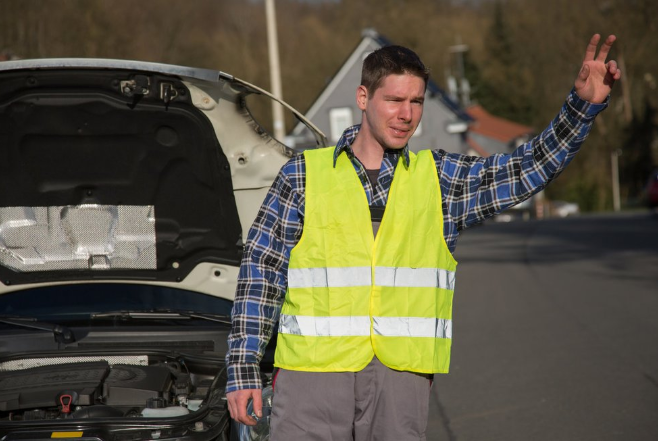
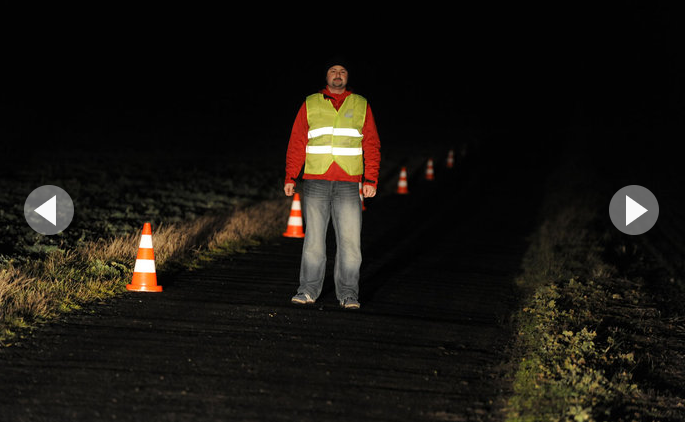
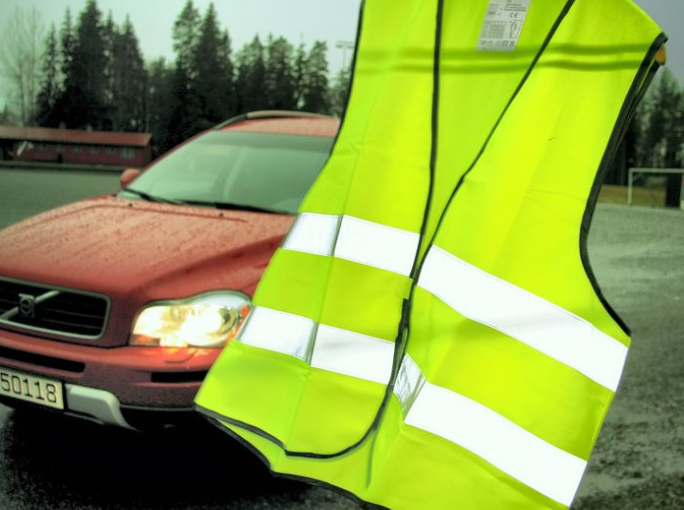
Everyone is required by law to have a reflective vest with reflective material in the car. If you are stuck somewhere, it is wise to make yourself as visible as possible.

“Reflective vest is important, so you can be seen if a search is made,” says Stensvand.

Reflective vest is cool

Thursday was National Reflection Day. This was highlighted by the fact that Narvik municipality and police distributed reflexes to the 1st and 6th grades.

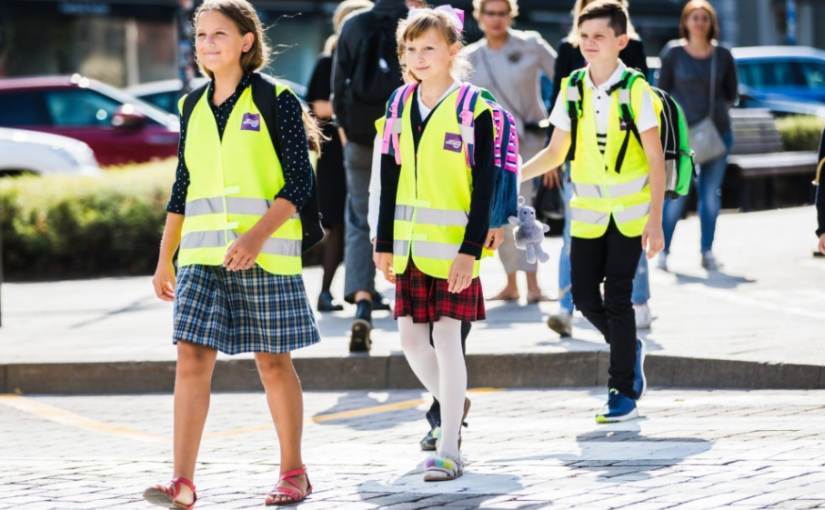
Distributed reflective vests

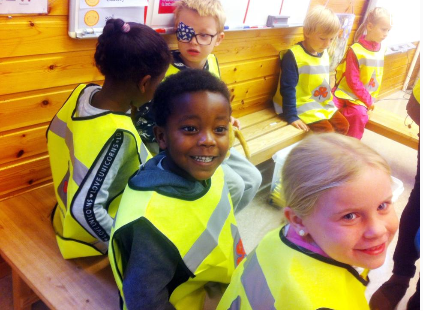
Those in the first grade were given yellow reflective vests, while those in the sixth grade were given reflective bands that can be used on arms or legs.

“Those who are in the 6th grade and who are sponsors are given the task of making sure that they use reflex in the first place. And you in the first-class must make sure that they in the sixth class also use reflex,” says Sigbjorn Normann at Vei and park in Narvik municipality.

Must use reflex

Sebastian Haugan Johansen (11) and Linnea Overbyhagen (11) are in sixth grade and are sponsors of the first.

“I’ll try to use the reflective tape, at least in the evenings,” says Sebastian.

Linnea thinks she gets to use her reflex tape often because she tends to go to several places in the street in the evening.

Áslat (5.5) and Kelian Sword (6) are both happy to get a reflective vest.

It is fun to use a reflective vest, and we are using it, the two say.

Students know well why reflex is important.

“It is important that we are not driven by cars and such,” says Linnea.

“There can also be a trailer, and it is important with reflex when we go down to the shore in the evening,” says Áslat.

Police officer Mats Aamodt thinks it’s good the students have such good attitudes.

“It is dark in the morning, evening and night, and it gets darker. So it is important to use reflex to be seen,” he says.

He has experienced meeting road users without reflex and knows they are hard to see. He recalls that it is extra dark and difficult to see walking without reflex now before the snow arrives, and especially when the asphalt is wet.

Use reflex

He encourages everyone to use reflex, both children, adolescents, and adults.

“Wear too much reflex rather than too little. Wear both reflective vest with reflective material and reflective tape. This applies to both children and adults,” he says.

“No need to paint a child in an ideal world where everyone follows the rules”

Getting your child to travel to school or in private is a great challenge for parents. Dijokait, Chief Specialist of the Vilnius County Police Headquarters Traffic Police Board, author of the book “Road Traffic Rules for Children”, says that it is up to parents how the child will behave in the street. The official says it is not enough to discuss the traffic rules with the offspring once and hope that things have become clear – responsible behavior and potential dangers need to be spoken in a language that children can understand.

Officer A.Dijokait is known by many children not only in the capital but also in other Lithuanian cities and towns – she has been teaching them the rules of road safety at various events and special lessons for more than 10 years. Groups of toddlers and teenagers are coming to the Traffic Safety Class at the Vilnius County High Police Commissariat’s Road Police Board, where attractive traffic safety lessons are being organized. In the classroom, adults are also learning: parents, educators, students, and seniors. A 15min talk with an officer about how parents can prepare their child to break into the traffic stream. Road safety lessons are spent in kindergartens, schools, special projects, and events. Can parents expect this to give their child the most important knowledge? Although I am constantly working with children of all ages, the rules of road safety are also discussed in kindergartens and schools, but the primary responsibility for this knowledge lies with the family. After all, parents are the greatest authorities of children, the best teachers, they know the peculiarities of their child, their behavior in certain situations. The conversation between parents and children about traffic safety mustn’t be abstract and one-off, but repetitive and detailed, and comments in real-life situations help a lot – pedestrian behavior with both right and wrong can help. It is not enough for a child to wish: “Be safe!” It doesn’t mean anything. Parents must teach him how to be safe. And not just to teach, but to constantly observe how he follows the rules. Of course, there is no need to formalize everything, but let’s say the topic of yesterday’s talk maybe about how well your child has crossed the street and the safety of a child’s passenger while traveling by car. As a general rule, the child should be constantly talked about and reminded of how to stay safe in traffic.

of course, there is no need to frighten children down the street: “you are going to die!”, “You will be met!”. We need to talk about the diversity of people and situations. I think the fundamental mistake would be to teach children just the rules, but not to see the danger, not to talk about how to avoid it. After all, paying for and following a rule may mean that a child is in distress – precisely because he or she has followed the rule, but another road user – the driver of a car, bike or even an electric scooter – has failed to comply! Thus, the primary purpose of traffic safety training is to present a bouquet of knowledge and to prepare the child for the journey so that the child can see and avoid the dangers of the traffic environment. A child can’t draw only an ideal world, he must understand that even in a pedestrian crossing it may be unsafe. Of course, there is no need to frighten children down the street: “you are going to die!”, “You will be met!” We need to talk about the diversity of people and situations. For example, when traveling with a child, it is possible to notice which drivers are talking on mobile phones or with passengers, explaining that such a driver may not be noticeable in the child’s crossing. Even the various children’s poems call for courageous steps, but I would say that it is not courage but wisdom and caution. Talking with your child starts with the essentials, which are that there are two parts of the streetcars for cars, sidewalks, and sidewalks – for pedestrians, and good road traffic rules to ensure safe use and harm. After all, rules do not exist anywhere if they do not exist in our daily behavior.

By what age are children well aware of the rules of the road? Kids 3 to 5 years old are worth teaching through the rules of the game, and kids 6 to 8 are very receptive, they believe in what you say, they understand and remember well. If we spend the time when the child is receptive and trustworthy, when the adults are their true authority, talking to the teenager may already be difficult as they are already learning from the wrong examples or even from their own mistakes and those around them. I would advise you to talk about road safety with children from an early age, adding to the knowledge that is relevant to the age of the child and would be used daily in real life. It is important to understand that the rules of the road, just like the provisions in the booklet, are too abstract for children. They need a playful presentation, they need to speak his language, then it will be clear. For example, young children often do not distinguish between left and right and this is normal until a certain age. This can be taught through play – songs, exercises, reminders that we eat, write and so on with the right.

What other traffic situations are often left aside when talking to children? It is a mass event and various celebrations – it is necessary to talk to the children that in such cases it is not possible to jump between cars, it is necessary to look for the driver to notice and stop the vehicle. Children also need to be told about the stopping distance of the car, as they demonstrate during the lessons that they expect the car to stop faster than is possible. Few people talk about moving cars in reverse and after all, the accidents that happen are related. Although the driver has to be very environmentally aware while reversing, I explain to the children that everything is possible – his car windows have become dirty or frosted and he has had to clean himself, or he talks on the phone and so on. It is important to point out to the child that he can guess from the sound of moving the car backward, that he can see smoke in the winter, and finally that we all see white lights. Such signals indicate that the machine is moving. What other important things should parents take care of when allowing their child to travel to school on their own? I am glad to see more and more children wearing bright clothes, reflective vests, backpacks, accessories with reflective materials. Parents mustn’t shy away from buying such brightly colored clothing and dress their offspring with it. Adults need to ensure that not only does the child have a reflective tape, carry it, but also learn how to fasten correctly. After all, it is often the case that the only reflector on the backpack and the child is on the highway before the vehicle traffic and is invisible sides (pockets), on a long strip for knee height and free-swinging. If there is a second reflector, let it be on the other hand. The more reflectors on all sides, the more likely it is to be noticed by the driver. Reflectors are optional in cities or other illuminated areas, but I think they are necessary and very important during the dark hours of the day, especially when there is fog, rain or snow. It is safe to say that the reflector is a must, a need and a fashion.

Do you know how and where to place the emergency stop sign?

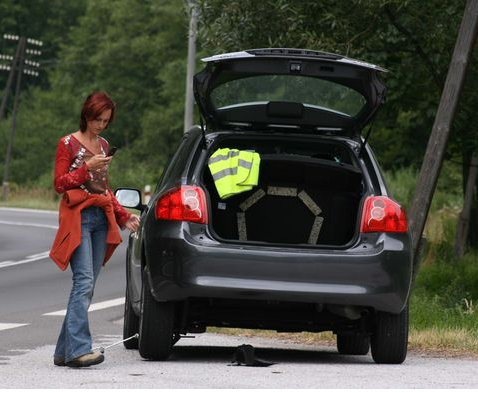
Although drivers do not expect or wait for an emergency, they need to wear a reflective vest with reflective tape and an emergency stop sign in addition to a fire extinguisher, a safety kit and driving. However, do drivers know how to properly place this sign and what else to do?

Driving instructor Paulius Kazėnas says that keeping this right is not always given enough attention and that drivers who get caught in an emergency are often forgotten about how to behave. “The first thing to do in a situation like this is, of course, to turn on the emergency light. However, this alone is not enough and regardless of the time of day, it is recommended to wear a bright colored reflective vest before leaving the car for better visibility,” the specialist said.

However, before doing this, alone, again, this is not enough – you also need to put up an emergency stop sign. The Road Traffic Code (KET) stipulates that if the vehicle is parked at a standstill where the vehicle is stopped by other road users less than 100 meters away, the driver of a motor vehicle, tractor, to place an emergency stop sign immediately on the side of the carriageway on the side of the carriageway: not less than 25 m in settlements and not more than 50 m from settlements in non-settlements. potentially impaired visibility of the vehicle to other drivers. The instructor also advised that the estimated distances can be estimated in steps.

Protect Children on the Road – Protect Me

Twenty years after the Protect Me campaign – twice as few children injured, four times as many killed Protect me, the longest-running social responsibility campaign in the country, will take place this year for the 20th time. As every year, its organizers invite all road users to be extremely careful on the road, thus protecting children on their way to school and home. According to the data of the Lithuanian Road Police Service, the number of killed children has quadrupled in 20 years, and twice as many were injured. The number of injured children traveling on foot alone reached 634 in 2000, and in 2018 dropped to 202 injured children. The Protect Me campaign also contributes to improving numbers. Every September, the initiative “Protect Me”, which takes care of the safety of children on the roads, is organized by Vilnius City Municipality, the largest insurance company in Lithuania “Lietuvos dramas” and its partners – Vilnius County Police and other municipalities in the country. Lietuvos Draudimas, the initiator of “Protect Me”, as well as annually ensures all schoolchildren of the country against road accidents for 5 thousand. amount of EUR. Personal insurance coverage for schoolchildren is available from September 1 to September 30 throughout the country for 24/7 hiking and cycling. In total, over 322,000 students will be covered this year. This year, in cooperation with the municipalities of twelve cities, this year the insurance company 13 thousand. elementary school students will don light reflective vests.

Traffic focus in Vilnius Every year after the summer holidays, traffic, especially in the big cities, intensifies as thousands of schoolchildren return to the streets. In the city of Vilnius, the municipality, in anticipation of the new school year, is implementing measures to improve road safety on the streets, which reduce the likelihood of accidents, encourage drivers to comply with speed requirements, and consider other road users. More than 100 speeding hills, 70 directional lights, and other road safety improvement elements have been installed in the streets, near educational institutions, pedestrian crossings and junctions and other dangerous places. Almost 100 pedestrian crossings have been newly marked with the “Protect Me” label to protect children’s safety and to draw the attention of drivers to educational institutions. By facilitating the movement of pupils, transport is improved by building cycle paths, sidewalks and restructuring existing infrastructure. Yellow lines also mark areas of street intersections, 75 intersections, update existing street signage, introduce safer and more informative traffic arrangements at the Volunteer roundabout. The municipality has bought and will distribute about 2400 signal vests and 4000 reflectors to the students of Vilnius city. “Together with our partners, we look for solutions every year to help raise awareness of child safety on the road. In recent years, we have included seniors on duty at school crossings to help children cross the streets safely. We share reflectors and reflective vests with reflective tape  for children, with an emphasis on safe cycling. These initiatives and actions bring results, but we not only have to teach children in theory, but they also have to implement practical knowledge on how to be safe. along the way. Not all adults, and especially children, know how to ride scooters correctly and safely. I want to encourage adults to set a good example for children and to behave correctly on the road, and to wish children a safe school year,” says Deputy Mayor Edita Tamošiūnaitė. Crossings near schools are marked with a special yellow campaign sign across Lithuania. There are more than a thousand of them this year. The sign is already recognized by the vast majority of drivers and pedestrians. Insured every student Lietuvos draudimas reminds that students and their parents or guardians do not need to apply for insurance to come into effect – every child is already insured. In the event of a traffic accident in which the pupil is injured, his parents or guardians should notify Lietuvos dramas at short number 1828 or via the company’s website www.ld.lt and the victim will be compensated. “The Protect Me campaign takes care of children returning to the streets and roads every year after the summer holidays. With this initiative, we encourage all adults to take responsibility for the little road users and to protect them by disciplining them for carelessly running across the street and setting the right example for themselves,” says Kęstutis Šerpytis, CEO of Lietuvos Draudimas. For the third year in the Protect Me campaign, Lietuvos Draudimas has been donating reflective vests to the beginners of smaller towns and districts. During this time, the safety of 33 district primaries has already been taken care of, with 34 thousand vests distributed to them. “This year we donated light reflective vests to make their trips safer. Light reflective vests with reflective material are one of the simplest but highly effective means of ensuring pedestrian safety on the road. They are especially needed during the autumn and winter season when it gets dark quickly – wearing a vest can protect against a severe disaster both in the city and in the country,” says Kęstutis Šerpytis, CEO of Lietuvos Draudimas.

The situation is getting better According to Saulius Gagas, Chief of Vilnius County Police Headquarters, the situation on Lithuanian roads as well as in the city of Vilnius is improving – fewer and fewer children are injured and killed in road accidents. No children died in the capital during the first half of this year, and the number of injured has decreased compared to the same period last year. As the new school year begins, officers of the Vilnius County Police Headquarters will traditionally pay special attention to ensuring traffic safety, especially near schools and preschools. Officials are urging drivers to be extra vigilant and reduce speed on the streets, especially when passing schools or preschools. “The safety of all our children also depends on an adult’s responsible approach to traffic culture. The most effective way to teach safe behavior on the streets and highways is to set an example for our children,” says Saulius Gagas, the Vilnius County Police Chief.

Why in the dark the driver is always right

The new Traffic Rules, which are being promoted in the draft law on traffic and its safety, have not removed the obligation from the pedestrian to make themselves visible at the pedestrian crossing. Police investigators say this moment avoids punishment for drivers who beat a man on a “zebra” in the dark. There are many illuminated pedestrian crossings in Vinnytsia, which are known both by Vinnytsia who is traveling by transport and by those who are moving on their own two. The editorial board tried to find the most dangerous of the zebras with the help of experts. And yet – to find out whether the city authorities are going to eliminate the problem of darkness at pedestrian crossings once and for all. The blood near Ferida Plaza. A motorcyclist knocked down a girl at a crosswalk. It was in the dark. And not on the darkest zebra in town. But there are dozens like this headline in the news feed 20minut.ua. Only this year, according to the regional police, 34 people were killed in traffic accidents involving pedestrians, and 6 were killed. In the same period last year, there were twice as many people killed in road crashes with pedestrians. Drivers the journalist spoke to, exploring the problem of illumination of unregulated pedestrian crossings, said: most of them in the outskirts of the city. The center helps to see pedestrians driving the street lights. And out of town – it’s dark, though in the eye. “At the bypass, near Kurochka cafe and the police department, there the cars go off at all and never stop. The only way out is to install signs that are illuminated by lanterns in the dark, or pedestrians need to wear light-reflecting vests with reflective tape,” says Vinnytsia activist Andrei Gaidai.

The refractive elements on pedestrians’ belongings and clothing will not be overturned by the new Traffic Regulations, which are promoted in the draft law “On Traffic and its Safety”. According to one of its authors, human rights activist Volodymyr Karavaev, the new rules ask for pedestrian crossings to be marked in two ways at the same time – by a road marking and a warning sign. “The legislation now requires a pedestrian crossing with signs or markings. We insist – both signs and markings. This is a fundamental difference,” the human rights activist explains. “We bring back the practice that used to be when pedestrian crossings were safer. But he agrees that sometimes the signs are not visible – they cover up tree branches or over time lose the ability to reflect the headlights of cars.

“I drove from Vinnytsia along the Zhytomyr highway and paid attention to the signs – they are not visible. Either they do not have reflective properties at all, or they merge,” says Vladimir Karavaev. “These are not new routes! As for urban conditions, it is not necessary to say that the driver will see a pedestrian on an unlit road. 90 percent will not see, because no one simply rubs the signs. They are covered with dust and dirt and they do not reflect light properly. This is another problem,” continues the human rights activist. The police are not trained to give a clear assessment of the circumstances of the accident. If the car knocked down a pedestrian at such a crossing, as you say, the police will blame the driver. It will not be understood that the driver ran into the man because he did not see a sign that has not been wiped for ten years. If such cases were held responsible for those responsible for the state of the roads, then the situation would change. So do new rules change for pedestrian safety? What do they say about illuminating unregulated pedestrian crossings? They also oblige pedestrians to make sure there are no vehicles and make themselves visible in the dark before crossing the road. At the last moment, an investigator specializing in the investigation of resonant road accidents with deaths told the journalist that the suspected drivers could be avoided. The protection of the pedestrian-hit driver always tries to prove the victim’s mistake in this way. Like, he did not provide his visibility, as required by the rules, then he is guilty. “Physically, forcing our pedestrians to wear reflective vests is simply unrealistic,” says Vladimir Karavaev. There are traffic lights everywhere, one of them, near the former brewery, works around the clock, and has good lighting in the dark. However, students at this school are well aware of the fact that flickers (or fliers) were given to them by the reflectors of the liquidated service last year, and the children were used to wear them constantly. “I have flickered on my hen and my backpack,” says Maxim, a fourth-grade student at Gymnasium No. 6. “And my classmates all wear things that glow in the dark. It’s cool. And we also know that the drivers see us from afar. From a distance, pedestrians can also be seen on the crosswalks that are on Zodiac Street. No, the residents of Podillya do not wear flicker.”

“There is a need for lighting, but it must be done very carefully,” says human rights activist Karavayev. If you do not work out a single standard for illumination of non-regulated pedestrian crossings, then you can adjust the firewood. Someone would spin a 40-watt light bulb to shine somewhere in the transition area and assume that there was the lighting. This light bulb does not affect. There are now transitions, apparently illuminated, but there is still no pedestrian there. Have the only rules to cover “zebras”. We ask Volodymyr Karavaev if the number of transient accidents will reduce the lighting projects currently underway in Kyiv.

“If we don’t do the transition lighting, everything will be a plus. Definitely, without doing anything, we will not change the situation,” says the human rights activist. “In Europe, they have come up with a lot of novelties that can be borrowed. But everything is based on financing, as always in our country. It should also be understood that lighting is not the only problem,” continues the interlocutor. On the brightest sunny day, pedestrians also get under the cars. They arrange problems for themselves. They are beaten by the tens every month. And they cannot understand at all that they must take care of their safety. Here it will be winter, it will be slippery, and they will also go out on the carriageway in front of the car, with absolutely not even looking in the direction of the car. At the same time, there will be earphones in the ears sticking out, a hood will be worn on the head, which completely covers the inspection.

Halifax cyclist uses pink pool noodle for added safety

When Ella Dodson rides her bike on the streets of Halifax, she’s easy to spot.

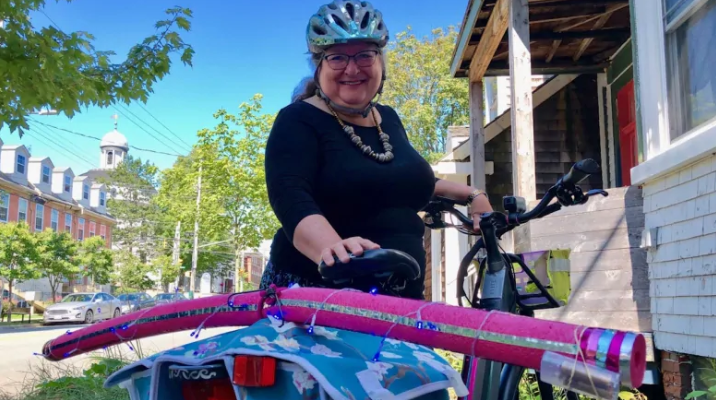
The woman from the city’s north end has strapped a bright pink pool noodle covered in reflective tape and twinkly lights to the back of her bicycle.

The noodle, she says, is a “polite reminder” of the law that cars must give at least one meter when passing cyclists.

“It’s a very cheap piece of personal protection,” Dodson said.

The idea came shortly after a close call with a car near the corner of Agricola and Charles Streets, where the city has added a pedestrian bump-out. It makes things safer for pedestrians but made the lane smaller for cars and cyclists.

“I was quite terrified,” she said. “So I was so angry. I wrote to the city complaining about the pedestrian bump-out saying that if this is a cycling street, they really ought to also provide for cyclists,” she said.

Only a week later, she was visiting a friend who was hit and injected while in a marked crosswalk over a year ago.

“Some of her injuries are never going to heal. After seeing how much was changing in her life, I decided to screw it all. I was going to become a dorky old lady with a pool noodle on the back of my bike.”

Dodson went to Canadian Tire and bought a $ 1.99 pool noodle as well as matching pink bungee cords to hold it in place.

Cyclist using a pool noodle to demonstrate Ellen’s Law says he was hit by a car

The bicycle is Dodson’s sole form of transportation.

“I’m a bit older and I’m a very slow rider and I use my bike for transporting groceries,” she said.

“As I started thinking about it, I kept hoping that other people would do it too because there seems to be a great deal of animosity between cyclists and drivers.”

She says she’d like to see wider roads and cycling lanes, but she hopes city planners will think about catering to those besides just young commuters.

“There’s a whole range of other people who aren’t cycling in Halifax because they don’t feel safe,” she said.

“And safety is going to come when we have enough people cycling on the road and enough people who are visible on the road.”

Reflective elements in pedestrians, design changes

There are fatal accidents when a driver strikes a pedestrian because he overlooked it. This happens especially in the village, at night, when the pedestrian moves on the road in dark clothes and on a dark background, when it is virtually invisible. I make one of the suggestions on how to deal with this situation.

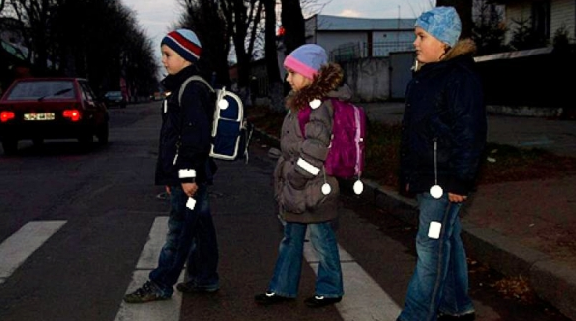
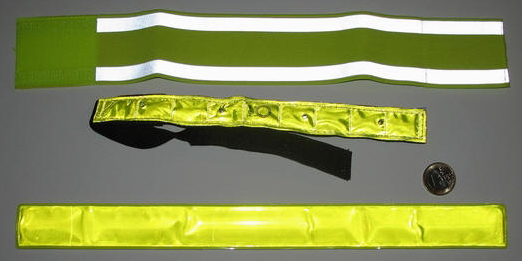
Different reflective elements for pedestrians compared to one Euro coin. Reflective velcro tape. In the middle reflective tape with own source and flashing LEDs, also with Velcro. Below is the most commonly used reflective tape with an internal spring.

Special provisions on pedestrians

Pedestrians may walk along the side of the road or the edge of the road at most two side by side, provided that they do not endanger or restrict road traffic, especially in reduced visibility or increased traffic; this does not apply to persons moving on the shoulder or on the edge of the road on skis, skates or similar sports equipment, which can only move in a row. From sunset to sunrise and in poor visibility, a pedestrian walking on the road or the edge of the road, inside and outside the village, shall have visibly placed reflective elements or wearing reflective safety clothing, so that it can be seen by drivers coming from both sides. This obligation shall not apply in the case of the transverse passage of the road at controlled pedestrian crossings or illuminated and uncontrolled pedestrian crossings.

Rationale:

By extending the obligation of reflective elements from outside the municipality to the municipality, pedestrians will be especially visible in villages where there are no sidewalks and use the road to move.

The obligation to be seen by drivers from both sides will eliminate the deficiency when the pedestrian had a reflective element only on his back, most often on his backpack. As a result, when walking along the opposite road surface not seen for incoming drivers.

By using the terminology from sunset to sunrise, which is common in aviation, we can easily and accurately determine the time from when to when it is required to use reflective materials.

To avoid unnecessarily burdensome pedestrians in well-lit city centers, this obligation is not at pedestrian crossings, in addition to footpaths. This also means that pedestrians without reflective elements will have to use pedestrian crossings as a priority.

A year and a half with mandatory reflective elements

On Sunday it will be a year and a half since pedestrians were to start shining on our roads. Literally, on February 20, 2016, the following formula was added to the Road Traffic Act: “If a pedestrian moves outside the village on a side or roadside in a place not illuminated by public lighting, he/she is obliged to wear retro-reflective material positioned so as to be visible to other road users.”

Light Up

It’s shortly before 9 pm when we pass the sign indicating the end of Prague. We decided to see how the Czechs comply with the law. True, all kinds of reflectors, belts, and clothing strips are grim autumn and winter. But the law applies without exception even at the end of a capricious summer. Is it already dark or not? This is what we say when approaching from Radotín towards Černošice – we meet a completely unlit runner. The legislation defines reduced visibility by not recognizing other vehicles, people, animals or objects on the road. It is not only about darkness, dusk or dawn, but also heavy rain, snow, and fog.

From a statistical point of view, the new regulation looks promising. Perhaps in the first year of validity, the number of killed pedestrians at night outside the village decreased from 37 to 31, which is almost a fifth decrease. A massive communication campaign, warning of the possible consequences of invisible night walks, certainly played its role.

The fact that the reflective components make sense is further supported by other harsh numbers: “After the law came into effect, we registered a total of 24 killed pedestrians with reduced visibility. In seventeen cases, the pedestrian was not demonstrably reflective,” says Petr Habenicht of the Police Presidium.

Rather a warning

“Yes, I know I should have a flashing tape. I wear it in winter, but it is not completely dark yet,” the runner we meet at the outskirts of Hlásná Třebáň grows in front of us. At least she wears a distinctive red T-shirt – but it wouldn’t help her before the law.

“After the introduction, we announced that we would especially explain to pedestrians the meaning of this duty. At the same time, however, we pointed out that, as the end of the year, which tends to be the riskiest to pedestrians, is approaching, police officers will also apply block fines for non-compliance,” explains Habenicht.

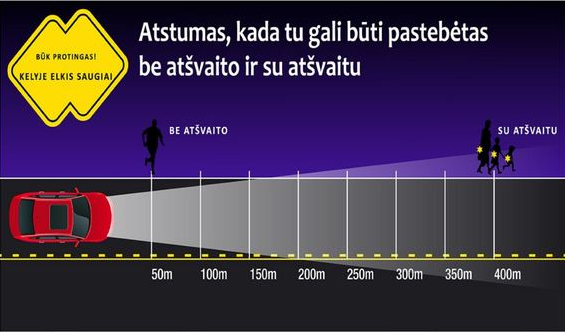
However, not only unmarked pedestrians but also drivers behave dangerously in the dark. “Classic halogen headlamps have a range of up to 100 meters, which should be adjusted to speed. If we do not, we often do not have enough room for an adequate response. At the last minute we are not able to react to the obstacle,” says Besip’s head Martin Farář.

We know

Another problem that annoys night roads is the poor lighting of many cars. As we head to the destination of today’s journey, we chose the village in style.

Darkness near Beroun, we see for ourselves. Although traffic is minimal, the percentage of squinting or squinting cars is significant. The risk is not only for pedestrians but also for the surrounding drivers, which can unpleasantly dazzle. Beware of them, we say to each other as we approach an intersection somewhere in the fields. Five young people with a dog walk along the verge. Reflective elements nowhere, at least have well visible white T-shirts and hold much to the edge. On the right side of the road. “I know we should have tapes. But we didn’t take them with us. But we are cautious,” one of the girls surprised us with an apologetic tone. When we leave, the crew moves off the road. By law, pedestrians are allowed to walk along the side of the road or at the edge of the road no more than two side by side. In low visibility, they even have to go behind – that is if it is not a light-marked, organized formation. However, according to Besip’s experience, rainfall is regularly caused by ignorance of the rules. Pedestrians in low traffic do not care where to cross. “They go red, run off the crossing, and even across the highway. At night we are more anonymous and more often sin on rules, which can have tragic consequences,” says Farář. A repeated problem is just walking on the wrong side of the road. “The car thus arrives at the back of the infantrymen and therefore cannot react adequately. They also commonly believe that when they see the lights, the car sees them. This is a great misunderstanding and underestimation of the situation! ”Warns the pastor.

Where are they?

When we arrive in dark Tman, it is half-past eleven and there is no one on the roads. , Berounsko has fallen asleep and we are slowly going home. We are already wondering if it was necessary to make such a halo around the elements when nobody walks on the roads. Although, the strap or reflector does not have anyway. We drove the lanes over sixty kilometers and did not hit pedestrians with reflective elements.

We are now approaching the highway when we see the bright glare of the reflective tape at the edge of the Court. It’s hard to say what a grim figure in dark clothes is doing here. To meet her a little further behind the curve, we would probably be surprised without the tape – of course, it is on the wrong side, the right side of the road.

It is surprising how little we see reflective elements on Czech roads. Statistics show that their benefits are indisputable. However, it will probably take a lot of effort before the Czechs accept them.

Reflective elements from the perspective of law

As we wrote at the turn of the year, the obligation to wear reflective elements has brought a new balance between driver and pedestrian from a legal perspective. “There has been a situation where not only the driver has to focus on driving, but the pedestrian is obliged to be seen,” describes attorney Jan Černý. Before the effect of the amendment infecting pedestrians to become visible for the police and hence the prosecutor, the primary culprit of a potential collision was the driver. “I have also experienced cases of the accusation of a chauffeur, when a pedestrian walked on the wrong side of the road, was darkly dressed and even under the influence of alcohol,” explains Černý.

Experts agree that in the investigation of traffic accidents, it focuses not only on the driver but also on the possible proportion of pedestrians. “We have a duty here and it is assessed whether the pedestrian had a reflective element. If a driver with a reflective element had seen it, the driver could be fully developed,” Jan Černý continues.

Therefore, it may happen that a pedestrian who is hit by a car without a reflector will not get any compensation. “In every individual case, we examine whether the element has been used, how it was placed, and what its reflective area was,” says Libor Beran of Allianz, pointing out that if the pedestrians are to blame, it may even be he who pays.

About reflective elements with Martin Farář from Besip

It is a year and a half of our duty to wear reflective elements. How do you perceive the introduction?

When we look at the year-on-year statistics for 2015 and 2016 outside the municipality where the obligation applies, we have seen twenty fewer deaths in reduced visibility. Moreover, after a long time, legislation and a large campaign came together, which was subsequently supported by police action to check that pedestrians wear the belts.

What about this year’s first half?

The trend continues, although in the first half of the year there were no major declines. However, we expect the main season of reflective elements and the most dangerous situations only at the end of the calendar year.

There was also talk of introducing the obligation to wear reflective elements even in unlit parts of municipalities.

From the beginning, we have been for nationwide introduction in places where there is no public lighting. This would be true, for example, in the peripheral parts of municipalities where there is often no pavement. Reflective items should be worn to increase the chances of a pedestrian seeing.

The introduction was accompanied by an extensive campaign. To be continued?

Definitely. We will also continue to cooperate with the traffic police, which will again make available a large number of reflective items. The goal is to reach as many people as possible. We do not want this to be based strictly on enforcement, but for the state to bring something – elements will be distributed and we will repeat why it is important to use them. It should not be based on repression.

On the legs and wrists

If you are on the road in poor visibility, we recommend using two straps: ideally one forearm and the other over the ankle. “We always put them on the right side, because outside the villages where there is no sidewalk, we walk in the opposite direction, ie the right side of the road,” recommends Martin Farář, head of Besip. “The lights of an incoming car shine first in the lower half of the body, so it is good to have the tape as low as possible. It is important to avoid having our clothes covered, especially when we put it on the wrist,” he adds. Although the law requires use exclusively outside the municipality, we recommend this element whenever you are in unlit areas.

How to choose a reflector

Hundreds of reflective elements are available on the market – the differences in visibility are abysmal. Which one to choose? “The guideline for choosing a quality material can be a CE quality certificate or a brand of a respected manufacturer. When it comes to clothing, such as a reflective vest, there should also be information about how to wash and how many wash cycles the material will last without changing its properties,” advises Zuzana Orlichová. It is also advisable to test the product before purchasing. On the market, there are products with a lower reflectance than may seem at first glance and not every tape is well visible after lighting. “We can measure the reflectance by using a camera with a flash, for example on a mobile,” says Lukáš Pejpal.
Mandatory equipment does not change

The mandatory equipment of the car does not change with the arrival of the new Traffic Act, as it is determined by another regulation. The spare wheel does not have to have every car and a reflective vest with reflective tape is included.

The panic around the color of the reflective vest is unfounded. The new law orders it to be used.

The new regulations on the mandatory equipping of vehicles came into force three years ago and were not changed by the new Road Traffic Act. It only determines how and when to use individual equipment elements on the road. This is particularly true of the reflective vest, which must be within a comfortable and fast reach of the driver. He should get out of the car dressed if possible. Owners of vehicles with xenon lamps do not have to have spare lamps, but they must not lack other bulbs used for the exterior lighting of the car. At least one of each species. The fire extinguisher does not belong to the mandatory equipment of the car in Slovakia, but it is necessary and recommended. Many modern cars might not burn completely if the driver had a fire extinguisher in their car.

Panic with vests

The new law imposes an obligation on the driver to wear safety clothing if he/she is on a road outside the vehicle during an emergency. Failure to comply can result in a fine of up to € 60.

No penalties shall be imposed for green or yellow-green. Although the new law provides that a driver may not wear a vest that is interchangeable with safety clothing used by armed forces or armed security forces, the type and color of the reflective vest are determined by a decree of the Ministry of Transport on compulsory car equipment.

Police vests have an inscription on the back and a different fastening than the vests available on the market, so there should be no confusion. “We chose other vests for police officers, which have several reflective elements, are shorter and designed to have access, for example, to weapons,” said Eva Uhliarikova of the Ministry of the Interior. The reflective vest in the car is designed to give visibility and protection to the driver of the car, so its use will be monitored.

There is not always a reserve

The spare wheel to be used in the event of a puncture must have only cars that not equipped with a special adhesive kit or Runflat tires that allow the puncture to travel. This also applies to the jack and wheel removal tools. Tires with Runflat technology have long been used by BMW vehicles. Their owners do not have to carry the spare wheel until they have ordinary tires on their car. “We have no problem with the Slovak regulations because it is homologated by the manufacturer and we use Runflat throughout Eastern Europe,” confirmed Milan Stupka of the BMW Group. Since February, winter tires on snow and ice are mandatory. This does not apply to the spare wheel, which may not have a winter tread pattern and can be used in an emergency even on snow and ice.

The late arrival of winter, along with the new traffic law, should force drivers who have not used these winter tires to buy or not to drive after the snow. In the tire repair shops after the first of February, there was no increase in interest, even though the spring break of the Bratislava region was approaching and it is snowing in the Orava and the Tatras. “Those who want to use winter tires have bought them,” said Marin, tire service owner. Some sizes of winter tires are a problem to get because they just sold out. In that case, the alternative dimension of the technical license must be looked at.