Short days and less bright streets: dangerous autumn and winter

In this period of the year, the hours of daylight are reduced, particularly in the morning and at dusk, considerably affecting the number of road accidents. In the last 10 years it has been noted that from November to February, from 05.00 to 09.00 and from 17.00 to 19.00, the probability of being injured or killed in accidents increases up to 58% compared to the rest of the year. This percentage is higher for less protected users, such as motorcyclists, cyclists, and pedestrians. The TCS, on the occasion of the international day of light, draws attention to this danger and to the need to see and be seen.

The TCS recommends that the most vulnerable road users pay particular attention to the visibility conditions, adopting a defensive guide and equipping themselves with clearly visible and season-appropriate safety clothing. The accidents that see them involved are more frequent in these months, characterized by reduced brightness and difficult atmospheric situations.

Motorcyclists, cyclists, and pedestrians at risk

For motorcyclists, the risk of accidents in the morning, from November to February, is almost 60% higher than in the other months of the year. This time slot, in addition to that between 17.00 and 19.00 (for a total of 6 hours), counts – over 24 hours – more than 40% of the motorists involved in an accident.

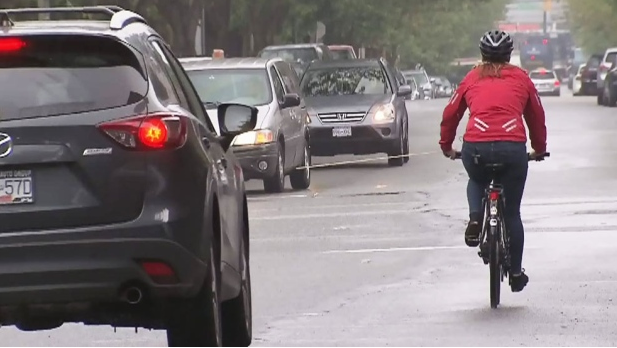
Even cyclists are equally exposed to these dangers in the same critical period of the year. A traditional cyclist is 52% more likely to incur an accident between 05.00 and 09.00 and even has an additional 54% chance that such an accident will cause serious injury or death. This last risk also affects drivers of electric bicycles with a percentage of 43% in the same time slot.

Pedestrians are the most vulnerable users in road traffic, particularly in winter. The greatest number of accidents happens in the morning with 44% more than 25% which is usually included at the end of the day.

Some tips to move safely

Road users are responsible for their vision and to be seen at all times. This golden rule is even more important for users who do not drive, so they are not protected by a body and are therefore more vulnerable in road traffic.

To be able to see well, in this period characterized by short days, cyclists and motorcyclists must check the lighting of their vehicle, before setting off. For their part, pedestrians must favor well-lit paths, to observe traffic well and prevent, where appropriate, dangers.

At the same time, it is advisable to increase one’s visibility. Drivers on two wheels can equip them with reflectors and wear light or reflective clothing with reflective tape. Clothing is an essential factor for safety, even for pedestrians. The “Made Visible” campaign, conducted by the TCS with the Road Safety Fund, provides numerous attractive solutions to combine fashion and visibility in all circumstances. Scarves, stickers, pendants, stylized backpacks: the possibilities to make oneself more visible are not lacking!
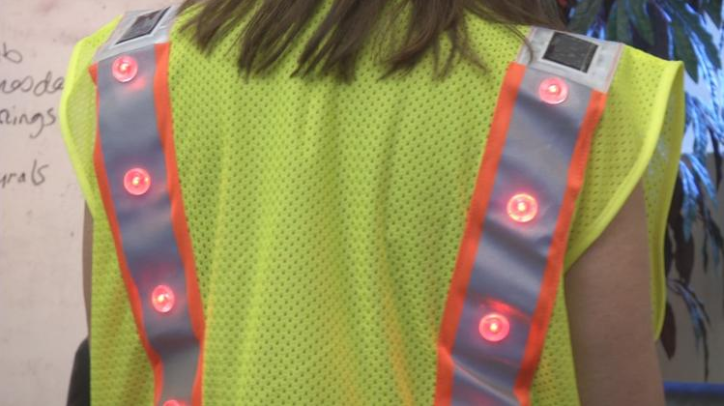
Las Vegas couple designs upgraded safety vest for road workers, police

A Las Vegas couple is hoping to change the way construction workers dress on the job.

They invented a one-of-a-kind safety vest that could make it easier for drivers to spot road crews before it’s too late.

As the temperatures warm up, you’ve probably seen more orange cones and flashing signs, popping up on valley roads.

“We had prototypes we let constructors use them out on the road,” Megan Collins said.

Experts in the construction industry, Tom Mueller and Collins founded Solar LED Safety Products. They created a new type of vest to keep workers safe.

“It was a process of gluing and putting it on some material that we felt could create the idea that we wanted,” Collins said.

So after more than eight years, five prototypes and three patents, they settled on a final design.

“Just doing manufacturing is a whole new animal for us, so it’s been a lot of learning,” Collins said.

Their vest includes flashing lights, which can help drivers spot them faster, especially at night. Right now, the typical vest only has reflectors.

“So a regular vest requires light to hit the reflective tape and that doesn’t always happen right away,” Collins said. “So if somebody’s coming around a turn, they’re not going to see that reflective material until the light hits it.”

Their battery-operated safety vest is powered by the sun.

“It has four solar panels that recharge 16 lights that flash 60 times a minute for 48 hours,” Collins said. “They can be seen at 2800 feet at night.”

The final product is already in the hands of several valley agencies.

“LVCVA, we have some going out to the City of Las Vegas, NDOT is going to be trying out some,” Collins said.

NDOT spokesperson Tony Illia said they are always looking for ways to decrease work zone fatalities.

“They’re up roughly 2% nationwide, year by year – highway workers being killed in work zones,” he said. “They’re simply doing their jobs to provide for their families and make it home alive. That shouldn’t be too much to ask.”

Now, this Vegas couple hopes their invention will help turn those numbers around.

“If we can stop just 2%, 1%, that’s going to be good,” Mueller said. “The main thing is to take you home to your parents, your family, loved ones.”

Up next, they are working on some new styles including a shorter version, tailored for law enforcement.

“That will allow them to wear it and they can still access their belt, their gun, and everything,” Collins said. “Saving lives, that’s a passion of ours. We’re looking forward to making that awareness on the roadways.”

NDOT also wants to remind drivers speeding fines are doubled in work zones. National Work Zone Awareness Week is April 8-12.

The event is in its 20th year and is sponsored by the Federal Highway Administration.

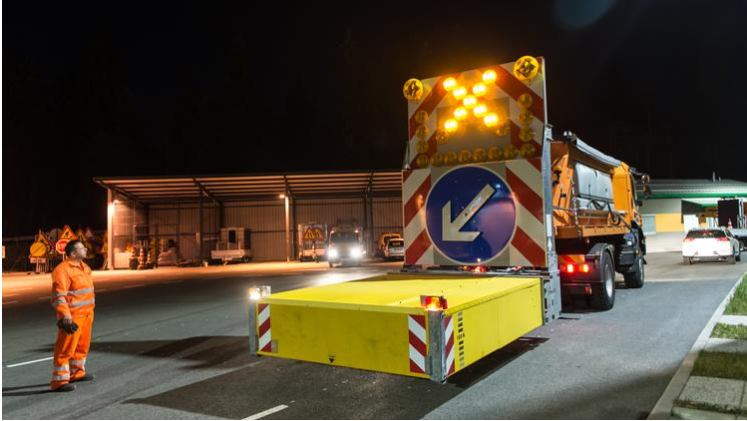
NDOT also brings out a mobile truck with what’s called an impact continuator. Illia said it’s like a movable crash zone that works like a guard rail to protect workers.

Two dozen Nevada Department of Transportation employees has been killed in the line of duty since 1948. The most recent employee that died in the line of duty was Ron Raiche Jr., who was struck and killed by an inattentive driver on March 30, 2015, while repairing roadway cracking on Interstate 80 near Battle Mountain.

Hi-Vis Workwear ANSI Class 3 High Visibility Safety Jacket

The first option for the best high visibility rain gear that is worthwhile to invest in is the ANSI Class 3 WJ9012-2XL High Visibility Bomber Safety Jacket from New York Hi-Viz Workwear. It is a fantastic choice if you truly want to own a jacket designed to bolster your visibility and guarantee your safety.

It falls under the Class 3 type of visibility jackets and adheres to the rules and regulations set by ANSI when it comes to this protective equipment. That said, I am certain that it will not let down its users in terms of giving them protection. I am incredibly amazed at the 100 percent waterproof nature of the jacket, too.

Apart from its visible lime color, it also features reflective tape around two inches wide at the arms, back, and front portions. This further increases your level of visibility. Another amazing reason to love this waterproof reflective work jacket is its snap-off adjustable hood, which is made to be convenient to put on and adjust.

I am also very delighted with the presence of the molded adjustable cuffs in this hi-vis winter jacket with reflective material. Such cuffs feature easy-to-use hook and loop closures. I am also sure that you will be pleased to know that this jacket comes equipped with a few pockets. This will help you bring some important items with you without any hassle.

It comes with a clear ID pocket as well as a pocket intended for mobile devices, like a phablet. Furthermore, this highly protective jacket boasts of its high waterproof and breathability rating, making it great to incorporate into your safety gear collection.

Adding arrow to cyclists’ vests reduced number of crashes

Cyclists who are concerned about their safety should don a specially designed high-visibility vest with an arrow to help stay safe on the road, according to new research from UBC Okanagan.

Gordon Lovegrove, an associate professor in the engineering department, and collaborator Takuro Shoji say they were interested to see if communication was more important than visual aids when it comes to bike safety. They added an arrow to a reflective vest with reflective tape to convey a message to Drivers: move over.

Their study, published in the journal Sustainability, claims to be the first paper in the world to study the role communication aids can play to help vulnerable road users (VRUs).

Researchers gave cyclists high-visibility vests with different designs, as well as no vests, and discovered that a vest with an arrow design pointing left (which made of reflective heat transfer vinyl) was the most effective.

The study discovered that the arrow vest design reduced the number of traffic accidents between cyclists and drivers.

“Vehicles passing VRU test subjects wearing the arrow vest design showed more respect, and participants’ perceptions generally agreed,” the study reads.

Part of their research, Lovegrove says, was fuelled by an interest in examining whether the advice of “Be safe, be seen” actually helped cyclists.

He notes that bikers are recommended to have front and rear lights, reflectors and brightly-colored clothing, but it doesn’t just help.

“While overall detectability on the road is critical, evidence suggests that current conspicuity aids cannot provide safety in their current form,” And a more optimal design is needed.”

The researchers call the results “promising,” but add that they used a relatively small sample size, and additional work is required to further test their findings.

Operation Dark Nights are not what you might think!

Mark Murphy suggests we use the extra hour in bed to check our cars – why don’t we do that these days?

Don’t forget the clocks change tonight, spring forward and fall back, so if I’m correct that means we get an extra hour in bed!

If you work odd hours like me you’ll know how precious that extra hour is.

It also means the nights will pull in now, as the winter darkness descends, it’s time to hunker down a bit or as the Scandinavians say Hygge.

If you haven’t come across the word, it’s Norwegian and Danish for a mood of coziness, comfortable conviviality with feelings of wellness and contentment.

That means in my case snuggling down in front of the telly with the fire on and a cheeky glass of red.

It’s also sadly the time of year that accidents increase on our roads and this week Suffolk police launched Operation Dark Nights to do something about it.

Apart from sounding like the title of a Batman movie, it’s designed to make us motorists get our cars ready for winter.

They are particularly keen to make sure ALL our lights are working and it can’t come soon enough. Callers to my BBC Radio Suffolk breakfast show were in full support of the campaign.

No doubt changing a bulb in your car is not as easy as it used to be but it’s not that hard.

Judging by the number of vehicles I see every day you’d think it was impossible.

It’s not like we don’t know they’re out, many vehicles now have warning lights on the dashboard and even if they don’t it’s easy to spot.

Lots of my callers were saying that these cars with a headlamp not working looks like a motorbike and it can’t be easy for drivers to see the road ahead with one out either.

My colleague Luke Deal spent an hour standing by the St Matthews Street roundabout in Ipswich counting the vehicles with lights out.

In one hour between 7.15 am and 8.15 am when it was still dark he spotted 27 vehicles with no lights on, 6 with a front or rear light not working, 10 with front lights only on and 8 cyclists with no lights or reflective clothing.

So if that’s anything to go by I think the police have got a lot of people to catch and have a word with.

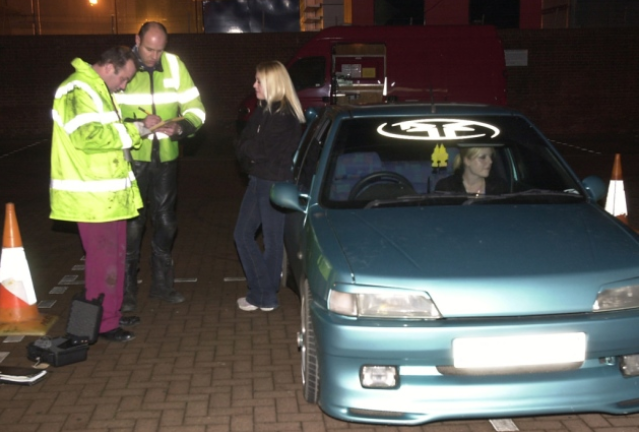
The police will also be stopping vehicles and checking tires and if you have a defective one it’ll be points on your license.

I think these days a lot of us just jump into our vehicles and off we go. Cars are certainly more reliable than they used to be but we really should make sure they’re roadworthy.

When I was young my dad would always be checking his tire pressures and depths. The oil level and washer level would be topped up and he’d make me walk around the car to check his lights.

If he was keen he’d adjust the tappets too! He’d also throw a cement bag in the boot to give the car more grip in the snow! With a rear-wheel-drive car, it’s something I still do.

We also needed to be checking our anti-freeze levels as the winter sets in and making sure we got the basics in our boot like a torch, warning triangle, and reflective jacket with high light reflective tape.

Now it seems like a lot of us don’t even know how to lift the bonnet and do the most minor of things.

The police can’t be everywhere and frankly, they have more important things to deal with.

Perhaps with the extra hour, we gain from the changing clocks we could all have a look over our engines tomorrow.

Although you might think a cement bag is a bit too much!

The most dangerous time for pedestrians is coming

“Looking over the years, pedestrian safety has improved significantly, which is undoubtedly the result of working together and the right strategy in this area,” Vesna Marinko, v. d. Director of the Agency for Traffic Safety, where they are currently working to improve pedestrian safety as part of national preventive action.

The Be Visible – Be Careful campaign will last until October 13, 2019. The campaign seeks to draw attention to the safety of pedestrians who are among the most vulnerable road users, with a focus on the safety of children and older road users.

Progress in all areas

“Pedestrian safety and traffic accidents are affected by various factors. Both vehicles and infrastructure, as well as human behavior and behavior in traffic. Looking at vehicles alone, there has been a lot of progress in recent years. We know different pedestrian detection systems, dead than freight. vehicles, not least the entire automotive industry is mainly trying to design the front of the vehicle differently,” Marinko says.

While car manufacturing and infrastructure require the participation of the masses, there is much that pedestrians can do for their safety.

Be tolerant

The AVP emphasizes the need to respect the rules of the road and, of course, the need for tolerance among all road users. It should be borne in mind that there are different groups of pedestrians on pedestrian surfaces, like children, the elderly, we also have differently impaired people, so such persons also need special attention.

Pedestrian safety is becoming especially important in the coming months. The visibility is lower, the days are shorter and the roads are much more slippery.

Pedestrian-related topic

In 2019, as many as 9 of the 11 pedestrian deaths died in the dark part of the day. Data for the five years (2014–2018) show, however, that about two-thirds of pedestrians (47 of 75 pedestrian deaths, or 63%) die in the dark part of the day when visibility is impaired. None of the pedestrian deaths in 2014 had a reflective body.

A pilot pedestrian observation was carried out at AVP is 2017, and the results showed that the proportion of use of different reflectors was extremely low – only 1.2% of pedestrians had a firefox or reflective tape, 4.2% of other reflective materials, as much as 93% of pedestrians did not use any reflector. Therefore, 16,000 reflecting bodies will be distributed during the national preventive action.

Wear fireflies

“Therefore, as the Traffic Safety Agency emphasizes in all preventive actions, the pedestrian visibility must be kept in mind. We have distributed over two million fireflies in Slovenia, which means that every Slovenian could have one firefighter by now,” adds Marinkova.

Modern times, however, put pedestrian safety at stake. Pedestrians using a mobile phone pose the greatest danger when writing text messages or posting on social networks. This is extremely dangerous when walking or crossing the road.

AVP has been told that cell phones are distracting from traffic. According to research, pedestrian reactions are reduced by as much as 60%.

Pedestrian-friendly e-scissors

They are also highlighting new forms of e-mobility, such as e-scooters and similar forms of special means of transport, which are increasingly occupying pedestrian areas. Therefore, the Agency has already proposed updating the legislation.

“The problem with electric scooters, however, is certainly their speed and their quietness,” Marinko replies to the topic Automotive.

This should not in any way be a blow to the often slightly sublime behavior of pedestrians, but it is worth remembering once again the known fact. Marinko concludes that walking is the most natural form of exercise, is emission-free, and has many positive health effects: “25 minutes of walking a day brings seven years of quality life to an individual.”

Hope for Road Workers and Careless Drivers

Dars now use a special collision safety bellows mounted on the back of a truck or a larger delivery truck to protect workplace lockups, as well as vehicle breakdowns on back belts and accidents. Its main role is the absorption of released energy upon impact.

The first defense pillar that protects careless drivers by overlooking all light alerts and traffic loops is the safety bellows. This safety element, whose aluminum core, embedded in panels or honeycombs, is capable of absorbing large amounts of energy upon impact, has saved many lives on our roads.

Experienced maintenance coordinator Dusan Molek from Dars Highway Base in Postojna, Dusan Molek, who is very involved in highway safety, says that in the case of a safety bellows, it is fairly effective protection:

“The onboard safety bellows are introducing a new rulebook, and are intended for highway users, drivers who make a mistake. Its technology allows a clumsy driver who overlooks all the signage and bumps up to a hundred miles per hour to save lives. Unfortunately, work barriers are too frequent, and this year alone, the oncoming security bellow has already played the role of a defensive pillar three times this year. “

1. Turn on the turn signals

We drive 130 miles an hour and all of a sudden the car breaks down. In such a case, immediately turn on all the safety indicators. Let’s not try turning the key and pressing the gas immediately. Instead, we press the clutch pedal, as this is the only way to maintain enough speed to shift the calm vehicle to the edge of the carriageway. the paragraph lane where we stop.

2. Make sure you wear a reflective vest

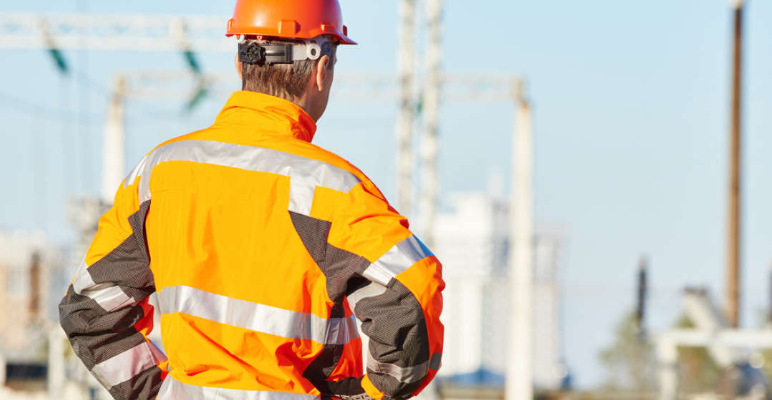
When leaving the car, all passengers in the vehicle must wear a reflective vest with reflective material. If we do not do this or we do not have a vest, we are especially visible in the mist, in the snow and at night, and present a possible risk of a vehicle colliding with us. Also, police officers can find us.

After stopping, the vehicle must be left as soon as possible, being very careful, since the remaining traffic is running smoothly. In the rear-view mirrors, we have to make sure that the carriageway is empty while holding the reflective vest with reflective tape we will put on our way out. With our vest – even at night – we are secured and visible at greater distances. Otherwise, we must get out of the vehicle as quickly as possible and retreat behind its rear. Possible passengers should exit through the right door and retreat beyond the guardrail – special caution is needed on objects and those parts where there is a gap behind the guardrail. They then wear a vest and keep an active eye on traffic.

3. Safety triangle

The following is the installation of the safety triangle. If we know where it is, we can quickly find and use it, but if we have a lot of luggage loaded in the car, we will be in big trouble, so the triangle should always be on hand for quick use. It is advisable to learn how to make a triangle at home because even in this moment of panic, even this simple act can cause problems. We need to place the triangle at least 100 meters from the vehicle. The longer the distance, the sooner drivers will be able to react and prepare for danger.

It is very important not to move around the right lane when setting the triangle, but to walk only behind the safety fence.

THE NATIONAL REFLECTION DAY IS OCTOBER 18

National Reflex Day is being organized for the 13th time in 2018. The goal of the day is to increase the use of reflex and to reduce the number of pedestrian accidents. Kyrre Gorvell-Dahl better known as Kygo is this year’s reflex designer.

Safe Traffic’s call to everyone this day is: Find out your reflections, check that they still have an effect and attach them to the outer jackets. Or go out and buy yourself a new little lifeguard this day!

The margins between a near-accident and a serious accident are small

Over 1, 7 million Norwegians have experienced near-misses due to lack of reflex use according to Trygg Trafikk. We know that reflex works, but there are still few who use reflex! In recent years, about 4 out of 10 have been using reflexes.

The effect of reflex is higher than many people think

Pedestrians are at higher risk than many other road users, especially in the dark. The risk is at least twice as high for being hit in the dark as in daylight. The accidents often happen because drivers are unable to detect dark pedestrians in the dark until it is too late. It also turns out that the chance is greater in the evening for drivers to drive with a crush or less alert due to fatigue. And when we know that pedestrians are far less protected against accidents than people in cars, it underlines the importance of reflex use.

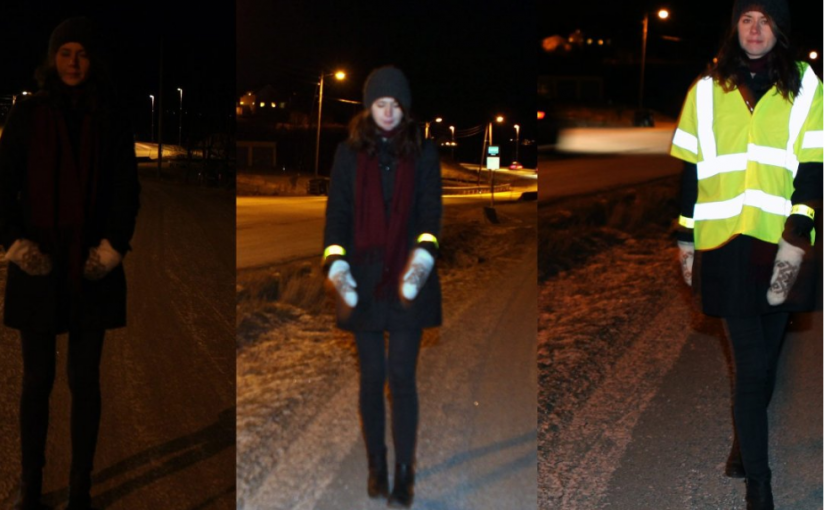
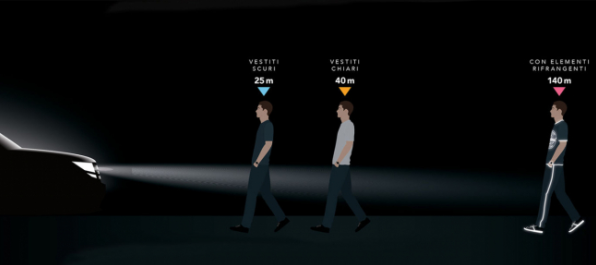
The purpose of using reflections and clothing with visible colors and reflective materials is to make you visible so that the driver can detect you more easily, even in situations where motorists do not count on any pedestrians. Reflective use reduces pedestrian accidents. Without a reflective material, you are first visible at 25 – 30 meters, while with reflective tape you appear at 140 meters when the car uses a low beam.

Converted to seconds, the driver has 10 instead of 2 seconds to respond, it can be the difference between life and death.

Street lighting creates false security, and many believe that reflexes are not necessary when walking in areas with street lights. It is wrong. Even if you see the car, the motorist does not see you. Therefore, it is cheap life insurance to always use at least one reflex when you are out in the dark.

Tips on using reflex

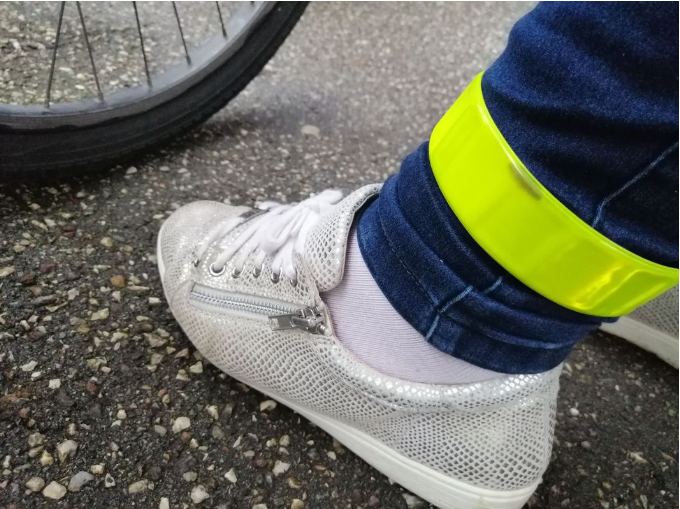
Safe Traffic recommends hanging the reflex at knee height. Then receive the most light from the car headlights. Reflections that move when you use them, they seem best. A strong color reflective vest will have a good effect both in the dark and in daylight. Check that the pedestrian reflex you are using is marked with CE EN 13356, it is of good quality. But reflections get worn when you retrieve the old reflectors from the drawer check that it affects! Put the reflectors in the pocket of the jackets you wear, so you don’t have to remember to bring it with you when you go out.

What you need to provide when traveling abroad in your car

Going on a trip to European countries, it is important to consider many details. A visa, an international driver’s license, motor third party liability insurance are far from all the documents that a person wishing to drive a car outside the transport routes of his native country will have to draw up.

Point One – Green Card

The Green Card is called the OSAGO analog. With the difference that the policy is valid on the territory of European states. The program ensures motor liability.

According to information received from the MTIBU insurers’ association, the number of Green Card international policies sold has increased by 48.2% since the beginning of 2019. This insurance program allows you to travel abroad in your car. Without a Green Card, a vehicle at the border will not be allowed to pass. It is also worth considering that the policyholder is allowed to drive a vehicle exclusively on the roads of the states specified in the contract.

The cost of the Green Card in Ukraine is reduced and adjusted annually by the euro. Official sources confirm that each year traveling without a visa is becoming more accessible for Ukrainians. What should be taken into account when going on a trip abroad in your car?

Point Two: Personal Documents

If you are planning a car trip around Europe, you should also prepare personal documents in advance:

International passport;

Travel insurance

Driving license of international standard;

Certificate indicating registration of the vehicle. It can be checked together with a document indicating the technical condition and condition of the machine. Therefore, if possible, pass inspection before the trip;

Inquiries from the place of work and bank statements. They are checked if there are suspicions that the family is not going on a trip, but for permanent residence in one of the countries.

And, of course, do not forget about the money. At least, because the cost of gasoline in Europe is higher.

Point Three: Additional Costs

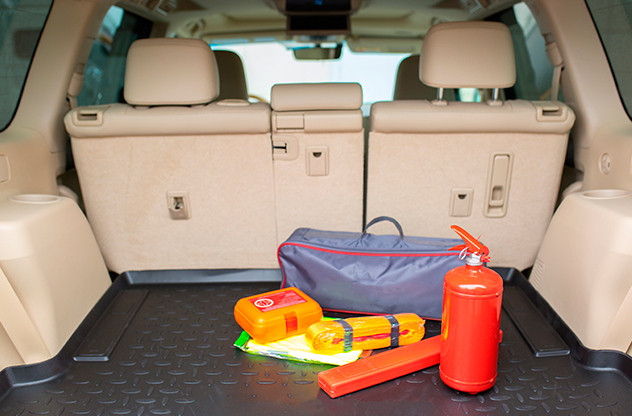
In addition to purchasing the Green Card policy, lovers of overseas trips in their cars must also prepare for the additional costs. Firstly, it is worth checking the availability of the following equipment in the machine (if it is not there, be sure to purchase it in advance):

Sign of emergency stop of the vehicle;

First-aid kit with unexpired medicines;

Reflective vest with reflective tape(checked in countries such as Austria, Lingerie or Hungary);

Unexpired fire extinguisher.

In some European countries, they check the availability of a spare wheel, towing cable, a set of spare lamps for low beam.

Also, it is recommended to study in detail the rules of the DD of the countries in which the trip is planned. For example, in Austria, there are several toll highways for which a trip without payment is punishable by a fine of 120 euros. And in France, there are zones with so-called low emissions. Entrance to their territory is prohibited for those cars that run on the fuel of Euro-2 class and lower. There are also penalties for traveling with headphones and smoking while driving.

Knowing these subtleties, you will be on the alert and your auto travel will pass without unnecessary worries.

Check the difference!

In Norway, 29 percent use reflex on average. In the three northernmost counties, the average is up to 38 percent. This is confirmed by Project Manager in Trygg Trafikk, Carina Henske.

“I expect it has something to do with dark time, but we are generally too bad to use reflex in Norway,” she says.

Difficult

For this reason, Trygg Trafikk wants an order to use reflexes in the country. Some care, others don’t.

It may be a good idea, should we believe Karlsson on Jula. He is happy that many people use reflex, but have a clear idea of ​​who does not use.

“The youth gives a shit fuck. To me, it’s scary that people think so differently,” he emphasizes.

And he’s not alone in that thought. In Safe Traffic you are aware of the problem.

“Youth is a difficult target group, but I think there are just as many adults who reflex,” says Henske.

At least two reflexes

She recommends having at least one reflex on each side of the body.

“Certainly at knee height on moving parts. A hang reflex or a strap up is good, four reflexes are superb,” she says.

Henske sees no tendency that there is a new trend in reflex use, but that more and more people use the vest.

“We want an order for reflexes in traffic, but it is not unknown that people are afraid to ‘destroy’ the outfit with a reflective vest over. But there are alternatives, we should believe Henske.”

Now there are more and more garments with sewn-in reflex. Then it quickly gets a little cooler.

She also brings out the so-called “microflexes” as figures and other small objects that can be used as a reflex. Although we are better at using reflexes in Northern Norway, many believe that people are too poor to travel safely in traffic.

Led tapes

A quick visit to some of Bodo’s stores shows that it is the reflective vest with reflective tape that sells best when it comes to reflex equipment.

“Especially kindergartens want the kids most visible,” says Eldar Andrè Stendal.

He is the store manager at Europris Morkved and believes that several also swear to so-called joint bands with reflective material where there are flashing lights inside the reflex that you wrap around your arm or foot.

“People are also interested in luminous figures that are often hung on a jacket or backpack,” he continues.