Use reflex, it’s a cheap life insurance

Autumnal dark and rainy roads characterize many an early morning in Norwegian cities.

The Norwegian Automobile Association (NAF) warns pedestrians who leave their homes without reflection, partly because the vision of many drivers is impaired with age.

As a 60-year-old, you have lost more than half of the night vision you had as a 20-year-old.

“Impaired vision in combination with autumn darkness can create dangerous traffic situations. The soft road users, pedestrians and cyclists, are particularly vulnerable. If you use reflex, the risk of being hit by 85 percent is reduced,” says NAF communications manager Camilla System.

Will make reflex natural

The basic rule in section three of the Road Traffic Act emphasizes that everyone “must be considerate and be cautious and cautious so that no danger or injury can be caused and so that other traffic is not unnecessarily hindered or disturbed”.

This provision applies to motorists, cyclists, pedestrians and others traveling in traffic. For the soft road users, it is important to make themselves visible by using reflex and light.

But according to Ryste in NAF, it is not natural for everyone to put on the reflex before going out in the dark.

“Over 90 percent use seat belts and the goal must be that just as many use reflexes. It’s important to bring this in as a natural part of going out in the dark,” says System.

Street lights provide false security

Figures from Trygg Trafikk show that four out of ten Norwegians use reflective material, and this means they are too few.

“We are better at using reflexes on country roads than in the cities, but the street lighting provides false security. There are more pedestrian accidents in the cities than on the road,” says communications adviser Christoffer Soland Steen to Dinside.

The gender differences in reflex use are minimal: 51 percent women and 49 percent men, Trygg Trafikks reports from last year. The most common reason for not using reflex is simply oblivion.

“We are much better at making sure our children use reflexes than we are using reflexes themselves. Also, reflexes are often fitted in children’s outerwear, which also helps the children use more reflexes than us adults,” Steen adds.

Steer clear of reflective spray

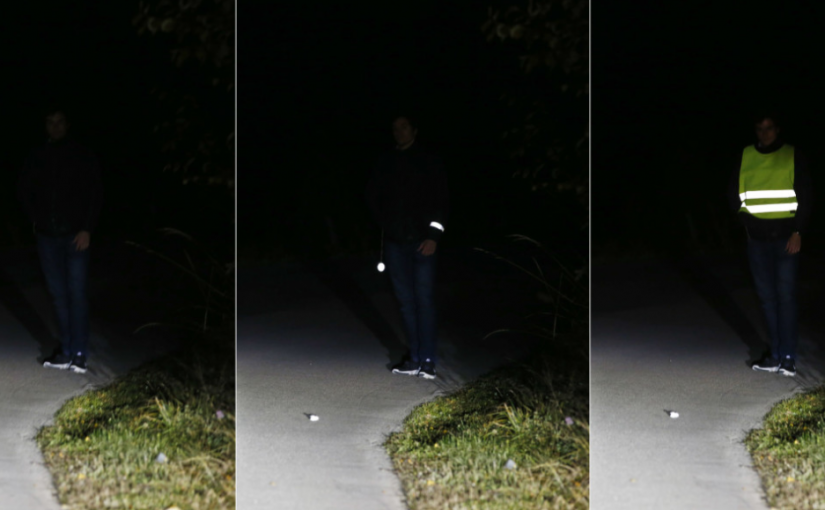
You get the best visibility by using a reflective vest with reflective fabric, according to NAF. If you use other types of reflectors, it should hang at knee height to capture as much light as possible from the headlights when you are out and about, and if you have reflections on both sides you will also be more visible.

That reflective vest is the best was also shown in the reflection test Dinside wrote about last year. Also, the reflex trading net and reflex umbrella came out well.

Reflective vest is cool

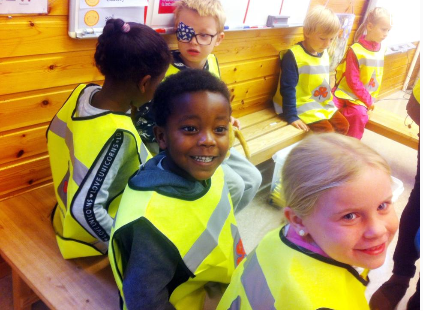
Thursday was National Reflection Day. This was highlighted by the fact that Narvik municipality and police distributed reflexes to the 1st and 6th grades.

Distributed reflective vests

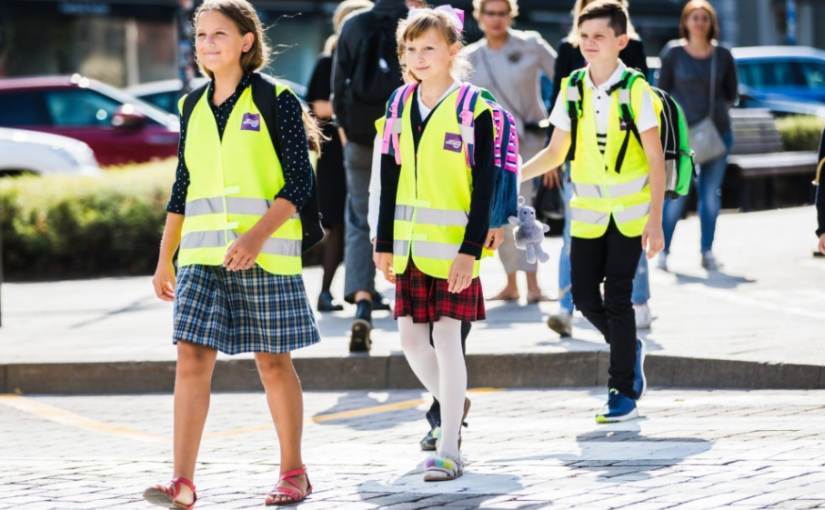
Those in the first grade were given yellow reflective vests, while those in the sixth grade were given reflective bands that can be used on arms or legs.

“Those who are in the 6th grade and who are sponsors are given the task of making sure that they use reflex in the first place. And you in the first-class must make sure that they in the sixth class also use reflex,” says Sigbjorn Normann at Vei and park in Narvik municipality.

Must use reflex

Sebastian Haugan Johansen (11) and Linnea Overbyhagen (11) are in sixth grade and are sponsors of the first.

“I’ll try to use the reflective tape, at least in the evenings,” says Sebastian.

Linnea thinks she gets to use her reflex tape often because she tends to go to several places in the street in the evening.

Áslat (5.5) and Kelian Sword (6) are both happy to get a reflective vest.

It is fun to use a reflective vest, and we are using it, the two say.

Students know well why reflex is important.

“It is important that we are not driven by cars and such,” says Linnea.

“There can also be a trailer, and it is important with reflex when we go down to the shore in the evening,” says Áslat.

Police officer Mats Aamodt thinks it’s good the students have such good attitudes.

“It is dark in the morning, evening and night, and it gets darker. So it is important to use reflex to be seen,” he says.

He has experienced meeting road users without reflex and knows they are hard to see. He recalls that it is extra dark and difficult to see walking without reflex now before the snow arrives, and especially when the asphalt is wet.

Use reflex

He encourages everyone to use reflex, both children, adolescents, and adults.

“Wear too much reflex rather than too little. Wear both reflective vest with reflective material and reflective tape. This applies to both children and adults,” he says.

Explained what drivers forget to do when a car crashes on the road

Drivers who stop in the event of an accident or accident on the road often underestimate the circumstances and fail to take care of their safety, confident driving professionals. Making sure they are perfectly visible, they often carelessly enter the driveway, even at dusk, which results in serious injuries or even death.

There is no shortage of cases of passing car accidentally losing drivers in the car they drive. Many accidents occur during the dark hours of the day, as although the car must have a reflective vest sew on reflective tape and be worn when leaving the vehicle, the frequent driver does not have one at all or is so far away that it is not possible to reach it quickly.

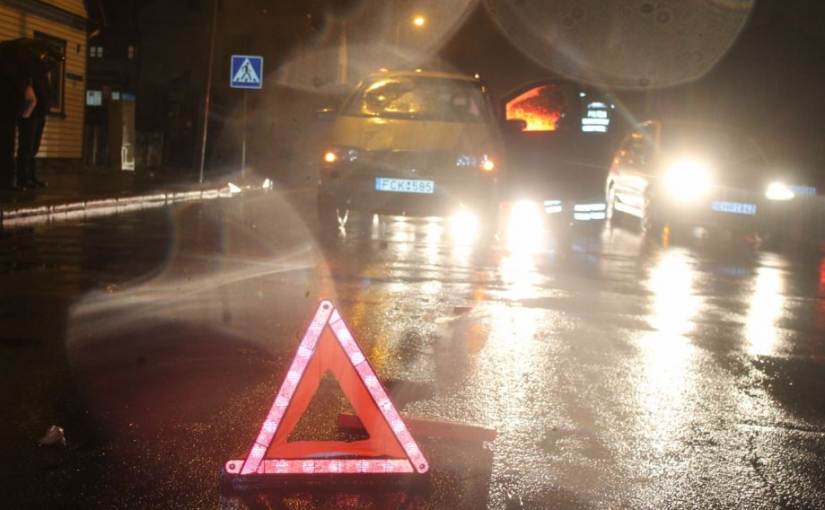
Trouble is because people do not appreciate such situations properly. Here is how I saw the accident today while driving home in Vilnius: “a small car collided with a minibus. The minibus driver stopped in the far left of the road and ran across the road to the right lane to ask if everything was OK with the other driver. And they did it all on the street, where the traffic flow is 80 km / h. and faster,” said Olga Zidovlenkova, an instructor at the driving school Amplius LT, grinning. First of all, she said, drivers need to realize that in the event of a breakdown, something should stop as far as possible. Even when the car door is stopped in the street, the instructor says, you have to check that there are no passers-by and can block the car. Finally, you should only get out of the car when it is safe to do so. The reflective vest must always be readily accessible to the driver. “And be sure to wear a vest with reflective material. This must always be in hand in the car. In the worst-case scenario, the driver should at least put on a few reflectors before driving on the street,” the interviewer said. Also, the instructor reminded that when the car is forcibly stopped, the Road Traffic Code (KET) states that it is mandatory to turn on the hazard warning light. “The car must blink, and if the emergency lights aren’t on, then a flashlight on the back of the phone can be placed so that passers-by can navigate,” she said. Forgotten Emergency Stop Signs The instructor spoke if there is no emergency light, it is defective, or if the car is stopped where the car is stopped by other road users less than 100 meters away, it is mandatory to park it on the side of the carriageway. emergency stop sign.

It is specified that in settlements such a sign should be placed at least 25 meters away from a stopped vehicle and outside settlements at least 50 meters away. If the car breaks down, you need to make sure that it is visible and wait for assistance while standing still on the sidewalk where it is safe. “However, very often people forget this rule and don’t make the triangle at all. Although I would say that sometimes two such signs would come in handy, one farther away, the other closer, because often passing cars overtake or cross the sign and are no longer visible. It turned out that truck drivers often use two signs,” commented the specialist. Not for safety, but for roadworthiness Finally, according to O. Zhidovlenkova, some accidents happen because drivers and passengers of a broken car are parked in the driveway for some reason. “Without reflective vests, especially in the weather like now, early morning or evening, they are simply invisible. If the car breaks down, you need to make sure that it is visible and wait for assistance while standing still on the sidewalk where it is safe,” the specialist emphasized.

The driving instructor also had complaints about uninhibited drivers, who do not realize that the list of must-have items on the car is not just listed on the KET itself. “It seems to everyone, for example, that the same reflective vests should be worn for maintenance and not for their safety. It has been repeatedly seen when drivers borrow everything they should have before the roadworthiness test. Probably if you stopped ten cars on the street right now, maybe only three would have everything mandatory,” a traffic safety expert predicted.

Protect Children on the Road – Protect Me

Twenty years after the Protect Me campaign – twice as few children injured, four times as many killed Protect me, the longest-running social responsibility campaign in the country, will take place this year for the 20th time. As every year, its organizers invite all road users to be extremely careful on the road, thus protecting children on their way to school and home. According to the data of the Lithuanian Road Police Service, the number of killed children has quadrupled in 20 years, and twice as many were injured. The number of injured children traveling on foot alone reached 634 in 2000, and in 2018 dropped to 202 injured children. The Protect Me campaign also contributes to improving numbers. Every September, the initiative “Protect Me”, which takes care of the safety of children on the roads, is organized by Vilnius City Municipality, the largest insurance company in Lithuania “Lietuvos dramas” and its partners – Vilnius County Police and other municipalities in the country. Lietuvos Draudimas, the initiator of “Protect Me”, as well as annually ensures all schoolchildren of the country against road accidents for 5 thousand. amount of EUR. Personal insurance coverage for schoolchildren is available from September 1 to September 30 throughout the country for 24/7 hiking and cycling. In total, over 322,000 students will be covered this year. This year, in cooperation with the municipalities of twelve cities, this year the insurance company 13 thousand. elementary school students will don light reflective vests.

Traffic focus in Vilnius Every year after the summer holidays, traffic, especially in the big cities, intensifies as thousands of schoolchildren return to the streets. In the city of Vilnius, the municipality, in anticipation of the new school year, is implementing measures to improve road safety on the streets, which reduce the likelihood of accidents, encourage drivers to comply with speed requirements, and consider other road users. More than 100 speeding hills, 70 directional lights, and other road safety improvement elements have been installed in the streets, near educational institutions, pedestrian crossings and junctions and other dangerous places. Almost 100 pedestrian crossings have been newly marked with the “Protect Me” label to protect children’s safety and to draw the attention of drivers to educational institutions. By facilitating the movement of pupils, transport is improved by building cycle paths, sidewalks and restructuring existing infrastructure. Yellow lines also mark areas of street intersections, 75 intersections, update existing street signage, introduce safer and more informative traffic arrangements at the Volunteer roundabout. The municipality has bought and will distribute about 2400 signal vests and 4000 reflectors to the students of Vilnius city. “Together with our partners, we look for solutions every year to help raise awareness of child safety on the road. In recent years, we have included seniors on duty at school crossings to help children cross the streets safely. We share reflectors and reflective vests with reflective tape  for children, with an emphasis on safe cycling. These initiatives and actions bring results, but we not only have to teach children in theory, but they also have to implement practical knowledge on how to be safe. along the way. Not all adults, and especially children, know how to ride scooters correctly and safely. I want to encourage adults to set a good example for children and to behave correctly on the road, and to wish children a safe school year,” says Deputy Mayor Edita Tamošiūnaitė. Crossings near schools are marked with a special yellow campaign sign across Lithuania. There are more than a thousand of them this year. The sign is already recognized by the vast majority of drivers and pedestrians. Insured every student Lietuvos draudimas reminds that students and their parents or guardians do not need to apply for insurance to come into effect – every child is already insured. In the event of a traffic accident in which the pupil is injured, his parents or guardians should notify Lietuvos dramas at short number 1828 or via the company’s website www.ld.lt and the victim will be compensated. “The Protect Me campaign takes care of children returning to the streets and roads every year after the summer holidays. With this initiative, we encourage all adults to take responsibility for the little road users and to protect them by disciplining them for carelessly running across the street and setting the right example for themselves,” says Kęstutis Šerpytis, CEO of Lietuvos Draudimas. For the third year in the Protect Me campaign, Lietuvos Draudimas has been donating reflective vests to the beginners of smaller towns and districts. During this time, the safety of 33 district primaries has already been taken care of, with 34 thousand vests distributed to them. “This year we donated light reflective vests to make their trips safer. Light reflective vests with reflective material are one of the simplest but highly effective means of ensuring pedestrian safety on the road. They are especially needed during the autumn and winter season when it gets dark quickly – wearing a vest can protect against a severe disaster both in the city and in the country,” says Kęstutis Šerpytis, CEO of Lietuvos Draudimas.

The situation is getting better According to Saulius Gagas, Chief of Vilnius County Police Headquarters, the situation on Lithuanian roads as well as in the city of Vilnius is improving – fewer and fewer children are injured and killed in road accidents. No children died in the capital during the first half of this year, and the number of injured has decreased compared to the same period last year. As the new school year begins, officers of the Vilnius County Police Headquarters will traditionally pay special attention to ensuring traffic safety, especially near schools and preschools. Officials are urging drivers to be extra vigilant and reduce speed on the streets, especially when passing schools or preschools. “The safety of all our children also depends on an adult’s responsible approach to traffic culture. The most effective way to teach safe behavior on the streets and highways is to set an example for our children,” says Saulius Gagas, the Vilnius County Police Chief.

Road safety: Equipment for safer driving of HRK 150

Protective equipment is not always required, but it is good to wear it because the cyclist is more visible to others in traffic. Everything can also be purchased at shopping malls.

I often cycle and wonder if I should wear a cycling safety vest. When should I have it and do I have to wear it when I drive through the Maksimir forest, the reader asked us.

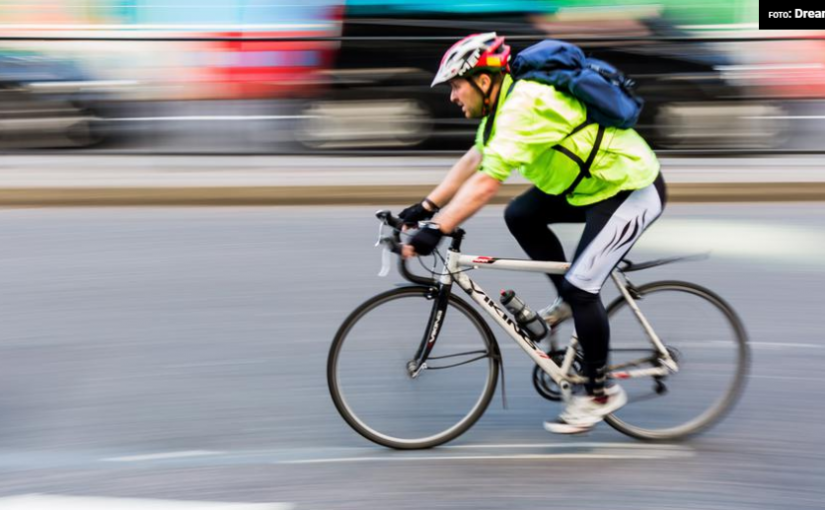
“A bicycle driver who rides a pavement must have a reflective vest sew on reflective tape, reflective cycling attire or another reflective mark at night and, if the visibility is low,” the Ministry of Interior replied. This means that the reader driving through the Maksimir Forest is not obliged to have it, but it is still better to be visible in traffic.

According to the Road Traffic Safety Act, a bicycle rider who does not wear a reflective vest with reflective material or other reflective mark is in violation and is fined HRK 300. The same penalty applies to those cyclists who do not have lights.

“At night, from the first dusk until full sunrise, and in the daytime, if visibility is low, the bike must have a white light on the front and red on the back,” says Article 101 of the Traffic Safety Act.

The Ministry of Interior replied that the technical requirements for vehicles involved in road traffic, as well as for bicycles, were laid down in the provisions of the Ordinance on the Technical Conditions of Road Vehicles.

“The bicycle must be equipped with a road light and position light, or rear light. It must also have ‘cat eyes’, cat adopters, red on the back of the bike and yellow on the pedals, reflective elements on the wheels and bells,” says Article 166 of the Regulations.

It also states that the headlamp must be adjusted to illuminate the road for at least 10 meters and at most 50. A poorly placed headlamp, especially if it is a strong LED lamp, can be a problem for anyone who comes across it. Namely, if the careless rider did not point the lamp slightly downwards but straight ahead, he would blind the cyclist coming to meet him on the cycle path.

Cyclist under 16 must wear a helmet when driving on the road. Children under the age of eight must also wear a helmet if older people ride them on a bicycle in the seat.

Highway Tips: What to do in the event of an accident

Although traveling by road is statistically one of the safest ways to travel by car, it is essential to be careful about unforeseen circumstances and unsafe drivers.

In recent weeks, we have witnessed several highway accidents where high speeds make it difficult to avoid tragic consequences.

Here are some tips to help you make your trip as safe as possible:

Turn on the dipped beam and take off your sunglasses before entering the tunnel. Pay attention to traffic lights and other traffic signs in the tunnel.

Drive at the permitted speed. Keep track of the security devices in the tunnel and places such as emergency exits and SOS phones.

Stop only in case of extreme need and at extensions.

Before traveling on the road and while driving, keep track of the weather forecast and traffic information.

Keep track of messages on traffic info displays on individual sections of highways and notifications of possible detours.

You respect the traffic signage that indicates a detour, as it will take you back to the highway again and towards your desired destination.

When driving on a wind-driven section, strictly observe the variable speed-limiting light signs and maintain a safe distance between vehicles.

When engaging in highway driving, in all cases (tolls, loops, landings), be careful and follow the traffic signs so that you do not find yourself in the opposite direction of any part of the highway.

When driving on a highway, be aware of the possibility of encountering a vehicle moving in the opposite direction, so it is advisable to check the traffic lane ahead of you, in addition to checking vehicles moving behind you.

Keep up to date with traffic information on the road, which will give you timely insights about a possible highway accident on the highway, as well as important messages and tips for safe driving.

Observe obligations and restrictions through light-variable signage and messages on information portals.

If you get traffic information in the opposite direction, reduce the speed to 40 km / h on the section of the highway you are on, and proceed with caution in the right lane without overtaking with all four direction indicators turned on. Stop the vehicle at the first stop along the highway and wait for information on the end of the hazard.

If you have spotted a vehicle traveling in the opposite direction on a highway, report the information immediately to the police.

Only when you are informed that the incident situation has ended do you continue your normal highway journey.

Procedures in the event of a traffic accident

Turn on all four direction indicators and, with extreme caution, stop your vehicle in the stop lane a safe distance. Turn off the engine, stay calm and calm.

Wear a safety reflective vest with reflective tapes and secure the crash site with a safety triangle, if not already done. Notify the police immediately.

Do not move injured persons unless they are in immediate danger of fire or explosion.

Provide first aid to injured persons in a car accident, within your knowledge and ability. Stay on the scene until police arrive.

Highway assistance

In the event of a vehicle breakdown, if there is no possibility of stopping in the parking lot along the highway, stop the vehicle in the stop lane (or SOS extension or resort) just off the edge of the roadway and switch on all four direction indicators.

Have all passengers leave the vehicle on the right and away from the car and lane. Do not stand in the lane!

Wear a reflective vest with reflective material and place a safety triangle at the prescribed distance to mark a stopped vehicle (the recommended distance is 100 meters on the highway).

Whether or not you have a subscription, call the on-the-go help desk.

In case the driver is unable to remove the car from the highway due to a breakdown of the vehicle, a specialist service will be responsible for this.

Keep your distance !!!

Driving too short a safety distance is statistically one of the most common causes of road accidents. Most of this pattern is also related to speeding.

According to the traffic rules of the Law on Traffic Safety (ZOBS), the driver is obliged to keep the vehicle at such a distance from other vehicles in traffic that, given the speed of movement of the vehicle and other traffic circumstances, it does not cause danger and does not interfere with other drivers.

Most drivers drive too close because of their lack of knowledge about the length of their vehicle’s stopping distance about changes in speed and road conditions.

What is a safe distance?

The safety distance is the rule: a driver driving another vehicle in the same lane must drive at a distance not less than the distance traveled by that vehicle in two seconds unless otherwise specified by a traffic sign.

On wet pavements, the distance should be increased to four seconds and in winter conditions to a minimum of 6-8 seconds.

Cyclists, do not underestimate the reflective elements or helmet

The most common mistakes of cyclists include riding without lights and reflective elements or cycling outside the village without a helmet. According to police spokeswoman Denisa Balogh, driving in groups side by side or driving under the influence of alcohol is not exceptional either. What rules should cyclists follow during their journeys?

It is important, for example, to wear reflective vests, especially at night and in low visibility. “Reflective material can be seen at a distance three times longer than white clothing and more than ten times that of blue clothing. By using reflective elements, cyclists extend the distance over which the driver can see them,” the spokeswoman explains.

At the same time, Balogh recalls that children under the age of 10 can only ride a bicycle unattended on a cycling path, a dirt road, a forest road, or a residential area. Otherwise, they must be under the supervision of a person over 15 years of age who must also be sufficiently competent to supervise them. “When traveling with children, of course, there should be helmets, leg guards and reflective fabrics on clothing,” he adds.

The helmet must have children under 15 years in the village. Other cyclists are obliged to wear it only outside the village. It is important to ensure that cyclists only drive one behind the other on the side or on the edge of the road. “Two cyclists can only walk along the bicycle path, and only if they do not restrict and endanger other road users,” says Balogh.

At the same time, the police appealed to drivers to be considerate of cyclists. “We all know that in the case of a cyclist versus a car, the less protected participant always pulls the shorter end. Therefore, it is important that the driver of the motor vehicle anticipates what he can do if necessary and responds adequately,” Balogh points out.

“Maintain sufficient lateral distance from cyclists to prevent them, counting with caution, poor eyesight, and hearing, especially of older people. While driving, pay close attention to the right side of the road because of the most likely occurrence of cyclists,” he continues. At the same time, it points out that a right-hand driver is obliged to give priority to a straight-rider. This is not only for the tram driver.

A year and a half with mandatory reflective elements

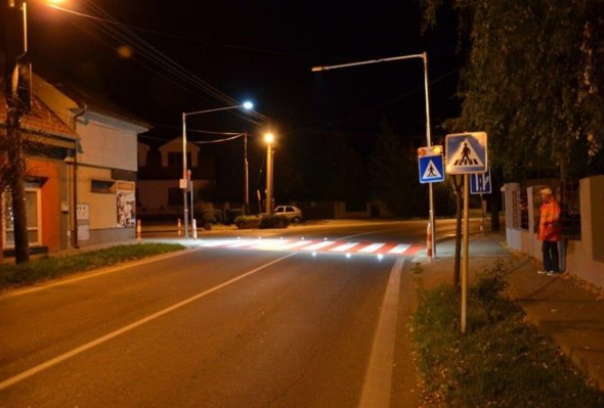
On Sunday it will be a year and a half since pedestrians were to start shining on our roads. Literally, on February 20, 2016, the following formula was added to the Road Traffic Act: “If a pedestrian moves outside the village on a side or roadside in a place not illuminated by public lighting, he/she is obliged to wear retro-reflective material positioned so as to be visible to other road users.”

Light Up

It’s shortly before 9 pm when we pass the sign indicating the end of Prague. We decided to see how the Czechs comply with the law. True, all kinds of reflectors, belts, and clothing strips are grim autumn and winter. But the law applies without exception even at the end of a capricious summer. Is it already dark or not? This is what we say when approaching from Radotín towards Černošice – we meet a completely unlit runner. The legislation defines reduced visibility by not recognizing other vehicles, people, animals or objects on the road. It is not only about darkness, dusk or dawn, but also heavy rain, snow, and fog.

From a statistical point of view, the new regulation looks promising. Perhaps in the first year of validity, the number of killed pedestrians at night outside the village decreased from 37 to 31, which is almost a fifth decrease. A massive communication campaign, warning of the possible consequences of invisible night walks, certainly played its role.

The fact that the reflective components make sense is further supported by other harsh numbers: “After the law came into effect, we registered a total of 24 killed pedestrians with reduced visibility. In seventeen cases, the pedestrian was not demonstrably reflective,” says Petr Habenicht of the Police Presidium.

Rather a warning

“Yes, I know I should have a flashing tape. I wear it in winter, but it is not completely dark yet,” the runner we meet at the outskirts of Hlásná Třebáň grows in front of us. At least she wears a distinctive red T-shirt – but it wouldn’t help her before the law.

“After the introduction, we announced that we would especially explain to pedestrians the meaning of this duty. At the same time, however, we pointed out that, as the end of the year, which tends to be the riskiest to pedestrians, is approaching, police officers will also apply block fines for non-compliance,” explains Habenicht.

However, not only unmarked pedestrians but also drivers behave dangerously in the dark. “Classic halogen headlamps have a range of up to 100 meters, which should be adjusted to speed. If we do not, we often do not have enough room for an adequate response. At the last minute we are not able to react to the obstacle,” says Besip’s head Martin Farář.

We know

Another problem that annoys night roads is the poor lighting of many cars. As we head to the destination of today’s journey, we chose the village in style.

Darkness near Beroun, we see for ourselves. Although traffic is minimal, the percentage of squinting or squinting cars is significant. The risk is not only for pedestrians but also for the surrounding drivers, which can unpleasantly dazzle. Beware of them, we say to each other as we approach an intersection somewhere in the fields. Five young people with a dog walk along the verge. Reflective elements nowhere, at least have well visible white T-shirts and hold much to the edge. On the right side of the road. “I know we should have tapes. But we didn’t take them with us. But we are cautious,” one of the girls surprised us with an apologetic tone. When we leave, the crew moves off the road. By law, pedestrians are allowed to walk along the side of the road or at the edge of the road no more than two side by side. In low visibility, they even have to go behind – that is if it is not a light-marked, organized formation. However, according to Besip’s experience, rainfall is regularly caused by ignorance of the rules. Pedestrians in low traffic do not care where to cross. “They go red, run off the crossing, and even across the highway. At night we are more anonymous and more often sin on rules, which can have tragic consequences,” says Farář. A repeated problem is just walking on the wrong side of the road. “The car thus arrives at the back of the infantrymen and therefore cannot react adequately. They also commonly believe that when they see the lights, the car sees them. This is a great misunderstanding and underestimation of the situation! ”Warns the pastor.

Where are they?

When we arrive in dark Tman, it is half-past eleven and there is no one on the roads. , Berounsko has fallen asleep and we are slowly going home. We are already wondering if it was necessary to make such a halo around the elements when nobody walks on the roads. Although, the strap or reflector does not have anyway. We drove the lanes over sixty kilometers and did not hit pedestrians with reflective elements.

We are now approaching the highway when we see the bright glare of the reflective tape at the edge of the Court. It’s hard to say what a grim figure in dark clothes is doing here. To meet her a little further behind the curve, we would probably be surprised without the tape – of course, it is on the wrong side, the right side of the road.

It is surprising how little we see reflective elements on Czech roads. Statistics show that their benefits are indisputable. However, it will probably take a lot of effort before the Czechs accept them.

Reflective elements from the perspective of law

As we wrote at the turn of the year, the obligation to wear reflective elements has brought a new balance between driver and pedestrian from a legal perspective. “There has been a situation where not only the driver has to focus on driving, but the pedestrian is obliged to be seen,” describes attorney Jan Černý. Before the effect of the amendment infecting pedestrians to become visible for the police and hence the prosecutor, the primary culprit of a potential collision was the driver. “I have also experienced cases of the accusation of a chauffeur, when a pedestrian walked on the wrong side of the road, was darkly dressed and even under the influence of alcohol,” explains Černý.

Experts agree that in the investigation of traffic accidents, it focuses not only on the driver but also on the possible proportion of pedestrians. “We have a duty here and it is assessed whether the pedestrian had a reflective element. If a driver with a reflective element had seen it, the driver could be fully developed,” Jan Černý continues.

Therefore, it may happen that a pedestrian who is hit by a car without a reflector will not get any compensation. “In every individual case, we examine whether the element has been used, how it was placed, and what its reflective area was,” says Libor Beran of Allianz, pointing out that if the pedestrians are to blame, it may even be he who pays.

About reflective elements with Martin Farář from Besip

It is a year and a half of our duty to wear reflective elements. How do you perceive the introduction?

When we look at the year-on-year statistics for 2015 and 2016 outside the municipality where the obligation applies, we have seen twenty fewer deaths in reduced visibility. Moreover, after a long time, legislation and a large campaign came together, which was subsequently supported by police action to check that pedestrians wear the belts.

What about this year’s first half?

The trend continues, although in the first half of the year there were no major declines. However, we expect the main season of reflective elements and the most dangerous situations only at the end of the calendar year.

There was also talk of introducing the obligation to wear reflective elements even in unlit parts of municipalities.

From the beginning, we have been for nationwide introduction in places where there is no public lighting. This would be true, for example, in the peripheral parts of municipalities where there is often no pavement. Reflective items should be worn to increase the chances of a pedestrian seeing.

The introduction was accompanied by an extensive campaign. To be continued?

Definitely. We will also continue to cooperate with the traffic police, which will again make available a large number of reflective items. The goal is to reach as many people as possible. We do not want this to be based strictly on enforcement, but for the state to bring something – elements will be distributed and we will repeat why it is important to use them. It should not be based on repression.

On the legs and wrists

If you are on the road in poor visibility, we recommend using two straps: ideally one forearm and the other over the ankle. “We always put them on the right side, because outside the villages where there is no sidewalk, we walk in the opposite direction, ie the right side of the road,” recommends Martin Farář, head of Besip. “The lights of an incoming car shine first in the lower half of the body, so it is good to have the tape as low as possible. It is important to avoid having our clothes covered, especially when we put it on the wrist,” he adds. Although the law requires use exclusively outside the municipality, we recommend this element whenever you are in unlit areas.

How to choose a reflector

Hundreds of reflective elements are available on the market – the differences in visibility are abysmal. Which one to choose? “The guideline for choosing a quality material can be a CE quality certificate or a brand of a respected manufacturer. When it comes to clothing, such as a reflective vest, there should also be information about how to wash and how many wash cycles the material will last without changing its properties,” advises Zuzana Orlichová. It is also advisable to test the product before purchasing. On the market, there are products with a lower reflectance than may seem at first glance and not every tape is well visible after lighting. “We can measure the reflectance by using a camera with a flash, for example on a mobile,” says Lukáš Pejpal.
Many walkers and cyclists without a reflector in the autumn dark

On the streets and roads of Lappeenranta, here and there, you come across spots of joy, people with fair-looking reflectors.

The first quarterback in downtown Lappeenranta on Sunday evening predicts poor performance in reflector spotting.

Several dark-skinned pedestrians are walking down the street from the park, which the driver often notices until the last drop.

Few bicycles have lights when they flash.

Wouldn’t it be good for an evening stroll downtown not to hang a reflector hanging around? On the other side of Korkkitehtta, the beach is better.

The Salli Kortelainen of Lappeenranta can be distinguished from afar since the anorak’s front covered by a reflective vest with reflective tape. It came from a hint as a gift from a man.

One would not think that Taipalsaarentien would be crossed at night without a reflector. There is no danger of cars on the jogging path here.

The reflective vest is not only for personal protection but also for a child.

In Kortelainen’s opinion, behind the wheel, you notice pedestrians and cyclists squinting in reflectors.

Miniature Schnauzer Hampus has a red light that he has come up with from far away. The dog still alienates the reflector, but Maiju Nurmela believes that it will be used.

The reflector is convenient as the light can be recharged on the computer.

The reflector should also be flashing. This function is not used because it seems that a flashing light would cause migraine.

Nurmela has equipped his dog for a walk on a dark November evening better than himself.

You have to invest in your reflector. Today we still have to trust that it will be enough for the dog to be noticed first.

Cyclist in the dark

Around Tirilä and Lapvesi the driver is startled. From somewhere on the left side of the road, a dark-skinned bike crosses the road again.

Doesn’t a young man realize what kind of danger he exposes himself to?

Expected bright spots appear in the direction of Hakal and Lauritsala. Powerful reflective vests with reflective material make joggers stand out from the crowd.

In the meantime, downtown walkers have also changed. In addition to the traditional hanging reflector, Tuire Hakasen has reflective stripes on both wrists.

These are easy to take with the door handle when going out for an evening stroll. It is just hard to know whether these appear.

Yes, they are. Hakanen is easy to spot both in the twilight of the street and on the sidewalk.

Campaign for Child Safety vest

Volvo Cars Korea will hold a “Children’s Traffic Safety Campaign” to make the safety vest wearable for the family month in May.

This campaign is designed to prevent traffic accidents caused by outdoor activities of infants and young children as a car company that cares about people and safety.

Volvo Cars will provide children with difficult-to-predict behavior patterns with free-to-view safety vests with a visible fluorescent background and a reflective tape to help reduce traffic accidents for children under 6 years old, We expect to be able to.

This campaign also aims to introduce the European children’s safety culture widely in Korea.

Currently, European countries, such as Norway and the UK, are obliged to wear fluorescent vests and reflective items for outdoor activities of infants and toddlers to identify children wearing safety vests with reflective material.

The safety vests produced by Volvo Cars will be offered to 24 childcare centers and kindergartens selected by the Seoul Metropolitan Transportation Bureau from this month, and last year Volvo Car Korea was awarded a grant from the Pure Foundation, a nonprofit public benefit foundation, The foundation will also be distributed to special daycare centers for disabled children in Seoul.