Police are checking in the schoolyard

No light, no bell, loud music in the ears – Before the Dahlewitzer Herbert Tschäpe high school police checked on Tuesday the bicycles of the students. Many of the wheels were not safe.


Tuesday began with a – not always pleasant – surprise for the students of the Herbert Tschäpe secondary school. When they entered the school grounds, the police were already waiting, especially for the cyclists. The Revierpolizisten Manfred Ewert and Uwe Depner checked whether lights, reflectors, and bell are available and work well.


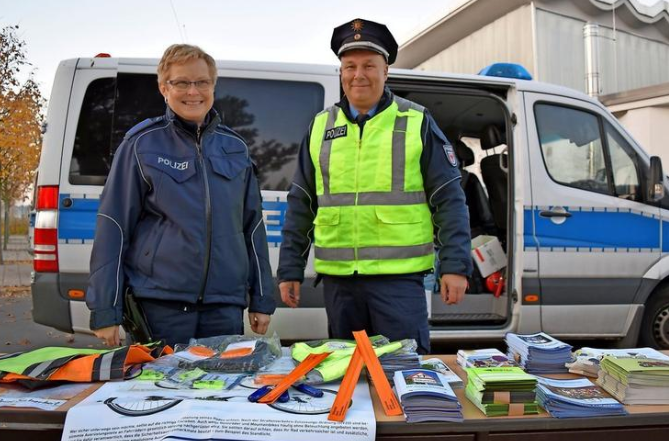
Support was provided by the security community Blankenfelde-Mahlow and the prevention team of the police department West. Chief Inspector Ute Streckert and High Commissioner Axel Schugardt distributed reflectors, safety vests, reflective bags made of reflective fabrics, and informational materials to show what a safe bike is all about.


Police call out “days of visibility”

Throughout Brandenburg, the police have called the “days of visibility”. Until Thursday, especially cyclists are informed about the risks of the dark season. “People with dark clothes only recognize a car driver from a distance of around 25 meters,” explains Axel Schugardt. With light clothes, it is at least 40 meters. Anyone wearing reflective clothing or light can be seen 140 meters away.


Principal Michaela Töpelmann and her fellow teachers Lutz Schwabe and Matthias Stiller are at the school gate. “You know your Pappenheimer,” says Michaela Töpelmann. Most of the 267 students come by bike. Many wear headphones in their ears that play so loud music that they do not notice their surroundings. Others hang their cycling helmet over the handlebar instead of turning it over.


30 of the 82 bicycles have defects

The balance of the day: Of 82 controlled bicycles have 30 shortcomings. In most cases, the lighting is broken or not available at all, others do not have the prescribed reflectors front, rear, on the pedals and spokes, yet others lack the bell. A bike was particularly negative. “Apart from brakes, it did not have any safety-relevant parts,” says Axel Schugardt. Revierpolizist Manfred Ewert noted all the shortcomings on lists, which the students should work off.


That parents leave their children with such companions on the street, annoys Michaela Töpelmann. “Everything that serves security is good”. The Herbert Tschäpe high school is located directly on the busy L 40th “We have had some accidents here,” says the headmistress. Hot situations between motorists, cyclists, and pedestrians are not uncommon. Whether the action brings something permanent to the police? Michaela Töpelmann hopes.


Girls were more insightful

Some students, especially girls, found the action good, the boys were less insightful. Some dropped their bikes on the way. Olaf Lehnhardt, who is responsible for prevention in the Teltow-Fläming Police Inspectorate, wants to take some more breasts in the coming weeks. “I’ll do retraining,” he says. Silvia Fisch, chairman of the security community, is even more rigorous. “My son is not allowed to cycle to school until the light works. Until then he will run. ”
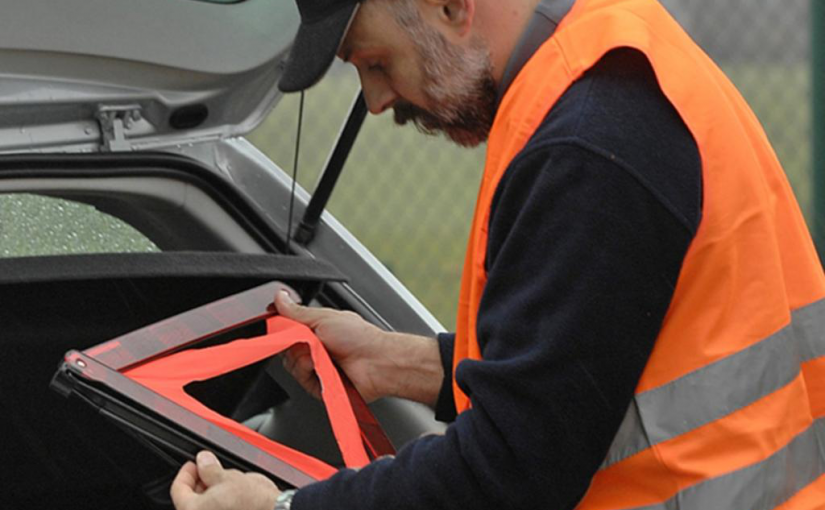
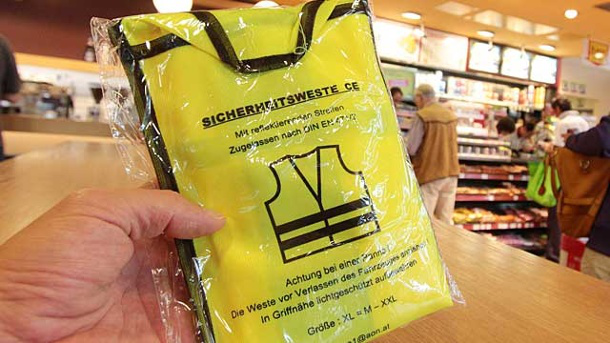
 

safety vests

No question, safety vests are handy. But where to go with the thing in the car?


In Germany, the safety vest is not mandatory equipment for private vehicles. However, TÜV Rheinland always recommends wearing this protective reflective clothing in the event of a breakdown – not only in the dark season. The reflective material is already seen from a distance of 150 meters. People without a safety vest recognized by motorists only when they are only 80 meters away.


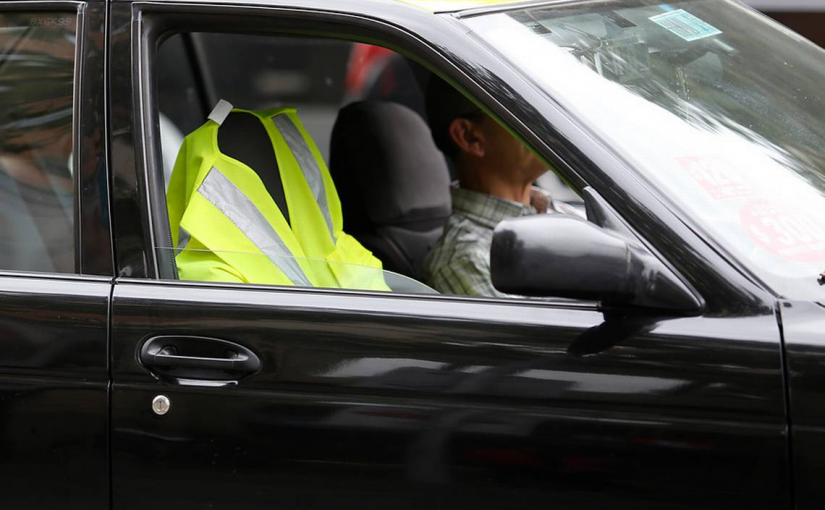
So that the vest is quickly at hand in an emergency, it should be stored indoors, preferably in the glove compartment, under the seat or in the door pockets. When the vests are open in the interior, they can age faster due to solar radiation. The trunk is less suitable for accommodating the vest. First, you have to walk around the car without protection to get to the vest, on the other hand, she could be covered thereby luggage.


Approved in Germany west in red, orange and yellow, which comply with the standard 71 DIN EN. For children, there are also other colors with the label DIN EN 1150. The vest is available from about two euros, for example, the ADAC or the TÜV, but also at many gas stations or accessory shops.


Safety vests in Europe: holiday countries in the overview

In Germany, motorists are required from July to have at least one safety vest in the car. In other European countries, from France to Croatia, the flash cover has long been mandatory. “We generally recommend putting on safety vests for safety reasons in the event of a breakdown, no matter in which country,” ADAC lawyer Michael Nissen explains to travelers who set off on their summer vacation by car.


Safety vest best in the glove box

The best is according to Nissen in the car for each passenger a vest ready and not in the trunk, but handy in the glove compartment. The regulations on the obligation to wear warning visas and the fines for their disregard differ from holiday destination to holiday destination.


Belgium: In the event of accidents or breakdowns on Belgian motorways or motorways, the vest with reflective material is mandatory. Whoever wears none, must expect a fine of at least 50 euros. This also applies to motorcyclists. However, anyone who cannot show a vest during a check is not prosecuted in Belgium.


France: The safety vest must not only be worn in an emergency but always be there – preferably in the glove box, because it must be tightened before leaving the vehicle. This also applies to passengers. Who gets caught without a vest, pays at least 90 euros. Motorcycles and quads are excluded.


Italy: Anyone who is outside closed villages on the carriageway without a vest risks a warning fee of at least 41 euros. However, under Italian law, this only affects the driver or the person setting up the warning triangle. Motorcyclists are excluded. In the case of controls, however, no vest must be presented. “In Italy, only the duty to wear,” says Nissen.


Croatia: Motorists and motorcyclists must have a vest outside closed villages and cover in case of breakdowns. Violations are not punished in Croatia.


Austria: Here is a safety vest for the driver mandatory in the luggage. In poor visibility, in confusing areas or in the dark, the vests with reflective tapes must be covered even in case of breakdowns on the highway. “Austria is the only country where our members report enforced fines,” says Nissen. The penalty is between 14 and 36 euros.


Portugal: Anyone who does not carry a safety vest as a car or motorcyclist risks a fine of 60 to 300 euros. Who in an emergency on the road does not carry, even 120 to 600 euros. This is true only for vehicles registered in Portugal, but also includes rental cars for tourists.


Spain: Reflective vests have to carry drivers of cars, buses, and trucks, but moped and motorcyclists do not. If you do not wear a vest, you risk a fine of up to 100 euros – if you pay the penalty immediately, the Spanish police will release half the amount.


Making children more visible in the dark season through safety vests

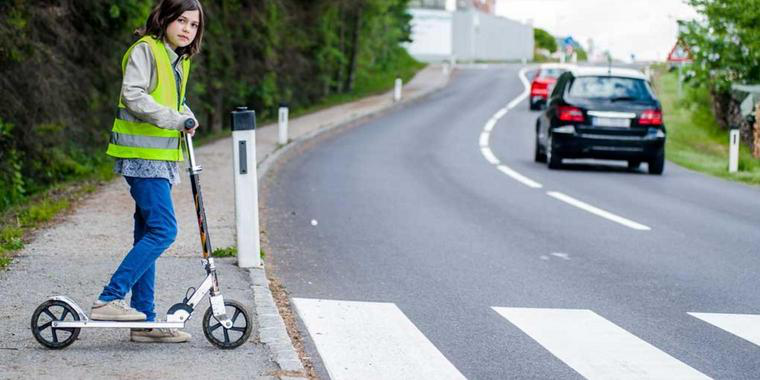
The days are getting shorter again, it’s the time of the year when safety vests are increasingly used again. And rightly so: The eye-catching items of clothing help to prevent accidents and to protect your children in the traffic from dangers.


Especially in the dark season, it is advisable to equip children in traffic with safety vests. So they are perceived by other road users much more likely.


This is the ideal safety vest for children.


Safety vests made of breathable and lightweight material. They are easy to pull over the normal jacket and do not hinder. It is best if they can be closed with a Velcro fastener, so the vest is quickly put on, fastened and also stripped off again. Characteristic is the reflective tape, which should be at least one centimeter wide and once around the vest should lead around: only this way it is ensured that the child is clearly visible from all sides.


The color of the vest gives you added security. If you buy a model in a fluorescent signal color, such as yellow or pink, your child will not be overlooked even in daylight. The difficulty, especially in the winter months, lies in the fact that most garments are sold like warm jackets in rather muted colors. In them, a child is much worse to recognize that in a color that does not blur with the hazy background on the winter road.


Color and reflectors make the difference with safety vests

If the children have to leave the house and go to school in the morning, it is still dark outside in autumn, winter and early spring. Whether they are on foot or by bicycle, they are not easy to spot for motorists, and in the morning rush hour traffic on the streets is still a little more dangerous than usual. Buy reflective vests with reflectors for your kids, they’re in the light the headlights are easy to see from far away, and drivers drive much slower and more cautiously.


You can also buy one for yourself: For example, if you bring your child to kindergarten by bike in the morning, you will also be more easily recognizable by motorists. If you find the normal vests that you find in trading too boring and not very individual, you can also order special designs. If you find that the reflective areas are not enough, you can buy additional reflective materials and fix them on the vest. How your child safely gets through the traffic!

If you have no safety vest in the car, you have to pay

Motorists must expect a fine from July if they have no safety vest in their vehicle. However, there is no obligation to carry – the Ministry of Transport points to personal responsibility.


Many road users in Germany must expect a fine of 15 euros from 1 July, if they have no safety vest in their vehicle. As reported by the “Saarbrücker Zeitung”, the Federal Ministry of Transport, led by Alexander Dobrindt (CSU), has fixed the amount of the fine in a new regulation.


According to the information must be carried in cars, trucks, tractors, and buses in the future, a safety vest sew-on reflective tape. Motorcyclists are excluded from the new rules.


Motorists should wear the reflective vest in the event of a breakdown or accident. However, according to the report, the new regulation does not provide for any obligation to carry. Instead, the Ministry “on the self-responsible action of road users.” The Federal Council had already decided in July 2013 the warning waistcoat. The carrying of a warning triangle has long been mandatory in Germany and in other EU countries.


In other countries higher fines

With the revision of vest Germany is now following the example of many European states. However, in other countries significantly higher fines are due than in the future in the Federal Republic, and their road users must also wear the safety vest with reflective material if it comes to an accident or a glitch.


For example, road users in Portugal are fined between € 60 and € 600 if they are caught without a warning vest. In Italy, violations of this nature are punished with at least 35 euros; In Spain, not wearing costs around 90 euros.

For better visibility in autumn and winter

Autumn and winter bring naturally shorter days, cloudy weather and unfavorable lighting conditions. The dark season thus gives all road users worse visibility in traffic. Help is provided by bright headlights and reflective vests, which ensure that drivers are better seen and seen.


If you have a very modern car with laser light, lack of brightness should not be a problem in principle. Even with LED lights or xenon headlamps, the lighting of the street should be sufficient.


But what can one do, if the light from their own halogen headlights is not (or no longer) bright enough? We will tell you how you can improve the light output of your vehicle headlights and what you should pay attention to.


Clean headlamp

First of all, the headlights should be clean. A soft fabric cloth and a little warm water are usually sufficient for external cleansing. In this way, not only dirty old headlights are bright again, but also new.


Dirty headlight glass not only reduces the light output but can also provide stray light. This, in turn, poses a danger because it may dazzle oncoming traffic as significantly as if the car headlights were set incorrectly.


If you want to clean your headlights thoroughly, you can clean the reflectors inside. Over time, however, the reflective elements may “go blind”. Then, depending on the extent, an exchange should be considered. The same applies to the headlight glass.


For example, if it is very cloudy or milky due to its age, even thorough cleaning inside and out does not provide much better light. Depending on the make in such cases, the purchase of new headlamps can be cheaper.


Change light bulbs

While the replacement of a complete headlight usually requires a visit to the workshop, the change of a light bulb can often be done in a few simple steps. Car models where the average consumer has to change the lamp in the workshop are fortunately the exception.


Therefore, it is worthwhile to change the bulbs in many cases. If you would like to use a more powerful bulb than before, you should first check out the manufacturer or the owner’s manual of which vehicle is approved for the respective vehicle type.


By changing the bulbs you can often increase the light output of the headlamps compared to the old lamps for little money often. About 10 to 20 euros cost brighter bulbs from major manufacturers. For this price even very durable “Longlife” models are available. Their lifetime is about four to five years, “normal” car lights depending on the manufacturer or quality sometimes only one year. Attention: Forbidden is especially bright special lamps as they are used in rally sport and afford up to 100 watts instead of the allowed 55 watts.


Upgrade old headlights

If you think that their correctly adjusted halogen headlamps are not bright enough, even when clean and with stronger bulbs, then only a conversion will help.


You should consider this, for example, if you no longer feel safe in the low light conditions in the fall or generally in the dark at the wheel.


However, switching from halogen headlights to LED or xenon technology is only possible if the technology in question actually exists for your vehicle type. This can give you in doubt, a car repair shop information.


The upgrade should anyway make a professional and can be associated accordingly with relatively high costs.


Are you going to travel? Check what you must have in the emergency kit of your vehicle

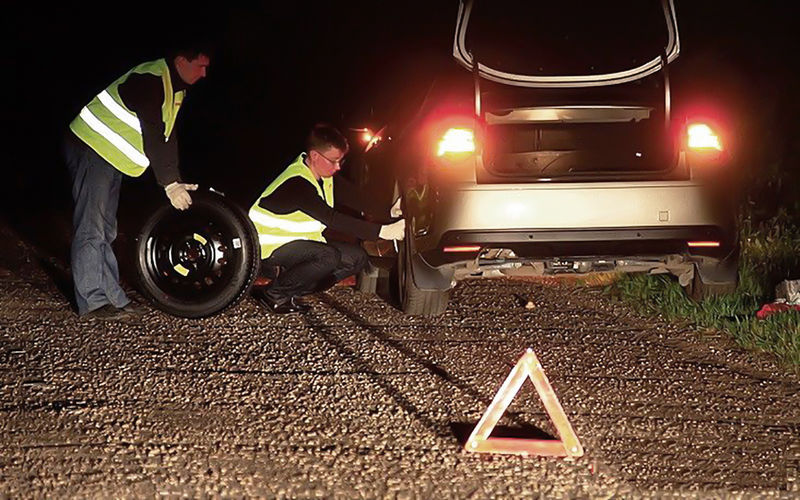
That a simple incident on the way to your vacation does not ruin the picture. The triangle, the reflective vest with reflective tape, and the extinguisher are not the only safety elements that you should carry in your car.


Ready and loaded suitcases, children with safety belts and entertainment prepared for several hours, crackers for the road, full tank, precise pressure in the tires.


Is there anything missing to start the trip? Well, do not forget to have the complete and revised safety kit, given that in case of an emergency situation it could be the difference between solving the problem or having a day of discomfort or even disaster on the route.


The National Safety Commission (Conaset) raises in its document “Book of the new driver” in its version for motorists that always before traveling the visibility is verified in the front windscreens, the rear window, and the side windows, it is checked that the mirrors have good visibility and that the doors are closed.


In addition, call to check that you have all emergency devices, which are detailed below.


Extinguisher

Remember that the fire extinguisher must have a load, not be expired and be located in a place that allows it to be used quickly and safely if needed.


Spare wheel

The wheel must be in good condition and be complete (rim and tire). This, except in special cases of the regulation.


In addition, you must bring the necessary elements for replacement.


Reflective triangles

It is advisable to have two equilateral reflective triangles in your vehicle. These should be red and visible both at night and during the day. In addition, they must be made of reflective materials that will not be damaged in the event of an accident.


Reflecting triangles must maintain stability and if used, place one in front of and one behind the vehicle.


Drivers are obliged to wear reflective vests outside the city from 2018

The Russian government has supplemented the road traffic regulations with a paragraph that obliges drivers to stop wearing a reflective jacket or reflective vest when the vehicle is forced to stop outside settlements.


The relevant decree of the Cabinet enters into force on March 17, 2018. According to statistics, in the first six months of 2017, over 7.5 thousand pedestrian raids were recorded on Russian roads at night. This is 10.2 percent less compared to the same period of 2016. As a result, 1321 people died, another 6537 suffered.


The number of vehicle arrivals at drivers who did not use reflective vests also increased. In the six months of 2017, 66 such accidents occurred, which is 4.8 percent more compared to the previous year.


Drivers must have protective vests in many European countries.


In the State Duma will be offered to make mandatory reflective elements of clothing

State Duma Deputy Vyacheslav Lysakov will propose that the government of the Russian Federation oblige enterprises to equip children’s, school and sports clothing with reflective fabrics or other reflective materials, the Parliamentary Newspaper reports.


On March 18, a decree comes into force, obliging drivers to wear a reflective jacket or reflective vest of drivers in case of a forced stop of the vehicle outside settlements when leaving the car. Drivers must have protective vests in many European countries.


“It is necessary to develop mandatory, rather than recommendatory standards for each group of goods: school clothes, children’s, sports and tourism, profile enterprises should strictly follow these national standards,” the author of the initiative explained to the newspaper.


Lysakov noted that the requirements will apply to both domestic and foreign suppliers.


According to preliminary estimates, additional elements can cause a rise in the price of goods by 10-15%. “But the question concerns the safety of Russians, this is the responsibility of the state. The state is obliged to protect the lives and health of citizens not only by increasing fines for violating traffic rules or introducing new punitive measures against offenders but also by regulating the activities of industrialists in the interests of people’s safety”.


According to statistics, in the first six months of 2017, over 7.5 thousand pedestrian raids recorded on Russian roads at night. This is 10.2% less compared to the same period of 2016. As a result, more than 1.3 thousand people died, more than 6.5 thousand people suffered.

Traffic will fine pedestrians without a vest on the shoulder

The Ourense society increasingly uses reflective clothing when it comes to walking, especially at night, along the roadside, roads, and tracks, according to the provincial traffic chief, David Llorente, who recalls that a few years ago “I do not know I saw practically nobody with this type of clothes to be seen before the drivers “.


But the provincial head of Traffic is not satisfied, especially when so far this year a pedestrian died when walking by the OU-504, on its way through Loiro, without making use of any reflective material. Pretend that no person leaves home to walk, play sports or walk through an area enabled to drive vehicles, without making use of the vest. This Thursday began a campaign (affects all Galicia) to avoid abuses. The initiative involves the distribution of 700 high visibility vests among pedestrians in the province, including pilgrims.


The campaign was announced in the Government Sub-delegation by its owner, Emilio González, who was accompanied by David himself and the captain of the Traffic Subsector in Ourense, Ángel Rafael. “The objective is to promote the use of reflective elements, giving protection to pedestrians and vulnerable groups, such as cyclists and motorcyclists,” said González, stressing that citizens when using a road on foot must “ensure that they are being seen by others. ”


During the past year, 14 people lost their lives when they were run over by Galician roads, three of them in the province of Ourense.


So far this year, another six were killed by a car on Galician roads, one of them in Ourense. To avoid more deadly abuses, the Civil Guard will distribute 400 vests, while the Provincial Traffic Headquarters will deliver another 300 in the different talks that it is carrying out in social centers, schools, neighborhood associations, and social groups to sensitize the population with the sinister ones


David recalled that Traffic agents can punish pedestrians who do not use the reflective vest on the road. In this sense, the captain of the Traffic Sub-sector stressed that it is not a matter of sanctioning anyone for the fact that “it is to protect pedestrians, that they do not go out on the road without making use of reflective garments,” he said.