Tips on how to travel by car

The car is still the most popular and used vehicle in the world, and it is not the same in our country. We travel by car to work, to the family, to shopping, to trips and, last but not least, to holidays.

Most Slovaks prefer to travel on holiday by car, despite affordable air transport. We like to travel by car very often, so we have prepared a summary article that can help you before you travel by car.

We focus mainly on what to check before traveling, what to watch out for and to recommend a few devices and applications that might be useful for you.

What to check?

The basic basis and necessity are to check the condition of the vehicle. We believe that without a basic check of the condition of the car you will not go on a long journey. You do not need to be an expert or car mechanic to check important parts of your car. First of all, it is the tires – their condition and correct inflation. The optimum tire inflation values ​​can be found on the label at the bottom of the B-pillar or the inside of the fuel filler flap. Checking the fillings is also very important, which means checking the level of oil, coolant, brake fluid, and washer fluid. This is the very foundation.

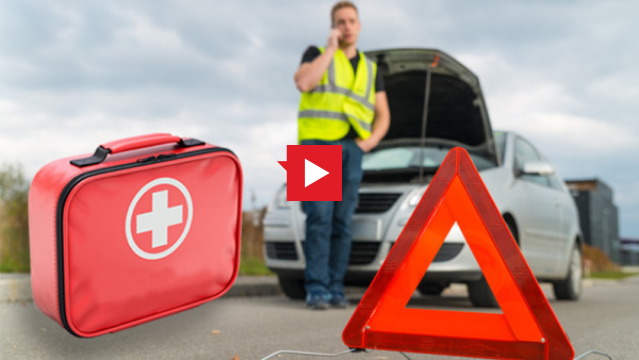
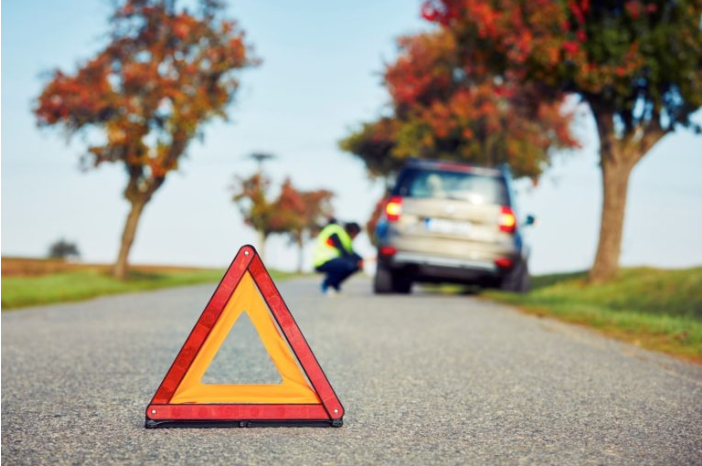
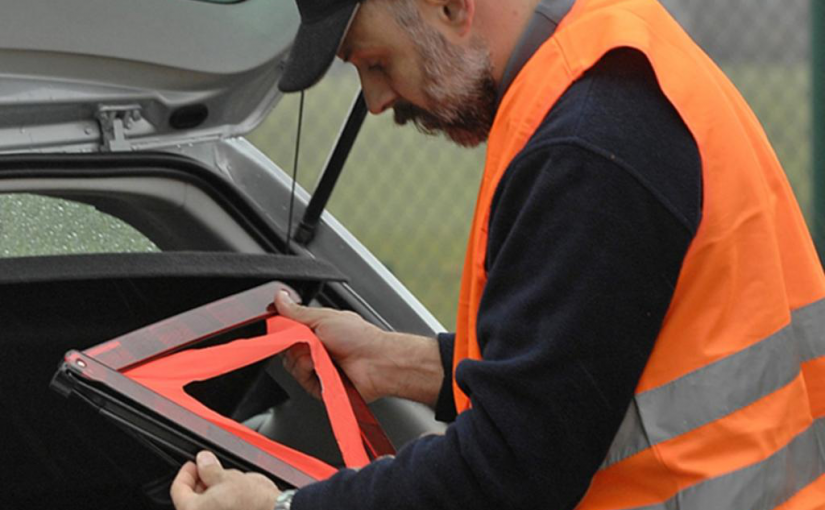
If you have an older car, it is advisable to have a little distilled water and suitable engine oil in the trunk. We also recommend that you check the required equipment, which may vary by country. A warning triangle, a reflective vest, a first aid kit, and a spare wheel is essential. This is not only necessary if you have RunFlat tires or a tire repair kit. Our recommendations include a basic tool kit, an LED flashlight, and spare bulbs.

Why not forget?

Before you (not only) take a long journey, make sure that you have compulsory contractual insurance (PZP). You show this to the competent authorities with a green card that applies throughout Europe. PZP covers only those damages that you have caused to the other party – your damages are without compensation. For this reason, it is also worth having accident insurance. If you have one or want to do so, check with your provider for territorial validity. You may not want to pay in the country you are going to.

This can be completed and paid for a short period. In addition to car insurance, do not forget about personal insurance. If you are traveling as a family, you can take out insurance for a given period together and often at a very advantageous price, often including luggage and valuables insurance. Many insurance companies have mobile applications that ensure the whole family in minutes, without having to visit any branch in person. An important and necessary document in the car is also an accident report, which should be safe in English. Just download the report on the Internet and print it. Nothing complicated but very important for you to have.

If you are going on holiday with foreign car hire, you should also consider the official confirmation of renting the car. If you are stopped by the cops and you do not have it, it can be a big problem and, in the worst case, an early exit. If you rent a car, print out a simple document on the rental of a motor vehicle for a certain period, with which you must visit a notary and have it officially verified. Of course, even with the owner of the vehicle. Doing so will prevent potential problems. When renting a car from a rental office, this form is a matter of course. And do not forget your identity card (valid within the EU and Switzerland) and children under 15 must have a passport. If you do not have it, you can also provide it for your children quickly – within two working days for an increased administrative fee.

Luggage properly and passengers come first!

Always observe the basic principles of proper storage when loading the luggage in the vehicle. The heaviest items (suitcases, water, etc.) should always be at the bottom and as close as possible to the backrests of the second row. This will prevent them from sudden shifting during emergency braking, and also achieve a lower center of gravity, which is beneficial to the driveability. Heavy objects on the top help to increase the vehicle’s tilt in curves and are also very dangerous. However, any improperly attached or placed item that can take up to several times its weight during impact is dangerous. We also recommend that you take the trunk only to the level of the backrests in the second row. Remember to divide your network to go higher. Also, it will not hurt if you secure the entire luggage in the trunk against the movement of the pulling belt, etc. And do not forget the maximum permissible vehicle weight!

Passengers are always in the first place! Make sure each passenger has enough space and comfort, while not trying to push extra luggage and things that have nothing to do into the cabin itself. The cabin includes only important personal belongings, snacks, drinking regime, or some games for children that entertain them during a long journey. If you do not have enough space in the trunk, consider a roof box or a compact trailer – you do not have to buy them, they can also be borrowed. Proper sitting is also very important, always sit max. comfortably, but pay attention to safety. A child seat is a must for children and all passengers should be restrained at all times. At the moment, it is a big habit for passengers or rather passengers to put their feet on the dashboard of the vehicle for comfort. Please, never do this! Even in a small car accident, it is a life-threatening position.

The driver should not forget about regular breaks, good music, and drinking regime. During long journeys, breaks are very important, ideally after 3-4 hours of driving. You will appreciate it not only for you but also for the crew. Have a good coffee at the petrol station, stretch bones or take the highway to discover local cafes. Coffee and energy drinks are good, but everything should be taken in moderation. These tasty drinks suppress fatigue – do not remove it!

Devices and applications that you might find useful

If you are traveling with children, it is advisable to have devices that can entertain them and are not difficult to operate. They can be offline games, but also game consoles such as. Nintendo Switch. It’s also great to have a tablet to download games and record movies or fairy-tales that younger children will appreciate while watching them without an Internet connection. This includes a tablet holder to make viewing comfortable and safe. You can buy a quality holder from as little as 15 euros, but make sure you are compatible with your car. A good smartphone holder will also appreciate a chauffeur who should know that the phone is not behind the glass (in direct sunlight). Ideally, it should be placed lower on/under the dashboard or in a bracket to be placed in the vent – the air conditioning will cool the phone.

If you are taking a laptop, a voltage converter will come in handy as well. It is affordable and invaluable at certain times. You should not miss a good car charger for your smartphone. Modern cars have multiple USB-A charging ports integrated, so you only need cables. You can also use a quality power bank, which you use not only in the car. There are also those available to start the car with a discharged battery! We believe you have a smartphone, so use it properly. Certainly, it should not miss navigation applications such as Google Maps and Waze. While these applications need data, they are no longer a problem even abroad within the EU.

We believe that these recommendations will help you to manage your trip without any problems and that you will enjoy every holiday or trip by car.
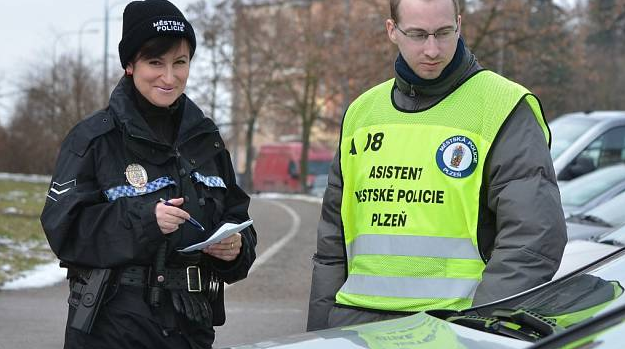
The municipal police have assistants

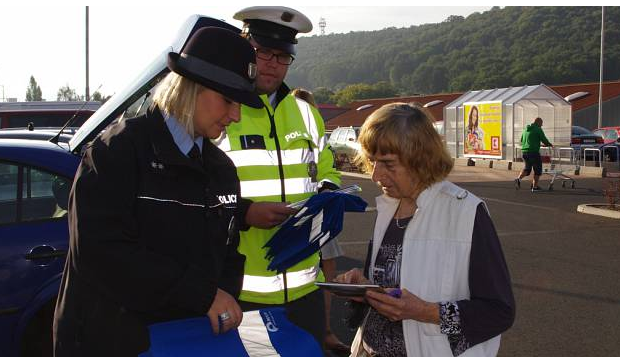
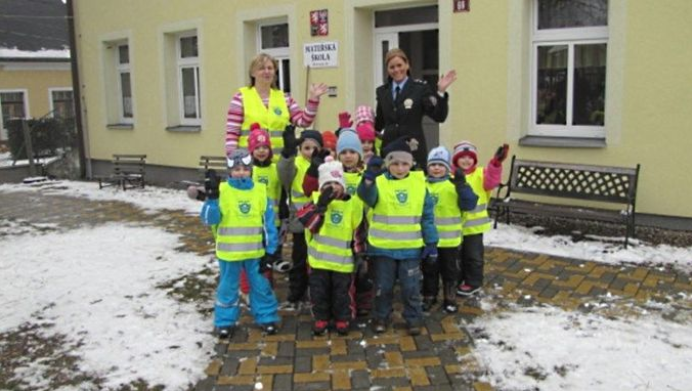
They have reflective vests, walk through the streets alongside police officers and control cars or supervise the safety of children at school crossings. We are talking about city police assistants who have passed their first week in the streets of Pilsen.

Meanwhile fifteen of them move around the city, in April there will be five more. “They monitor the situation in the city, supervise safety in general, focus on parking, supervise dogs or public order,” summarizes the activity of young people, City Police spokeswoman Jana Pužmanová. stopping vehicles as well as self-defense, as they will move in the streets on their own from March without their more experienced uniforms.

“If they encounter a problem in the city, they contact the operations department and send a patrol. The assistants only monitor the situation, and the municipal police officer can, of course, ask for help in urgent cases. They are more qualified to do this than an ordinary citizen who is not trained like them, “the spokesperson explains.

Within the project of professional practice for young people up to 30 years of age, the districts were attended by graduates of mostly secondary schools with a security law specialization. After spending one year as assistants in the streets, they can apply for work with the municipal police. Before that, however, they have to travel around the districts to try out different activities. “Each district has its specificity and that is why they will take turns in the offices in Pilsen,” concludes Pužmanová.

Martin Matula: I enjoy working as an assistant

He is twenty-four and has completed his first week as an assistant to the Municipal Police in Pilsen. Martin Matula was so impressed with the work that he was considering becoming a guard in the future. How is your working day?

In the morning before seven o’clock, I come to the office, then I go with officers, they show me problematic or safe places and locations where there are more people.

What are you doing in those places?

It’s about prevention. People see a policeman, see a reflective vest, they can feel safer. For example, we are standing in front of the school, supervising crossings when children go to school or, on the contrary, leave.

And do you enjoy it?

I have been a Pilsner man all my life, knowing Pilsen in a way I have never experienced before, and at the same time, it is a decent job because I help. That’s what I enjoy. What’s more, it’s a different job, something different happens every day, and it’s never the same.

Are you considering joining the municipal police then?

I have completed a month of training within the project and I have been in Pilsen streets for less than a week, which is not long. In the meantime, I can say that I would like to join the municipal police after the project.

What did you find most interesting about your work over the past week?

The most grateful is the service at schools, I see that we help children and nothing happens to them. It is the balance of the repressive component that is also with the municipal police.

Speaking of the repressive component, what activity did you do in this area?

We check to park occasionally, I was present with the citizen. And that is also the content of the project, as well as the work of the officer. He has to deal with people.

Going on vacation to Croatia? Equipment you must not forget

If you are planning to go on holiday to Croatia this year, you should keep in mind that each country sets different mandatory equipment for your car.

If you go to Croatia by the shortest route, you will go through Austria and later through Slovenia. In contrast to mandatory equipment in the Czech Republic, the one in Austria includes a first-aid kit, which is also mandatory for bikers and must be in a package that prevents the ingress of dirt into its contents.

A reflective vest is only mandatory for motor vehicle drivers but is recommended for other crew members. The following colors are allowed: orange, yellow and red. If you have an on-board camera behind your car’s windshield, take it off while driving in Austria. They are forbidden here and you face a fine.

After crossing the border with Slovenia, prepare for the fact that a reflective vest is mandatory for anyone who gets out of a motor vehicle in an emergency. You are subject to penalties of up to 40 Euros. It is also not allowed to transport children under 12 years on a motorcycle or moped.

If you set out to Croatia on a longer route through Slovakia and Hungary, you should know that in Slovakia, a reflective vest is mandatory for anyone who leaves a motor vehicle in an emergency, day and night. Restrictions on navigation and similar devices that must not be placed in the driver’s field of vision also apply.

In Hungary, be prepared that the rear position lamps must also be on for the daytime running lights and that it is only mandatory outside the cities. In Slovakia and Hungary, anyone who moves on low visibility communications is required to wear a reflective vest.

In Croatia alone, the driver is required to have a reflective vest for the driver, a ban on the carriage of children under 12 years in the front seats of the car, except children under two years, placed in a special “egg” have two triangles for a towed vehicle.

Driving abroad? Beware of different mandatory equipment

Traveling by car offers many advantages, but also many disadvantages. Those who cannot allow this type of transport should not forget that the same rules as in the Czech Republic do not apply everywhere.

Andrea Schmiedová from Cheb, who went to France last year, knows about this. “We were checked by the police and I did not carry an alcohol tester, which is mandatory here, and a reflective vest for all passengers. Fortunately, they just warned me and I didn’t pay the fine.”

According to experts, the basis of mandatory equipment is the same as in the Czech Republic, but there are differences. “Compulsory equipment in European countries is usually the same as in our country. However, you will also need a fire extinguisher somewhere – for example in Bulgaria, Romania, Greece or Turkey, and if you have an N-category vehicle, Croatia, too,” said Eduarda Hekšová, director of the consumer organization dTest.

Problems await those who drive abroad with a company or rented car. “You will need a confirmation from the owner that you are authorized to drive the car, and you should also take a work contract or a rental car. The confirmation should be in English or another world language and with an officially verified signature,” explained Hekšová. “Take the confirmation even if you are a company executive or even the only person in the company. It can be difficult to negotiate with foreign police.”

Those who are going to drive outside the European Union should check if they need an international driving license. This is usually issued by the authority of any municipality with extended powers.

Albania

In Albania, a tow rope, a first-aid kit, and a triangle are mandatory in the car. It is recommended to carry a fire extinguisher in a passenger car and is mandatory in buses and trucks. Children up to 12 years of age must be seated in the car in the child restraint system. A helmet for cyclists of all ages is also mandatory on the road. Alcohol at the wheel is prohibited.

Belarus

In Belarus, the mandatory equipment of a car includes a reflective vest, a warning triangle, a sticker with a state mark, a fire extinguisher and a first aid kit. Children up to 12 years of age must be seated in the car in the child restraint system. Phoning behind the wheel is only allowed with hands-free. Alcohol at the wheel is prohibited.

Belgium

In Belgium, a reflective vest for the driver is included. In vehicles registered in Belgium, the reflective vest is also mandatory for the passenger. Motorcyclists who drive motorcycles over 50cc are required to wear protective clothing – gloves, a jacket with long sleeves, trousers with long trousers and boots with ankle protection. For vehicles registered in Belgium, a fire extinguisher is also mandatory. For foreign vehicles, it is only recommended. Children up to 135 cm in height must be seated in the child restraint system. Children from 3 years of age up to 135 cm in height must not sit in the front seat of the car seat. Alcohol at the wheel is allowed at 0.5 ‰.

Bosnia and Herzegovina

In Bosnia and Herzegovina, a mandatory vest must be fitted with a reflective vest for anyone who leaves the car during an emergency, such as an accident. The same goes for bikers. A reflective vest, a first-aid kit, and a warning triangle are also mandatory. All cyclists must wear a helmet, regardless of age. Children from 5 years of age must not sit in the front seat of the car seat. Alcohol at the wheel is allowed at 0.3 ‰.

Bulgaria

In Bulgaria, all vehicles except motorcycles must be equipped with a fire extinguisher. You should not forget the reflective vest, which is mandatory not only for all passengers who get out of the car in the event of an emergency but also for bikers and their passengers. The warning triangle and first aid kit are also mandatory. Children up to 150 cm in height must be seated in a child seat. Children from 3 years of age up to 150 cm in height must not sit in the front seat, even when they are in the car seat. Alcohol at the wheel is allowed at 0.5 ‰.

Montenegro

In Montenegro, a reflective vest is mandatory for all persons leaving the vehicle in the event of an emergency. The same goes for bikers. A safety helmet is mandatory for all cyclists. The warning triangle and first aid kit are also mandatory. Children under 12 must be seated in a restraint system. Children between the ages of 5 and 12 must not sit in the front seat, even when they are in the car seat. Alcohol at the wheel is allowed at a rate of 0.3 ‰ except for professional drivers – they are zero.

Croatia

In Croatia, a mandatory vest must include a reflective vest with reflective tape, a warning triangle, a first-aid kit and a fire extinguisher (N-category vehicles only). Vehicles with a trailer must have 2 warning triangles. Children under 12 years of age must not be transported in the front seat, except for children under 2 years old who are placed in a safety egg and the airbag is switched off. Children under 12 years must not be transported on motorcycles or mopeds. Children under 16 years of age must wear a bicycle safety helmet. Alcohol at the wheel is only allowed for drivers with experience of 0.5 ‰. Novice drivers and professional drivers have zero alcohol levels.

Reflective vests will be mandatory in Germany from July

Starting in July, drivers in Germany will have to wear reflective vests in cars, and there is a fine for breach of duty. On the same date, the environmental rules for entry into some German cities are also tightened, to which cars with red and yellow emission plaques will no longer be allowed.

The inclusion of a reflective vest in the mandatory equipment of the car should improve the safety of drivers who have to leave the car in the event of an accident or breakdown, as motorists will be able to see them more easily in the surrounding vehicles. The new design does not specify whether the reflective vest should be orange, yellow or green. Unlike Austria, German regulations will not require a vest for every passenger of the car, one will be enough per vehicle.

If the driver does not have a reflective vest with reflective tape in his car, he is at risk of a fine of 15 euros (410 crowns) at the roadside check. German car club ADAC, however, warns that if the driver of the vest when getting off the vehicle, it is not an offense. In this case, however, he will probably not be entitled to compensation from the insurance company if he is injured by a passing car.

Since July, the rules for entry into some German cities have also been tightened. While so far cars with three types of emission plaques were allowed to enter, only cars with a green plaque, which indicates the engine with the least environmental impact, will now be allowed to enter. The measure concerns 21 cities in the state of North Rhine-Westphalia. Similar arrangements have been in place for example in Berlin.

The type of emission plaque is determined by the number of harmful substances that the vehicle emits into the atmosphere during operation. The Green Plaque has been eligible for petrol-powered cars since 1993, diesel-powered passenger cars since 2006 and trucks put into operation since October 2006. All-electric vehicles are also automatically awarded the Green Plaque.

In the Czech Republic, it is possible to obtain the plaque at most technical inspection stations upon the presentation of a large technical certificate. According to the Central Automotoclub of the Czech Republic, the price of the plaque is around 300 crowns, its validity is not limited in time.

Should the driver enter the defined low-emission zone without an emission plaque or with a lower grade than the given city permits, he will face a fine of EUR 80 (CZK 2200).

Changes for drivers: New rules for first aid kits and mandatory equipment

Mandatory equipment and first-aid kits will change from 1st October. You no longer need to carry bulbs or fuses in your car. First-aid kits will be valid even after their expiration and they will disappear, for example, a three-pointed scarf or drape. What other changes await us? Lenka Rezková, the spokesperson of the Ministry of Transport, replied on Friday’s Breakfast with Nová.

As of 1 October 2018, there is a change in the mandatory equipment of vehicles and medicine kits. The main changes include keeping the medicine chest after the expiration date. “The main change is that drivers will no longer have to change their medicine chest because of expiration. This means that those who have their medicine chest in their car, have it closed so they can keep it there without any problems, “said Lenka Rezkova.

So far, we have had to change the medicine chest after the expiration of the expiry date. However, the Ministry of Transport, in consultation with the Ministry of Health, decided that this was no longer mandatory. “If all medical materials are intact, they are fine and can be used without any problem in a car accident,” Rezkova added.

For example, you no longer need to carry a three-pointed scarf or a plastic mask in the medicine cabinet. There were no other things. “There won’t be three things in the medicine cabinet. It will be a three-pointed scarf, a patch with a cushion, and there may not be a plastic drape. There is nothing to add, “said Rezkova.

The change also applies to the mandatory equipment of the vehicle. Only the reflective vest and the warning triangle remain in it. Conversely, you do not need bulbs or fuses. “As far as mandatory equipment is concerned, the rule remains that there is a reflective vest with reflective tape and also a warning triangle. These things must be kept there. But what is changing and quite important is that people no longer have to carry fuses and also spare bulbs,” Rezkova said.

Newly, the driver does not have to carry a spare tire. “As for the spare tire reserve, if a puncture becomes a defect, drivers who have a car equipped with an emergency tire will no longer have to carry the spare tire. drivers who will have an agreed assistance service throughout the Czech Republic, who will replace their tire just in case of a puncture, “Rezková added.

The ministry is trying to make it easier for drivers to keep things from being unnecessary. “We are trying to make life easier for drivers so that they do not have to carry things in their cars that are not needed there at the moment. The fuses and the bulbs are mainly because the cars are at a different technical level than was a few years ago and many drivers are already leaving the replacement of both fuses and light bulbs at service experts, “Rezkova explained.

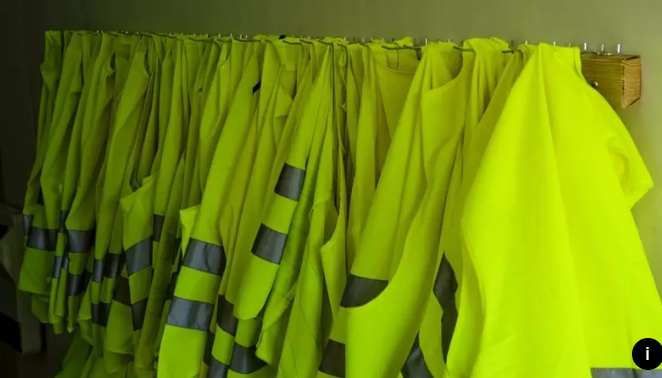
It is advisable to have a reflective vest in your car so that we do not get off the highway without it in the event of an accident. Ideally, anyone traveling in the car could have it in the car. “As for the reflective vest, nothing changes. We should all have a reflective vest. For safety reasons, it’s good to have it with you in the car. Somewhere on the left side of the driver, the right side of the passenger they did not have to look anywhere in the car, do not put God somewhere in the trunk when we have to climb the highway, but really to have it on hand and when we have a vest for every member we carry, it is good, “added Rezková.

One reflective vest in the car is sometimes not enough

Traffic accidents have increased significantly in recent days. The driver was often surprised by bad weather. But how to behave when leaving the vehicle outside the village or in a crash?

Frost, mists, ice – this is the last day’s weather. And many drivers have experienced how they can torment themselves. However, if you become involved in an accident or if your car breaks down on the road, you should follow certain rules, otherwise, you are also subject to a fine!

Sometimes a reflective vest is not enough

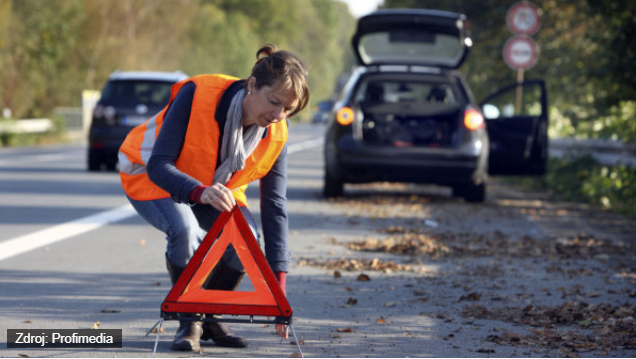
In the Czech Republic, the law mandates to have one reflective vest in the car – for the driver. If your car breaks down or crashes, you have to put it on when you leave the car; this obligation does not apply to other passengers. But under the new rules, they must not be left completely without security elements.

The driver must wear a reflective vest, but if the rest of the passengers move on an unlit road outside the village, they must be equipped with reflective material elements, “says the trainer drivers Jaroslav Honshu. There is a fine of up to two thousand crowns for breaking the regulations.

In some cases, the rest of the crew must have a reflective vest, both in terms of company vehicles and employee transport. “Any employee who enters the road to repair a car must move around the car in a reflective safety vest,” explains Hons’ government decree, according to which the employer is obliged to secure a sufficient number of vests. “They can either be stored in the car or the employee can fascinate them before boarding the car,” he adds.

Czech regulations do not specify where a reflective vest with reflective tape must be stored. Drivers can keep it in the cabin of the car, but also the trunk. But be careful abroad. “In some neighboring states there is a condition that the reflective vest must be placed within the driver’s reach, it is not stipulated in our country,” adds Honsů. Abroad, you have to watch the mandatory equipment, which is often different from the Czech.

In particular, pedestrians and cyclists risk death because they are not visible

The early arrival of darkness combined with drizzle, rain or even fog is not a very pleasant experience behind the wheel. Also, an unlit pedestrian or cyclist in a place where it cannot be expected is suddenly turned into real trouble. Many pedestrians risk their lives only for convenience.

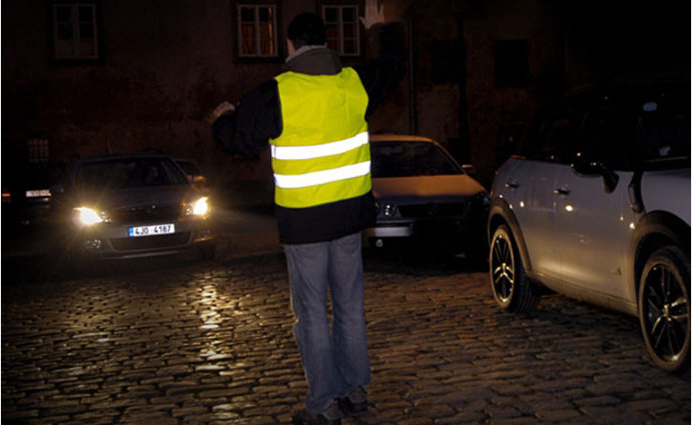
There are serious road accidents every day on the roads. Many of them are caused by poor visibility. In low visibility, they are the most vulnerable pedestrians. Drivers who hurt pedestrians or cyclists agree that they have not seen him at all or too late. Cars and motorcycles, as well as cyclists, must shine, pedestrians are not required to do so. For greater safety, pedestrians should use primarily reflective materials, which make them visible well in advance and others can respond to them in time.

Abroad, reflective elements have saved many lives

Foreign experience shows that reflective elements can reduce pedestrian participation in a fatal accident by up to ten times in poor visibility. In other words, 10% of pedestrians would have a chance to survive, and this percentage is even higher for cyclists – up to 30% of cyclists could live if they were sufficiently visible. That is why pedestrians and cyclists must use reflective vests or other reflective elements that increase road safety.

A series of tests have shown that if a person wearing dark, such as blue clothes is on the road, the driver can record it at a distance of 18 meters. It is better, for example, with the yellow color of the clothes, when the pedestrian is recorded at a distance of 37 meters, in white the driver can see it at 55 meters. But even this distance is not sufficient at night to safely avoid pedestrians. Pedestrians should therefore always have an element on their clothing that would make them more visible. For example, fluorescent materials are available – they increase visibility in daylight and dusk but lose their function in the dark. The most commonly used colors are bright yellow, green and orange. It is preferable to use reflective materials – they reflect light in a narrow cone to the source, up to a distance of about 200 meters. They significantly increase visibility in the dark and in reduced visibility. Reflective material is visible at night 3 times greater than white clothing and more than 10 times greater than blue clothing.

It is best to place objects made of reflective materials at the end of the sleeves, close to the knees and at the waist level (cyclists also wear helmets and bikes, for example). Children can then get clothes that are already equipped with elements of reflective materials, as well as already equipped school bags. When the driver does not see, nothing can be done.

At a speed of 75 km / h, the driver needs at least 1.5 seconds to realize the danger and react accordingly – in that time he has traveled 31 meters. And before he starts his evasive maneuver, he walks more than 150 meters away from seeing a pedestrian. Then he needs more time to complete the maneuver and to cover more meters. For this quite simple task, which happens on the roads countless daily, the driver needs about 200 meters. And at such a distance, a pedestrian can only see if he is wearing reflective accessories.

This is a basic safety requirement that a pedestrian should meet. On the other hand, the driver should also follow a simple rule of thumb – driving only fast enough to stop the vehicle at a distance it can see. We should keep in mind that at a speed of 100 km our car will travel 28 meters per second. Often the driver reacts for up to 2.5 seconds and then only brakes for 40 meters. This mathematical excursion is needed because we should realize that the afterglow of the dipped beam of a car is about sixty meters. This means that when the dipped beam is on, we can drive at a maximum of just over seventy kilometers per hour. At a speed of ninety kilometers, we have to count with a stopping distance of over seventy meters. Slightly more favorable is the situation where we can have the main beam on. Then we register pedestrians about 100 meters. If we pass by an oncoming vehicle in the dark and therefore switch from high beam to dipped beam, remember that the distance we are seeing is greatly reduced and the driving speed must be reduced accordingly. If it is not possible to illuminate the driving beam when driving, for example, we can use the beam of the vehicle ahead. It shows us what to expect on the road. We should never look into the lights of oncoming cars that can dazzle us. We follow the space on the right shoulder. By briefly flashing through the high beams, we can “touch” the way ahead. Without dazzling oncoming traffic, we can easily detect an obstacle in the dark.

Cyclists are obliged to have their bicycles properly equipped according to regulations. In poor visibility, the wheel shall be equipped with a headlamp illuminating the white front light and a steady or flashing red light at the rear. It also includes reflectors of the corresponding colors – white reflector at the front, red at the rear and orange on the pedals and the spokes. To increase safety, it is advisable to complete everything with at least reflective stripes on shoes and clothing, helmet and possibly on your bike.

How to increase visibility (pedestrians and cyclists)

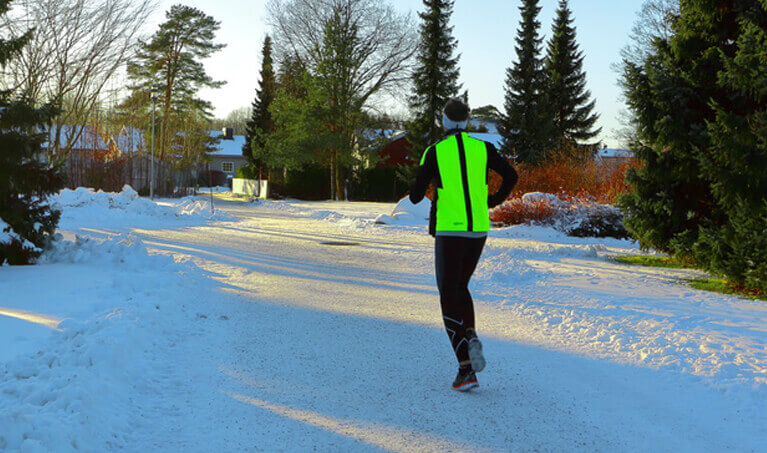
Use reflective and fluorescent materials and combine them to see well in both light and dark. Reflective items are best placed at the end of the sleeves, close to the knees and at waist level (cyclists also wear helmets and bikes). Get clothes, school bags, and accessories with reflective and fluorescent safety features for your children. Reflective and fluorescent objects are not expensive. Various pendants, patches, iron-on elements, stickers, hand straps, etc. Not only cars are required to light up, but the cyclist is also required to have a headlight with white light illuminating forwards and a red or flashing red light. A flashing tail light can be seen up to 1000 meters. The driver can see the cyclist in time and adjust the speed to the situation.

Pedestrians start to wear reflective elements, the government agrees

A breach of duty should be subject to a fine of up to two thousand crowns “on the spot”. But it must be reduced visibility and walking on the road without public lighting.

Pedestrians should be obliged to use at least one reflective material element on their garments if they are walking on the road without visible light in poor visibility. The government approved today a proposal of the Ministry of Transport, which is part of the amendment to the Act on Road Traffic.

A breach of duty is to be subject to a fine of up to two thousand crowns “on the spot”, such as in the so-called block proceedings. The Office in administrative proceedings could then impose a fine of CZK 1,500 to 2,500. The same sanctions are already threatening pedestrians for violating other duties, typically poor passage. The exception should be unforeseeable circumstances, such as impassable pavement and temporarily inoperative public lighting.

According to the proposal, the pedestrian is obliged to wear reflective elements placed so that they are visible to other road users. However, only when moving in poor visibility along the shoulder or on the edge of a roadway in a place where there is no street light or where the street light is off. All three conditions (reduced visibility, road, no illumination) are required at the same time.

Marketing action tip

In addition to the night, reduced visibility means, in particular, fog, heavy rain, dusk or dawn. The law does not specify the exact dimensions or location of the reflective fabric element on the pedestrian’s garment. However, it must be visible from the front and the rear, ie large enough and uncovered. According to the ministry, it is optimal to use reflective tape on the hand or foot of a pedestrian (ideally in both places) facing the road.

The Office expects that the acquisition of reflective elements will cost a pedestrian about 50 crowns, while some have and use them now. It is also possible to expect marketing events in which traders or petrol stations offer reflective elements with a discount or a free bonus. The ministry expects the municipal police to increase their expenditures by approximately 5% (due to the extension of controls). The main benefit for the state is to decrease the number of accidents and thus reduce the related costs.

Visibility rises several times

Although the number of pedestrians killed in the Czech Republic is decreasing (134 died on the roads in 2013), the Czech Republic still occupies one of the worst locations among European Union countries. The Ministry recalls that the obligation to wear reflective elements has been imposed by many other countries, including Slovakia. Reflective material is visible at night three times greater than light clothing and more than ten times greater than dark clothing.

The Ministry of Transport originally considered a stricter option – the use of reflective vests, not just elements. However, it rejected it, as well as a milder solution consisting only in another awareness campaign.

If the amendment is approved by the Government and subsequently by Parliament, it is due to come into effect from January 2016.

Attention! The braking distance in the snow is up to five times longer

The first weekend of this winter in the snow is over and there are confusion and hysteria on the roads. What is weird about it was when it was January. However, the drivers get confused in this weather, and then traffic accidents often occur. Pedestrians should also behave properly in the traffic industry.

“There should always be mutual consideration for both the driver and the pedestrian. The driver is supposed to approach the pedestrian crossing at such a speed that he can stop the vehicle and allow the pedestrian to cross the road safely, “explains Václav Irving from Besip and continues:” The driver is obliged to release the pedestrian and allow him to pass safely, but if the weather is outside and you run into the crossing, the driver is losing.”

Interestingly, children in schools adhere to these principles and, strangely, many children teach their parents and grandparents.

Furthermore, so-called eye contact is important. When the pedestrian contacted the driver and you already know the driver’s behavior, whether he is able or willing to stop. Also, a pedestrian standing at the crossing must give a signal that he is safely entering the pedestrian crossing. Of course, when he is at the transition, he has priority.

“Visibility is another very important factor in this period. It is getting dark soon and I would recommend that pedestrians walk on the roads sufficiently visible. This means that they are sufficiently visible on the roads,” he added.

When a walker walks in dark clothes, he is not visible. Everyone should not only observe the principle of seeing, but also be seen. “People complain that they don’t have the money to buy anything. But I don’t need money to see the money. An ordinary plastic bag is sufficient. In low visibility I’m in sight up to seventy meters, “he notes.

Reflective tapes are commonly available up to two hundred meters. Classically, however, just light dress or even shine a flashlight or flashlight. There are also plenty of clothes that already have reflective fabric elements.

What the drivers did not do much at the weekend is braking. At a speed of 50 km / h, it is necessary to brake about 25 meters. The stopping distance extends on wet, snowy and icy roads. On wet roads, it extends up to twice, on snow up to 5 times, and on-ice even up to 10 times, compared to braking on dry surfaces.

“Drivers think that if they have a car loaded, they will break at shorter distances. But the heavier the car, the longer the distance. With the car fully loaded, I stop on a significantly longer distance than with an unoccupied vehicle. We also point out that the passenger car has a shorter braking distance than the truck,” said Václav Irving.