What are the differences between the fluorescent and reflective?

The appearance of many yellow vests in the streets, on our screens and in one of our newspapers is an opportunity to be interested in a scientific eye: these devices must be both “fluorescent” and “reflective”. What are the differences between the two and what are they due to?

If at night, I see a car in the distance, it is either because it emits light, or that the light from another source. It reflects at least in part. Specifically, the light rays are partially absorbed by the car and partially reflected, before reaching my eye.

It’s very simple until then; let us now see the fluorescence: when a material is fluorescent, it is able, each time it absorbs a little light, to emit a little too. Thus a fluorescent vest with reflective material gives the impression of being even brighter: not only does it reflect a part of the light that reaches it, but also its yellow or orange zones emit light for each part of the light that they absorb. Which makes the one who wears it more visible and improves its security.

The usual safety vests also have gray bands that look dull in the light of the day. To make them more beautiful? No, of course! These are reflective strips, which, they, aim to return any ray of light in the direction in which it arrived, which also ensures to be very well seen.

The principle was developed just one hundred and one years ago by a French inventor, juxtaposing three mirrors at right angles to form like a cube corner or a pyramid. Little by little, we miniaturized this device to make reflective plates that equip wheels and pedals of our bikes. Finally, we find that half-spheres have similar properties. By aligning many of these tiny spheres side by side on a safety vest, we can create these reflective strips, hardly thicker than a classic fabric!

This reflective effect increases the safety of humans on foot, by bike, by car or motorbike, but it also exists in nature: it is also thanks to him that the eyes of cats glow in the dark and that ours sometimes appear red in the photos!
Vulnerable users – Think!

Seeing and being seen is essential in road traffic.

With the change of the time last weekend, many pedestrians move at nightfall. It follows an increased risk of the accident since often the drivers do not see them well or notice them only at the last moment. Road Safety Luxembourg ASBL, the Ministry of Sustainable Development and Infrastructure and the Police Lëtzebuerg recall some tips to reduce the risk of collision:

Pedestrians: Be visible!

Wear clothing with reflective material, armbands, jackets, reflective tapes, umbrellas and reflective pads – all accessories for long-distance viewing by motorists.

Walk-in in front of traffic on country roads and wear the mandatory safety vest.

Consider the speed and distance of approaching vehicles before entering the road. Make sure you are seen by motorists.

Put a reflective collar on your dog.

Joggers: be visible!

Wear reflective armbands and wear clothing with integrated reflective elements.

Wear a safety vest that is mandatory if you take the road out of town.

Cyclists: be visible!

Make sure the lights and reflectors of your bike are in good condition.

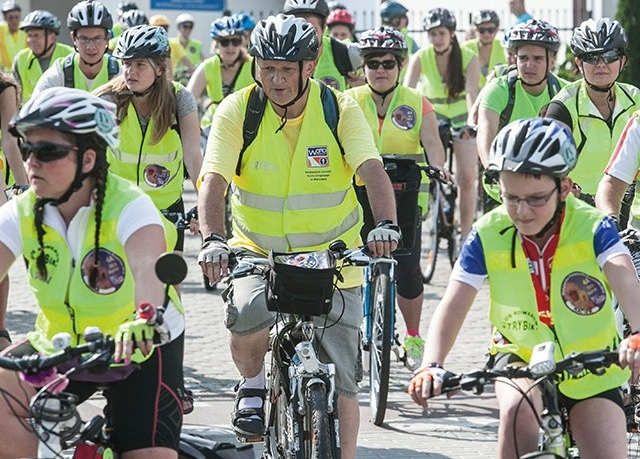
Wear a helmet and a vest or other reflective accessory.

Mandatory bike equipment:

a doorbell

two brakes

a white or yellow light before

at least 2 reflectors per wheel or continuous reflective tape on the tires

reflectors on the pedals

a red reflector

a red rear light

Motorists: be visible!

Turn on the lights when visibility conditions require.

Report your maneuvers in good time.

Adjust your speed.

Make sure windows and vehicle lights are clean (in winter cleared of snow or ice).

Take into account the potential errors of vulnerable users in traffic.

safety vests

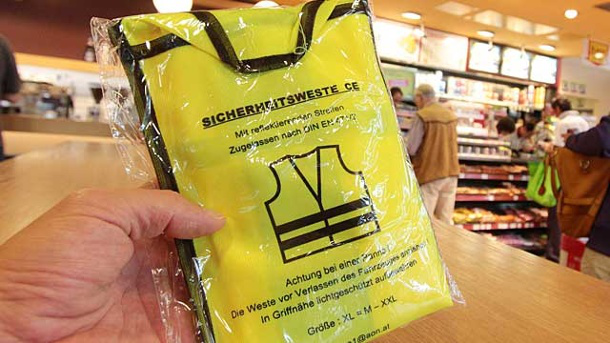
No question, safety vests are handy. But where to go with the thing in the car?


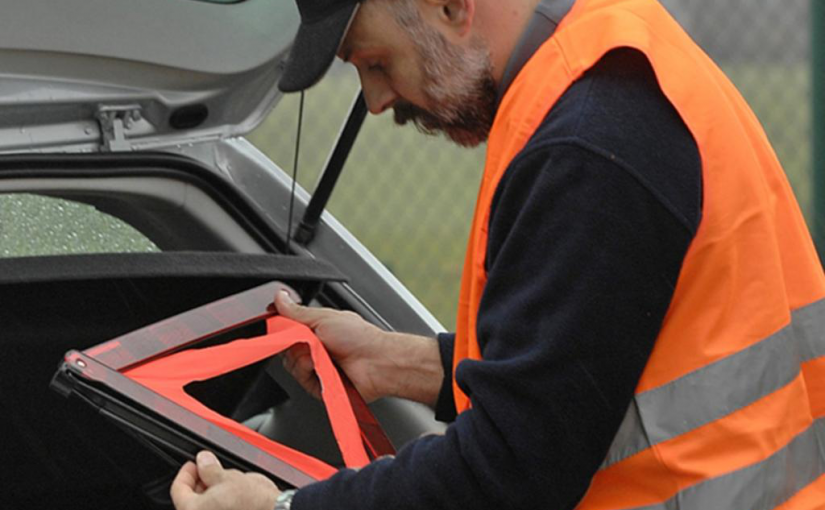
In Germany, the safety vest is not mandatory equipment for private vehicles. However, TÜV Rheinland always recommends wearing this protective reflective clothing in the event of a breakdown – not only in the dark season. The reflective material is already seen from a distance of 150 meters. People without a safety vest recognized by motorists only when they are only 80 meters away.


So that the vest is quickly at hand in an emergency, it should be stored indoors, preferably in the glove compartment, under the seat or in the door pockets. When the vests are open in the interior, they can age faster due to solar radiation. The trunk is less suitable for accommodating the vest. First, you have to walk around the car without protection to get to the vest, on the other hand, she could be covered thereby luggage.


Approved in Germany west in red, orange and yellow, which comply with the standard 71 DIN EN. For children, there are also other colors with the label DIN EN 1150. The vest is available from about two euros, for example, the ADAC or the TÜV, but also at many gas stations or accessory shops.


Safety vests in Europe: holiday countries in the overview

In Germany, motorists are required from July to have at least one safety vest in the car. In other European countries, from France to Croatia, the flash cover has long been mandatory. “We generally recommend putting on safety vests for safety reasons in the event of a breakdown, no matter in which country,” ADAC lawyer Michael Nissen explains to travelers who set off on their summer vacation by car.


Safety vest best in the glove box

The best is according to Nissen in the car for each passenger a vest ready and not in the trunk, but handy in the glove compartment. The regulations on the obligation to wear warning visas and the fines for their disregard differ from holiday destination to holiday destination.


Belgium: In the event of accidents or breakdowns on Belgian motorways or motorways, the vest with reflective material is mandatory. Whoever wears none, must expect a fine of at least 50 euros. This also applies to motorcyclists. However, anyone who cannot show a vest during a check is not prosecuted in Belgium.


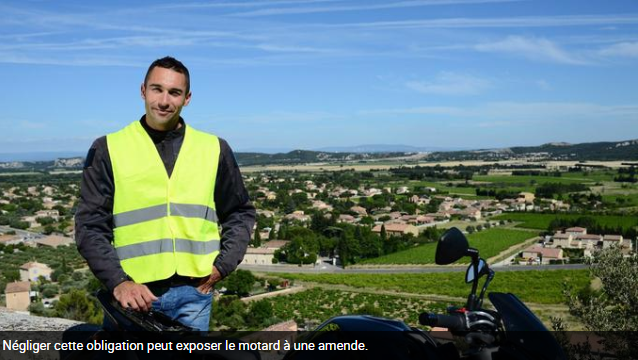
France: The safety vest must not only be worn in an emergency but always be there – preferably in the glove box, because it must be tightened before leaving the vehicle. This also applies to passengers. Who gets caught without a vest, pays at least 90 euros. Motorcycles and quads are excluded.


Italy: Anyone who is outside closed villages on the carriageway without a vest risks a warning fee of at least 41 euros. However, under Italian law, this only affects the driver or the person setting up the warning triangle. Motorcyclists are excluded. In the case of controls, however, no vest must be presented. “In Italy, only the duty to wear,” says Nissen.


Croatia: Motorists and motorcyclists must have a vest outside closed villages and cover in case of breakdowns. Violations are not punished in Croatia.


Austria: Here is a safety vest for the driver mandatory in the luggage. In poor visibility, in confusing areas or in the dark, the vests with reflective tapes must be covered even in case of breakdowns on the highway. “Austria is the only country where our members report enforced fines,” says Nissen. The penalty is between 14 and 36 euros.


Portugal: Anyone who does not carry a safety vest as a car or motorcyclist risks a fine of 60 to 300 euros. Who in an emergency on the road does not carry, even 120 to 600 euros. This is true only for vehicles registered in Portugal, but also includes rental cars for tourists.


Spain: Reflective vests have to carry drivers of cars, buses, and trucks, but moped and motorcyclists do not. If you do not wear a vest, you risk a fine of up to 100 euros – if you pay the penalty immediately, the Spanish police will release half the amount.


Making children more visible in the dark season through safety vests

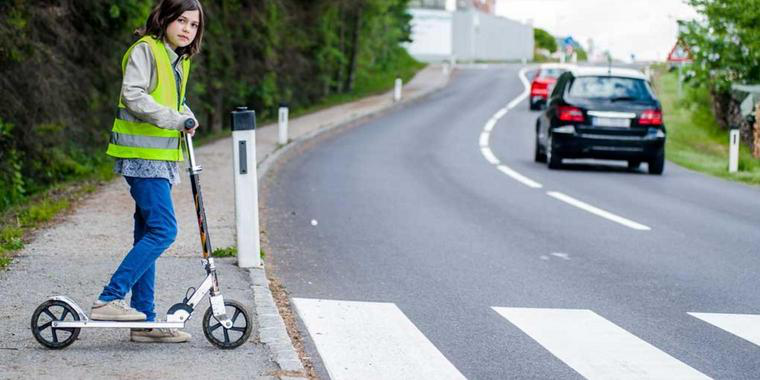
The days are getting shorter again, it’s the time of the year when safety vests are increasingly used again. And rightly so: The eye-catching items of clothing help to prevent accidents and to protect your children in the traffic from dangers.


Especially in the dark season, it is advisable to equip children in traffic with safety vests. So they are perceived by other road users much more likely.


This is the ideal safety vest for children.


Safety vests made of breathable and lightweight material. They are easy to pull over the normal jacket and do not hinder. It is best if they can be closed with a Velcro fastener, so the vest is quickly put on, fastened and also stripped off again. Characteristic is the reflective tape, which should be at least one centimeter wide and once around the vest should lead around: only this way it is ensured that the child is clearly visible from all sides.


The color of the vest gives you added security. If you buy a model in a fluorescent signal color, such as yellow or pink, your child will not be overlooked even in daylight. The difficulty, especially in the winter months, lies in the fact that most garments are sold like warm jackets in rather muted colors. In them, a child is much worse to recognize that in a color that does not blur with the hazy background on the winter road.


Color and reflectors make the difference with safety vests

If the children have to leave the house and go to school in the morning, it is still dark outside in autumn, winter and early spring. Whether they are on foot or by bicycle, they are not easy to spot for motorists, and in the morning rush hour traffic on the streets is still a little more dangerous than usual. Buy reflective vests with reflectors for your kids, they’re in the light the headlights are easy to see from far away, and drivers drive much slower and more cautiously.


You can also buy one for yourself: For example, if you bring your child to kindergarten by bike in the morning, you will also be more easily recognizable by motorists. If you find the normal vests that you find in trading too boring and not very individual, you can also order special designs. If you find that the reflective areas are not enough, you can buy additional reflective materials and fix them on the vest. How your child safely gets through the traffic!

He walked in dark clothes without reflective elements: a pedestrian was shot down near Yekaterinburg

Yesterday, May 3, at the 53 kilometers of the Ekaterinburg-Polevskoy highway in the late evening, the driver of a VAZ-21214 car knocked down a pedestrian who was walking on his way in dark clothes without reflective materials or safety vest.


Behind the wheel of the car was a man born in 1937. In a sober state, he was driving at a speed of 55-60 km / h. In the middle of the roadway, in the opposite direction, I saw a pedestrian, braked sharply, turned the steering wheel to the left, but did not manage to get away from the collision.


Currently, on the fact of an accident, traffic police officers are checking. As a result, a pedestrian was injured and was hospitalized.

Airbag vest Hit-Air, a successful equipment

“Le Figaro” donned a biker airbag vest from the brand Hit-Air, in order to analyze its functioning and relevance. Equipment offered at a rate of 495 euros.


The Japanese company Hit-Air has marketed the first airbag safety vest for motorcyclists in 1998. The company today claims the title of the market leader, and even equips all bikers French law enforcement. Their range of products includes airbag vests that can slip over any outfit, as well as jackets with a directly integrated airbag.


We tested the simple vest, which represents between 80 and 90% of the sales of the manufacturer. Customers probably seduced by being able to place it over winter or summer gear depending on the season. The integrated airbag jacket is not as versatile, but it avoids to forget the vest at home by accident. The builder recommends a check of the vest and the gas cartridge (if it has not been used) from 5 years of seniority.


The Hit-Air system uses a cable that connects the vest to the bike. When the wire detaches from the vest, the airbags deploy in 160 milliseconds. The cable should be placed vertically, preferably hooked to the seat. If the wire is attached too far forward or backward from the driver, airbag release may be delayed in some situations. So that the vest does not inflate at all times, and that it triggers well when one is in danger, it will take a load of 30 kg to unhook the strap of the vest.


The time has come for us to put on this equipment, and to undergo an airbag release. First good point: the vest is lightweight, and should be forgotten quickly enough. Without giving us time to prepare ourselves mentally, Hit-Air teams unhook the cable of our vest. The gas passes from the cartridge to the airbags instantly. Our human senses, in any case, could not detect any latency between the moment when the cable was removed, and the one where we took the appearance of the Michelin Man. The transition is surprising, but not brutal. Inflated in this way, we feel protected, particularly in the cervical area that will be preserved by a real cushion of air.


According to the manufacturer, during a shock at 50 km / h, the energy of the impact is divided by two in the back, and three in the cervical. After an accident, it will be possible to reuse the vest if it is in good condition. If it is damaged, it will be covered by the insurance as a helmet. This device is charged 495 euros, and a gas cartridge is worth 25 euros. It is certainly not cheap, but it will be argued that spending money on our security is certainly not the worst investment.

Has the economy become more important than the safety and animal welfare?

Now we are in the season that is probably the worst for the track staff on our race tracks. Plus degrees one day, freezing the other. Snowfall, rain, and frostbite that cause every trainer to lie sleepless.

Lots of water on the course and despite attempts to get rid of the water masses after race four. It was considerably better on some parts of the track. On the run, however, the water was quickly back in place.

The picture above I took after the last race. Driving in the third and fourth tracks of the rally one wanted to avoid.

By the way, it was enough to be an interviewer on the track to be dirty from head to toe.

Ove A: “I hoped they would set up”

All the coaches testified of the same thing. Couldn’t see anything during the race. One had to try to listen to the sound where the other horses were.

Several felt they should be canceled during the race day.

They didn’t do them to fuck. They didn’t do it as bad losers. They did it because they were very scared.

I was just waiting for an accident myself.

Mats Djuse to attack after the victory: “Just to cancel”

Criticism was hard on the stall hill from coaches and coaches. Many thought that the track staff should have done in some other way.

It is possible that the assets were right. But it is also possible that they were wrong.

The track staff can at least not be raw because we have a very strange spring in central Sweden.

But without knowing how to take care of a course, it is possible to state that the course was not good. It was lousy. But apparently good enough for the banquet veterinarian to release the horses.

Now it is not just the Östersundstravet that has been hit by bad paths just this time every year. But there is no greater comfort when it does happen. Now we were in Jämtland this Wednesday lunch when coaches said it was deadly at work.

You chose to continue the race day and it went without accidents. Thankfully.

There is a caretaker controller and checks all horses and coaches before the race. It should be a safety vest and the wagons should be full. The horses should not be equipped with anything illegal.

Everything should be so careful. After all, security goes first.

Then they go out on a trotting track with life as an effort.

The path answers: “Get to that criticism”

Strangely, it was also when a coach chose to stroke his horse because he did not want to risk a new fork band injury. The verdict would be a 10-day start ban. In my ears, it sounds wrong with punishment when one considers that the injury risk on his horse is great. Shouldn’t trainers who guard their horses be hailed instead.

After discussion, the starting ban was lifted. Thanks for that.

It sometimes happens that competitions are canceled. You who follow the path know that it is not commonplace. It can happen when the spring thaw causes a risk of drowning or when the fog is dense. Yes, Boden set up a few years ago when it was minus 32 degrees.

I wonder which sport will continue its competition day when the active say that the arena is deadly? It is possible that there are some even if I do not come on someone’s straight arm.

Svensk Travsport is so clear that animal welfare and safety are the most important in our sport.

But is it not that the economy has become more important than both animal welfare and security?

If we ignore the economic. Who thinks it had competed clearly on Östersundstravet this Wednesday?

The DGT proposes new lighting solutions to reduce the number of accidents

The DGT does not satisfy its desire to reduce the number of accidents on Spanish roads, this time incorporating new elements and reflective materials that improve the safety and visibility of pedestrians at risk.

The number of deaths on the roads of our country was reduced in 2018 considerably, but the 1,180 deaths is an intolerable amount for the DGT. To achieve the reduction, the body considers new solutions.

In motorways and highways, 303 people died, of these, 20% were out of the vehicle, due to breakdown or accident. That is why they are considering new methods of lighting safety that allows the visibility of pedestrians on these roads.

Insufficient traditional methods

As vehicles are incorporating new assistants and technologies, safer driving systems can fail, so in case of risk we must resort to traditional signaling and safety promotion methods, but these must also be insufficient or be outdated

Reflective vests and safety triangle

As a result of the deceased being out of the vehicle, some would wear the obligatory safety vest, while others would not, and at any moment of negligence, imprudence or risk they were run over.

These triangles or vests with reflective tapes may not be fully effective, also dependent on the situation in which the driver is and thus reducing the visibility of these.

Likewise, both the Ministry of the Interior and the DGT are working to incorporate devices that alert of a risk situation with a higher rank. The only thing we do not know is whether they will replace traditional ones or adapt to them.

Be cautious in situations of risk

This new lighting security system that wants to incorporate the DGT is known as Help Flash, similar to a siren since it has a rotating light like that used by emergency services.

The Help Flash system would have a range of 1 kilometer so I would call the attention of drivers who might come a little absentminded. In turn, in the case of secondary roads where the speed is limited to 90 km / h, there would be an improvement in safety.

Light change in emergency vehicles

Consequently, this new incorporation would bring a change in the vehicles of emergency services. A change in their usual yellow or orange lights for blues like those that the police incorporate, within a period of two years.

In the new security format that the DGT wants to incorporate, it is detailed that Help Flash must expand a high visibility yellow light and have an autonomous power supply. However, we still do not know how far this idea of implementation will go.

Everything for a safe way to school

For the fourth time, the beginning of the school year will be marked by prevention with the road safety campaign “Red stands, the child goes”. The children learn to walk across the street only when the wheels of the vehicle are stationary. Of course, the handlebars are also encouraged to complete. However, it is not always easy to notice the silhouette of a child in the rain or at dawn. That’s why visibility is very important. Since 2013, the TCS has already distributed half a million safety vests to first graders.

Just in time for the start of school in 2018, the road safety campaign “Red stands, the child goes” starts. It is supported by the TCS, the Accident Prevention Service, and police, which work locally with the communities and schools. A successful campaign because it is perceived and understood by more than 90 percent of motorists. Nevertheless dangerous situations arise daily because the children are seen too late.

The risk of not being seen is higher in the early morning and at night than during the day. It even multiplies by a factor of 10 in rain or snow. In the dark, an automobile driver only recognizes a person in dark clothing at a distance of 25 meters – this can be too late, depending on the situation. If this person wears reflective clothing, it can be perceived from a distance of 140 meters. This enables road users to react in good time.

Half a million safety vests soon to be distributed in order to help children see them better and faster on their way to school, the TCS has been distributing around 140,000 reflective triangles every year to kindergarten teachers and pupils aged four to seven years. This action is funded by the Road Safety Fund. Since 2013, TCS has been distributing 80,000 safety vests throughout Switzerland for the larger primary school pupils (eight to nine years). In total, there will be nearly half a million West this year, distributed by the TCS sections in cooperation with public authorities, to increase security.

Trendy clothing and accessories for the bigger ones, of course, the fashion industry has not missed the fact that the safety vest does not inspire everyone. That is why the TCS and the police have been using the MADE VISIBLE campaign for a year to encourage people to wear clothes and accessories with reflective materials. This label will be visible on all new uniforms of the school traffic service in the future. The mission of this service is to ensure the safety of children on the way to school. Co-financed by the German Road Safety Fund, this year around 3000 safety vests, 1000 jackets, and 3500 caps will be distributed to the transport helpers throughout Switzerland.