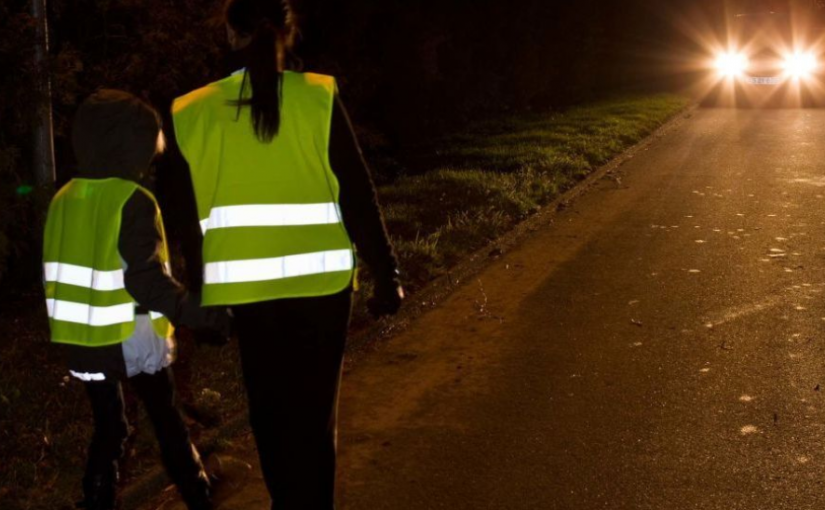
Did you know that the reflexes also go out of date?

Autumn means that it is dark in the early morning and evening. Also, there can be extra demanding driving conditions, with rain and wet roads that almost extinguish all light.

Under such conditions, it is of utmost importance that all pedestrians use reflexes.

Statistics from the Norwegian Public Roads Administration show that a third of pedestrian accidents occur in the dark. In the period 2005 to 2014, 40 percent of traffic accidents involving pedestrians occurred in the dark.

During the same period, statistics show that half of the pedestrians who died in road accidents did not use reflective vests.

It’s not just food that has the best before date. Reflections are also fresh and should be replaced more often than many people think. Bad reflexes can be dangerous to traffic, Tryg Forsikring believes.

“This is because you behave differently when you think you are protected from reflex. According to the road authorities, reflex has a life span of over three years. Reflections on children often get harsh momentum through play. And if you, as an adult, have the reflex in your pocket along with car keys, there is often so much scratching in the reflex that the effect deteriorates considerably. At our home we exchange reflexes every fall,” says Espen Opedal, manager of Tryg Forsikring.

Thursday, October 17 is National Reflection Day this year. The use of reflex reduces the risk of being hit in the dark by 85 percent. Even if you see the car, it is difficult for the motorist to see you if you are walking in the dark without reflex. The little lifeguard is cheap life insurance.

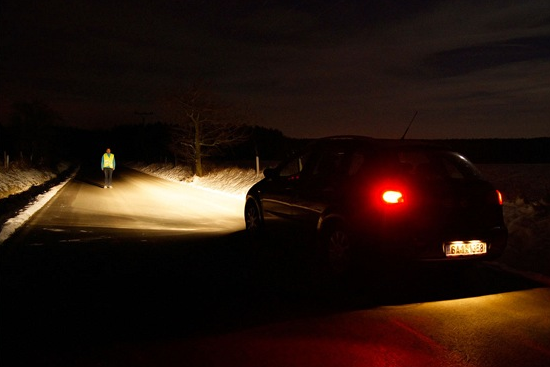
“If you walk along the road in the dark without reflex, you are first visible to the motorist at a distance of 25 meters. With reflex, you will be seen at 140 meters distance, with a dipped beam. A driver at 50 km / h thus has ten seconds instead of two seconds to respond. It can be the difference between life and death. Therefore, you should spend 15 seconds wearing one or more reflexes before going out in the dark,” says Opal, in a press release.

How do you check if the old reflex still works properly?

“All worn reflectors have a reduced effect, including integrated reflections in children’s and exercise clothes, which are often subject to wear through rough use, and which are washed frequently. To check if the reflex is still good, test in a dark room. Light the reflex with a flashlight and compare it with a new reflex. Those who reflect light poorly should be replaced,” says Opal.

Most accidents happen in cities when people cross the street. Lights from cars and shop windows compete for attention and make it difficult to see pedestrians without reflective materials.

Many people think that reflective tapes are not necessary when walking in areas with street lights. That’s wrong. When it is dark outside, it is difficult for the motorist to see you, even in street lighting. If it also rains, it is even harder to see you along the way.

Surveys conducted by Trygg Trafikk show that only 4 out of 10 adults use reflex. The worst adults are over 30 years of age. The best are children.
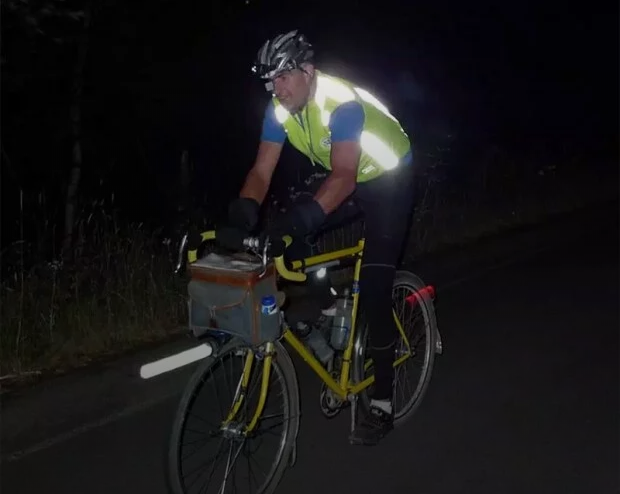
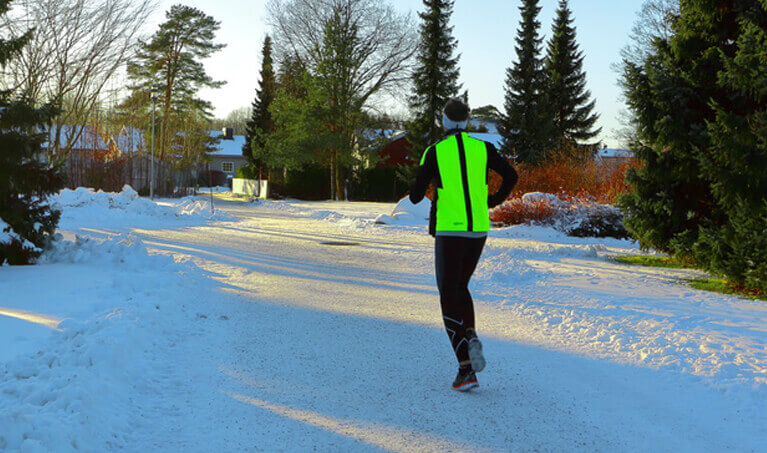
Pedestrians and drivers will be fined for the same violations

Three people’s deputies from the “Servant of the People” faction registered bills that are going to all road users in the dark to wear reflective elements.

One of the bills concerns pedestrians who move by the roadside or roadway. Their authors of the bill want to oblige in the conditions of insufficient visibility and to distinguish themselves at night. If possible, do these using reflective elements (ribbons, stickers, reflective vests). For violation of this requirement, the bill provides a fine of 51 hryvnias.

The second bill establishes obligations for officials of road services to provide builders who work on the road with reflective elements. It also establishes responsibilities for drivers, cyclists, and animal drivers at the time of day or in conditions of poor visibility to be on the road in reflective vests or to fasten reflective tapes or stickers on clothes. For violation of these requirements, a fine of 510 hryvnias is provided.

Attention! The braking distance in the snow is up to five times longer

The first weekend of this winter in the snow is over and there are confusion and hysteria on the roads. What is weird about it was when it was January. However, the drivers get confused in this weather, and then traffic accidents often occur. Pedestrians should also behave properly in the traffic industry.

“There should always be mutual consideration for both the driver and the pedestrian. The driver is supposed to approach the pedestrian crossing at such a speed that he can stop the vehicle and allow the pedestrian to cross the road safely, “explains Václav Irving from Besip and continues:” The driver is obliged to release the pedestrian and allow him to pass safely, but if the weather is outside and you run into the crossing, the driver is losing.”

Interestingly, children in schools adhere to these principles and, strangely, many children teach their parents and grandparents.

Furthermore, so-called eye contact is important. When the pedestrian contacted the driver and you already know the driver’s behavior, whether he is able or willing to stop. Also, a pedestrian standing at the crossing must give a signal that he is safely entering the pedestrian crossing. Of course, when he is at the transition, he has priority.

“Visibility is another very important factor in this period. It is getting dark soon and I would recommend that pedestrians walk on the roads sufficiently visible. This means that they are sufficiently visible on the roads,” he added.

When a walker walks in dark clothes, he is not visible. Everyone should not only observe the principle of seeing, but also be seen. “People complain that they don’t have the money to buy anything. But I don’t need money to see the money. An ordinary plastic bag is sufficient. In low visibility I’m in sight up to seventy meters, “he notes.

Reflective tapes are commonly available up to two hundred meters. Classically, however, just light dress or even shine a flashlight or flashlight. There are also plenty of clothes that already have reflective fabric elements.

What the drivers did not do much at the weekend is braking. At a speed of 50 km / h, it is necessary to brake about 25 meters. The stopping distance extends on wet, snowy and icy roads. On wet roads, it extends up to twice, on snow up to 5 times, and on-ice even up to 10 times, compared to braking on dry surfaces.

“Drivers think that if they have a car loaded, they will break at shorter distances. But the heavier the car, the longer the distance. With the car fully loaded, I stop on a significantly longer distance than with an unoccupied vehicle. We also point out that the passenger car has a shorter braking distance than the truck,” said Václav Irving.

Reflective elements will be mandatory

In November and December, over the past 14 years, a total of 830 people have died, twice the number of other months. The blame is mainly the poor visibility of people on the roads, says traffic police director Tomas Lerch.

Driving in the coming months will be unpleasant sleet, slippery roads, fog and especially dark in the morning and early evening. Especially in the autumn and winter season, the most frequent clashes of cars with pedestrians occur due to reduced visibility. The police, together with the Besip department, will distribute 18,000 reflective tapes as part of the security event.

Pedestrians, according to the leader of Besip Martin Farar, are the only group of people killed in traffic accidents that die more at night than in the daytime. Eight out of ten victims die outside the crossings. In winter, pedestrians most often die in the morning between 06:00 and 07:00 when the light is not yet fully lit and in the afternoon after 16:00 when it gets dark.

November is the most dangerous month for pedestrians

The highest number of crashes is on 1st class roads, although the number of cases has a decreasing tendency. Conversely, on lower-class roads, the number of deaths is increasing. The least fatal incidents with pedestrians are on highways.

“Most of these tragic accidents happen just in the autumn in the morning or in the evening, at a time when everyone on the road is on the sidewalk, but even at a pedestrian crossing, at risk of not seeing them,” Warns Goodyear. According to statistics, November is the riskiest month for pedestrians.

In December and January, the driver waits long hours behind the wheel without sunlight, and the possibility of a serious traffic accident increases significantly. Even if drivers drive only one-fifth of the total mileage at night, nearly 50 percent of all major road accidents happen at night or in the dark.

This year, 68 pedestrians died on the roads from January to September, but according to Besip estimates, this figure will rise to around 116 by the end of the year. Over the last three months, more than two-fifths of those killed have been killed. Pedestrians are the third-largest group of fatalities after passenger car drivers and their passengers. They are followed by bikers and cyclists.

Cars are obliged to shine, but pedestrians, even though they are the most vulnerable in traffic, do not have such a duty yet. The Ministry of Transport, however, has already prepared a law that would require the use of reflective elements.

The draft amendment to the Act on Road Traffic, which is currently under the comment procedure, envisages the introduction of an obligation for pedestrians moving along an unlit road or on the edge of a roadway to have reflective elements on them.

“Every pedestrian should know that in dark clothes, he is almost invisible in the dark on the road. A driver who does not see the pedestrians in time cannot respond quickly and avoids pedestrians safely,” explains Katarína Ardová from Goodyear. It is therefore very important that the driver sees the pedestrian or cyclist in time. Any reflective element that can reflect the incident light from the vehicle headlamps is well suited to this.

With reflective material elements, the pedestrian is visible to the driver up to 200 meters, while if the wear is black or blue, it is only 18 meters. However, the reflective elements do not work much in fog, rain or snow.

In some countries, the number of deaths has been reduced by the mandatory use of reflective vests for pedestrians. Reflective elements can reduce pedestrian participation in a fatal accident by up to ten times in poor visibility. In addition to a vest, a suitable solution is a backpack or jackets with reflective elements. “We found it better to move the light area,” says Robert Stastný from Skoda Auto. “Reflective elements are better to have on the limbs we move than on the body or backpack,” he adds.

Half of the pedestrians die from accidents at night

Pedestrians and cyclists are the most vulnerable on the road. Last year 112 died in accidents, 65 of them at night. Drivers usually admit that they have not seen them at all. Bright clothing and reflective tapes greatly increase visibility and can save lives. In stores, however, want those that meet the standards and at night you will not betray the road

Last year 65 people died on the roads at night. Dark clothes without significant reflective elements and, also, the seasons of darkening faster are one of the greatest dangers in road traffic.

“We can increase the visibility in traffic on pedestrian roads as well as cyclists or motorcyclists by suitably colored clothes and accessories made of fluorescent and mainly reflective materials. We should always do everything possible to be as visible as possible,” Martin Farář from BESIP appeals.

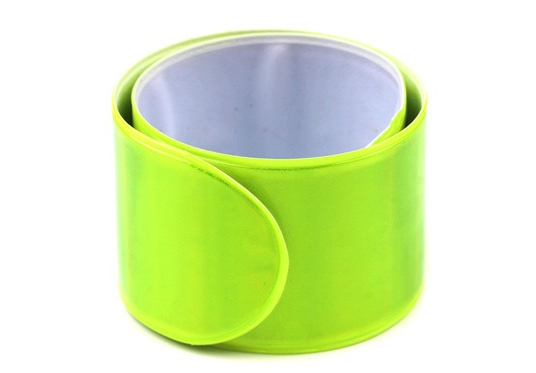
It does not have to be a reflective vest, which discourages many pedestrians as an accessory to clothing. “A reflective tape is enough. Ideally around the ankle and wrist, always on the roadside,” adds Farář.

“We found it better to move the light area,” says Robert Šťastný of the ŠKODA Road Safety Research Team. “Reflective elements are better to have on the limbs we move than on the body or backpack,” he adds.

However, not all tapes and patches are of sufficient quality and will provide pedestrians on the road at night with the services expected of them. The parish priest pointed out that there were products on our market that did not have the necessary properties. When purchasing, it must be ensured that the retro-reflective materials are labeled by European standards.

White clothing driver records from 55 meters

How does the color of clothing affect the visibility of pedestrians and cyclists? The man in the blue driver records up to a distance of 18 meters, the red-dressed increases this distance to 24 meters. If a pedestrian or cyclist dresses in yellow, the driver can see it from 37 meters and the white clothing can be seen from 55 meters.

But even such a distance may not be enough. If a car is traveling at a speed of 75 kilometers per hour and although the driver is bright, it takes about 1.5 seconds to respond to pedestrians or cyclists. During that time he will travel another 31 meters and he has only 24 meters left to avoid a collision.

Fluorescent materials increase the contrast of pedestrians or cyclists to the background and extend the distance the driver can notice. But they only increase visibility during the day and at dusk, losing their function in the dark. Reflective tapes and patches are visible to the driver from a distance of 200 meters and the driver has enough time to react.

“The principle of seeing and being seen still applies. All road users must ensure their safety. In the case of drivers, this may include the use of a mandatory safety vest in the event of an incident and subsequent movement on the road. The seeming little thing that can decide on pedestrian health in low visibility is a suitable reflective accessory to clothing,” confirms Tomáš Lerch, Director of Traffic Police.

“Glue” the kids and the bike

Children are the most vulnerable in road traffic. They must be as clear as possible on the road and sidewalk. Get them bright clothes with reflective fabrics, as well as briefcases and shoes.

Reflective elements are also necessary on the bike. The front white reflector, the red and orange rear reflectors on the pedals and the spokes are mandatory for cyclists. Reflective elements on boots, helmet and jersey or clothing provide increased safety. In fog or poor visibility, the front wheel must have a white headlamp and a steady red flashing light at the rear.

From Saturday on the road with only reflective elements

This Saturday, February 20, will come into force an amendment to the Road Traffic Act, which introduces the obligation for pedestrians to wear a reflective element if they move outside the village by road in low visibility. Initially, the police will distribute reflective tapes.

The aim is primarily to prevent serious and fatal accidents caused by the fact that the pedestrian was not sufficiently visible on the road. Between 2012 and 2015, 523 pedestrians died on the roads, including 303 at night. Only last year, 72 people died and were not seen at night.

“A driver who meets pedestrians in black clothes at night has about 18 meters to respond adequately. At a speed of around 70 km / h, he has less than a second to perform the maneuver and avoid the crash,” says Tomas Neřold from the Ministry of Transport. “However, if a pedestrian is equipped with a reflective element, the distance over which the driver can recognize a pedestrian (reflective vest) increases up to 200 meters. This distance already gives him enough space to avoid pedestrians at these 70 km / h.”

The obligation to wear a reflective element applies from Saturday to pedestrians in those cases when it is moving outside the village in poor visibility (not only at night but also at dusk, fog, etc.) along the verge or at the edge of the road in a place not illuminated public lighting. “Of course, from safety, it is good to use reflective elements wherever there is a risk that the driver cannot safely recognize a pedestrian,” adds Neřold.

“You don’t have to wear a reflective vest, a high-quality retro-reflective material of a distinctive color (yellow, light green, orange, etc.) that is visible to other road users is enough. For example, a reflective tape placed on the leg or hand (ideally on both limbs) in the direction of the road is ideal,” says Neřold.

In the event of a breach of this obligation, there is a risk of a fine ranging from zero to CZK 2,000 blockwise, from CZK 1,500 to 2,500 in administrative proceedings. “Instead of imposing sanctions, however, police patrols will rather talk to people and give them reflective tapes and bags so that they do not break the law next time and move safely on the road,” adds Tomas Nerold.

The MF DNES test has verified that a pedestrian with a flashlight is best visible to the driver. Unfortunately, the flashlight is not a reflective element and does not comply with the law. Theoretically, a pedestrian can be fined for using it instead of reflective tape.

Reflective elements protect the life of pedestrians

Traffic police focused on pedestrians in the early morning and evening hours as part of Wednesday’s traffic safety event to see if they were sufficiently visible to drivers.

According to the head of Hradec Králové’s traffic police Karel Kotil, a total of 110 pedestrians were checked, of which only eight had no reflective elements. “But it was in illuminated sections,” he said, adding that one of the pedestrians from Bystricko handed over for administrative proceedings.

“They are pedestrians who know about the obligation to have reflective elements but don’t wear them when they don’t have to. So far we have distributed 1100 reflective tapes, 150 bags, 20 reflective braces for motorcyclists and 200 orange reflective vests for drivers. But reflective vests can also be used by cyclists and pedestrians, “Karel Kotil said.

Police also stopped a pedestrian in Hradec, who had headphones in his ears and did not respond to their challenge. “Headphones with loud music are a problem. The pedestrian then does not hear the approaching car, does not perceive what is happening in the area and easily becomes the victim of an accident, “warns Karel Kotil.

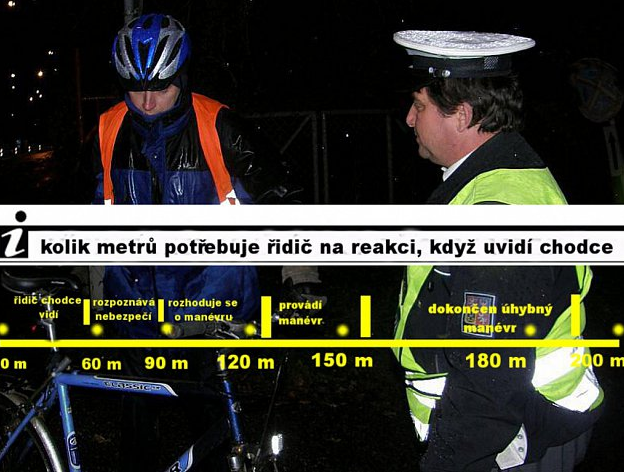
According to road safety experts, at night the driver will see pedestrians with a reflective element at a distance of two hundred meters. At 75 km / h, the driver needs at least 1.5 seconds to realize the danger and react. During that time it will travel 31 meters. And before he starts his own evasive maneuver, he walks more than 150 meters away from seeing a pedestrian. For this task, the driver needs approximately 200 meters, which is the distance a pedestrian with a reflective element will see. This implies that a person moving in dark clothes at night does not give much chance to safely avoid the maneuver. Therefore, not only cyclists have to be properly illuminated and marked at night at present, but also the pedestrians have to wear reflective material elements outside the village.

Although pedestrians do not have to have reflective elements in the city, the police appealed to all who walked along the sidewalk of Kasal’s sawmill in Jindrichuv Hradec in the morning, to urge them to wear reflective elements everywhere and to distribute them immediately. For example, Naďa Vaclavova had a flashlight with her, but in her bag. She explained that she did not walk much at night, but as a driver, she acknowledged that pedestrians should be well visible in the dark.

“The autumn and winter periods, when the day is getting shorter and driveability is getting worse, are extremely demanding for the driver’s attention. On slippery surfaces, it does not stop as fast as on dry roads. Pedestrians and cyclists should be aware of this and adhere to the principle of being seen,” said police spokeswoman Hana Millerova.

Her words were added by the head of the Hradec Kralové traffic police: “Drivers must expect that the weather conditions can change rapidly. Where they pass the nineties in the dry without problems, a sixty can be dangerous. It can freeze water from cars carrying verbal fish, it will also do wet mud.”

Police handing out reflective tape

The Russian roulette of “invisible” pedestrians traveling through unlit sections between villages has new rules. Since last weekend, an amendment to the Road Act imposes the obligation to wear reflective material elements outside the village.

Pedestrians are obliged to wear a reflective element if they move outside the village along the side of the road or at the edge of the road in a place not illuminated by public lighting, “states a press statement of the Ministry of Transport with the slogan that” range from zero to two thousand block, from 1500 to 2500 thousand in administrative proceedings. ” However, the Hradec police officers have not yet applied these sanctions.

“The law allows us to resolve the situation by agreement. We will respect this principle at the beginning of the amendment. However, people should be worried about their health instead of fines, “said the spokeswoman of Hradec police Lenka Burýšková. However, when the” defending period “ends, she did not want to anticipate.

“In our opinion, information is better than repression. Therefore, we will now focus mainly on alerting pedestrians that without reflective elements they are easily vulnerable to roads, “the spokeswoman added, adding that the most dangerous sections are located between the links of individual municipalities.

Five dead

The last fatal accident of an unmarked pedestrian occurred in mid-December in neighboring Rychnov.

“The driver on the stretch between Bílý Újezd ​​and Podbřezí was most likely not able to react to a pedestrian who was walking in the middle of the road in the short distance. The driver did not manage to avoid the pedestrian, who was later driven over by another car. Unfortunately, after the clash of the 53-year-old pedestrian on the spot he succumbed to his injuries, “said a spokesman for Rychnov police officers Alena Kacálková.

Throughout 2015, there were 146 traffic accidents in the Hradec Králové Region, involving a collision of a vehicle and a pedestrian. When these 5 people died, 23 pedestrians were injured seriously and 110 lightly.

“The difference in the visibility of a pedestrian dressed in dark clothing, or the visibility of the reflective element used is up to ten times, but some pedestrians still walk invisible,” regional police spokesman Jan Cizkovsky told the daily.

A new road decree has been in force since the weekend, requiring pedestrians outside the village to wear reflective elements at night or in poor visibility. Police expect less news from the news to tragic accidents where a driver knocks down pedestrians. Last year there were five fatal crashes in the Hradec Králové region.

“If a pedestrian is moving outside the village in poor visibility on the shoulder or the edge of a roadway in a place not lit by public lighting, he shall wear retroreflective elements so as to be visible to other road users,” informs the police website that pedestrians and cyclists are the most vulnerable when on the road, so pedestrians, in particular, should ensure that they are well visible and clear enough to avoid motor vehicle drivers in time to avoid tragic clashes.

A series of tests have shown that when a pedestrian is in dark clothing, he is only 18 meters visible to the incoming driver, 55 meters in white clothing, and if his garment is accompanied by a reflective sign, he sees it driver at 200 meters, which is sufficient distance for safe maneuvering.

“Last year, we distributed pedestrians to a thousand reflective tapes,” said Hradec Bureau spokeswoman Lenka Buryskova, adding that this spring the police will give away two hundred reflective bags with reflective fabrics.

“These are intended primarily for the elderly,” spokeswoman Lenka Buryskova said, adding that police officers will not yet impose fines on people who are caught outside the village without a reflective sign.

First agreement

The police presidium agrees, ie to raise awareness before repression: “We see pedestrians using reflective materials on the street as beneficial. Traffic police patrol vehicles are currently equipped with reflective tapes and are directly issued by police officers to unmarked pedestrians. However, the amendment to the law does not mean that traffic police will start to massively penalize all unmarked pedestrians. Although pedestrians will be a misdemeanor, in these cases police officers will primarily approach the agreement, explanation, preventive action and the actual visibility of pedestrians with reflective tapes. By the end of 2016 we expect to distribute up to 250,000 reflective tapes in this way, “added Tomas Lerch, Director of the Traffic Police Service of the Police Presidium of the Czech Republic.

Proper selection and care of warning work clothes is a must

Especially winter days are short, often cloudy, visibility is worse. Anyone working outdoors, on the streets, on roads or construction sites, needs warning clothing with reflective elements. “Ideal protective clothing is safe, comfortable and ergonomic,” says Silvia Mertens, Product Manager.

A graduated textile engineer knows that only those who feel good in their bright orange or yellow clothing are also consistently worn. Trouser belts or jacket sleeves should be comfortable and fit for physical activity. Also thoughtfully designed pockets or loops for tools and other needs are important.

Reflective clothing must comply with ISO 20471. All safety requirements are also met by the certified clothing collection “Dynamic Reflect”, which offers a wide range of combinations. There are fluorescent orange or yellow reflective jackets, pants with pockets and bib. All according to ISO 20471, class 2. In case the jacket is worn together with trousers or pants with a bib, it is class 3. MEWA also offers sweatshirts, polo shirts, and t-shirts in fluorescent yellow or orange color.

Regular inspection is vital

Fluorescent substances, as well as reflective tapes, lose their functionality after some time by wearing, soiling and mechanical stress. Therefore, regular checking of clothing is essential. “In any case, a specialized textile service provider should be entrusted with the washing of warning clothing. This is the only way of guaranteeing a professional treatment of clothing, detection of a possible defect and its professional removal,” says Product Manager.

A camera system with special software examines the garment and evaluates its condition using an algorithm. Afterward, employees check each item of clothing again to see if it can be used. If the reflective element or the fluorescent substance no longer fulfill the protective purpose, these parts are repaired or replaced. Clothing can thus continue to fulfill its protective and warning function.

Reflective clothing must comply with ISO 20471. The “Dynamic Reflect” certified collection of clothing meets all the safety requirements and offers a wide range of combinations.

Reflective elements save lives and money for fines

Police officers can impose a fine of 2,000 crowns outside the village for pedestrians without reflective elements. For the time being, however, it has rather a preventive effect and has been distributing protective equipment to pedestrians and cyclists.

As of 20 February 2016, changes under the amendment to Act No. 361/2000 Coll., On-Road Traffic, came into effect. Pedestrians are newly obliged to wear reflective elements in poor visibility when traveling on roads outside the municipality. The police officer may impose a block fine of up to CZK 2,000 for breach of this obligation, or CZK 1,500 to 2,500 in administrative proceedings. Meanwhile, the police are distributing reflective tapes.

Don’t get into the stats!

In the period 2012 – 2015, 523 pedestrians died, of which 303 at night. Night accidents account for more than half of fatal pedestrian accidents. Outside the village, it is alarming at 79%.

Campaign for safe behavior

Since last autumn, BESIP has been drawing attention to new rules by the campaign “See you?” It aims to teach pedestrians to use reflective material elements. BESIP in cooperation with the Police of the Czech Republic handles 500,000 reflective tapes, 100,000 reflective bags with reflective fabrics for seniors and tens of thousands of reflective laces and pockets for young people.

More news in the traffic rules

The amendment also prohibits driving a vehicle with dirt, snow or icing in the view from the vehicle. A novelty is the introduction of the so-called bicycle street. Police officers can withdraw a vehicle registration certificate when a dangerous fault occurs. Segway vehicles in cities must not exceed walking speed.