Students in JD Lever Safety Patrol become official with new safety vests

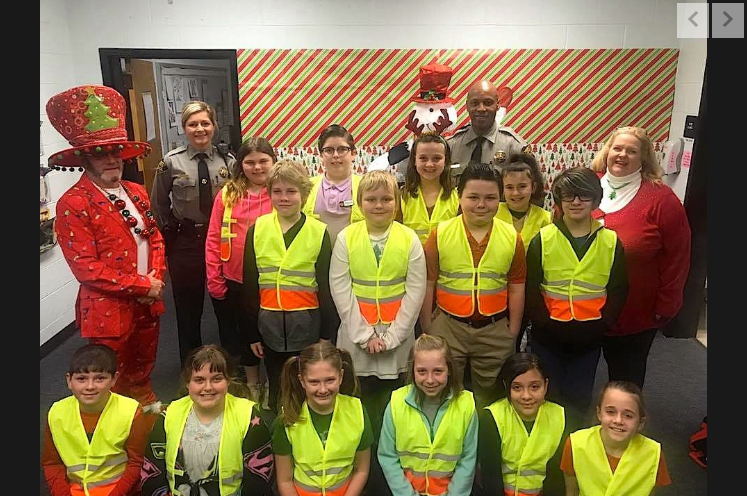
Local police deputies were at JD Lever Elementary School on Thursday morning to meet with students who are part of the school’s Safety Patrol, giving them supplies to help make them more official.

The Aiken County Sheriff’s Office joined with SAFE KIDS Aiken to provide students with the JD Lever Elementary Safety Patrol with safety vests, said Sgt. Mary Frantz, with the Sheriff’s Office.

The students also were each sworn into the Safety Patrol officially.

“I heard that JD Lever had a Safety Patrol, but that they did not have any vests,” Frantz said. “SAFE KIDS Aiken donated money to get vests with reflective material to the kids. They work very hard, going above and beyond what other kids at their school do. These are the students who get to school early and have responsibilities like raising and lowering the American flag each day. “

Most schools with safety patrols acquire equipment like safety vests with reflective tapes from AAA but can cost the schools a lot of money.

“When I learned how much a school has to pay AAA to get stuff, I was shocked,” Frantz said. “So, we decided it would be more fun if we do not buy gear from AAA and create our program.”

Trophies Unlimited made and donated badges, which say “JD Lever Elementary Safety Patrol” with the word “Deputy” and each has a picture of the school’s mascot, a lion, in the center surrounded by an outline of a star.

The badges will only go to those students who show leadership skills, Frantz said.

Over the next month, the students will each be evaluated by deputies on how they perform their duties, how they treat others, their grades, and their leadership skills. Based on the evaluation, each patrol officer who shows all of these skills will be issued a badge, she said.

“I just wanted the kids to know how proud we are of them and appreciate what they do,” Frantz said.
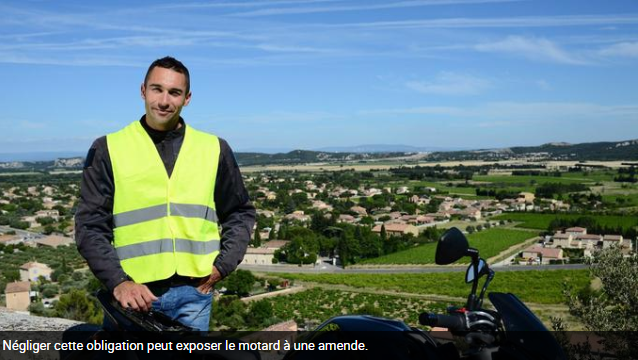
The new motorcyclist standard begins to apply

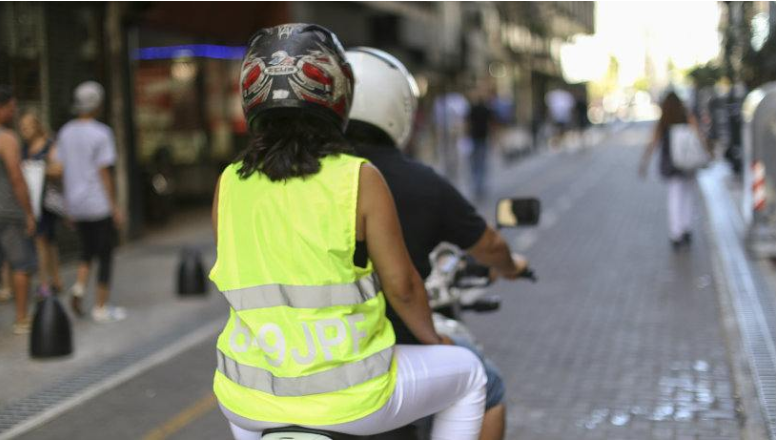
The Municipality of San Miguel de Tucumán sets in motion the decree that forces motorcycle drivers to use reflective garments to be more visible. “The measure is positive, but when the minutes are filed, the fines cannot be applied,” said one expert.

This Wednesday the Municipality of San Miguel de Tucumán will enforce the decree that forces motorcyclists to circulate in the capital to wear reflective vests.

The controversial measure, rejected by the drivers of this type of road, was a decision of Transit and Transportation, by Enrique Romero, with the intention that the motorcyclist is more visible to other drivers.

The resolution establishes that the vest should be yellow, with reflective tapes. In case of not having the piece, drivers must use shoulder straps or wear a garment with high visibility material. Also, if they use motorcycles with delivery boxes, they must adhere to reflective material.

Positive but poorly applied

Jorge Rodriguez Robledo, lawyer specialized in Traffic issues, explained to eltucumano.com that the initiative is positive within the security measures, although its application is erroneous since it lacks regulation. “When they file the minutes, the fines cannot be applied,” he said.

“It is essential that prevention and awareness actions are generated on the public road. This administrative resolution, which arises from the will of the municipal transport undersecretary, cannot have any application,” he said, adding:”He says that this must be mandatory, which is not bad, it is a positive action that adds up to security measures, but does not have regulations so that a lack judge can apply a sanction. The judge does not have the measure in the municipal code of fault, and does not come as a municipal ordinance but comes from the will of an official,” said the lawyer who compared this measure with the obligation of motorists to use the low lights.

“This will lead to the same thing that happens when the use of low lights is mandatory. All infractions for not using the lights in San Miguel de Tucumán is null and void. It does not have regulations so that a judge of fault can impute it,” he clarified.

Rodríguez Robledo stressed the importance of making this type of change through the Deliberative Council, in charge of debating all the issues that involve the neighbors. “When you want to regulate a behavior you must do it through a municipal ordinance, through an internal debate in the Deliberative Council. What Romero should do is present an ordinance project. Its forms confuse society, and as it is managed by the mayor develops those resolutions that do not affect the community,” he said.

“The vests are perfect because they allow seeing 150 meters the presence of the driver, of that motorcycle. It is a positive norm. What you have to generate is that pedestrians and drivers are visible. The way it is done is not correct. It does not comply with the formalities,” concluded the specialist.

IMM went out to supervise the bikes with free escape

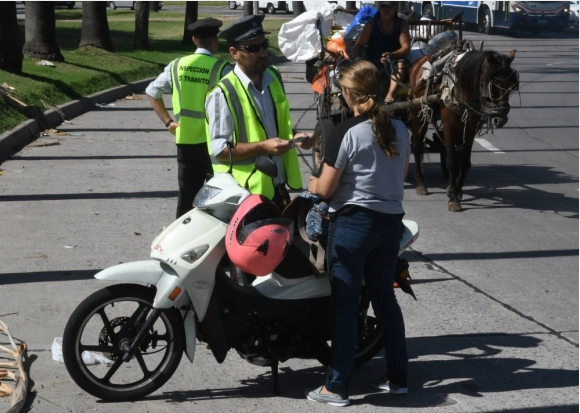
On the side of the street, at the roundabout of General Flores, a group of inspectors stationed on the morning of yesterday. The objective: to check if motorcyclists wore helmets, if they had lights on, driving and property books and if they wore reflective vests. Some of the officials, held in their hands a sound level meter to control that the noises of the bikes did not exceed the allowed decibels.

Mariela Baute, Transit Director of the IMM, who present during the procedure, said that “there were few”. “When we find that infraction, what we do, before giving a fine, is to give the driver 10 days to appear in the Municipality with the repaired tailpipe.” If he does not do so, the fine will be applied. is 10 Adjustable Units.” If in another procedure it is detected that the vehicle is in the same condition or did not make the repair, the motorcycle is directly removed.

According to Baute explained, the highest number of complaints about annoying motorcycle noise is given at night or dawn, when there are almost no sounds in the streets. “Many times it happens that we take the measurement of noise and do not exceed 100 decibels, but it annoys the escape because of the silence that there is in the streets, although we cannot sanction if that level is not exceeded,” he said.

Half an hour after the start of the operation, each of the eight inspectors had arrested more than 10 motorcyclists. None refused at the signal of the agents. First, they asked for the documents, they compared them with the license plates and then they were asked: “And the reflecting vest?”.

Most tried to give an excuse to get away from the moment: they said that they had stolen recently, that they had fallen down the street or that they had forgotten.

When the inspector went to a box they had on the sidewalk and grabbed a vest to give it to him for free, and proceeded to give him a little talk about the importance of wearing it, the motorcyclists were sincere and admitted that they had never bought the vest or They did not know that it was mandatory to use it.

“Even though we worked on this topic all last year, we have seen many people without the reflective vest,” said Baute. He added: “What we are looking for is your safety and that of the rest since a person wearing a vest with reflective tape is 17 times more visible than one who does not wear it”.

Another of the complaints that IMM commonly receives is about the deliveries that often commit infractions: they pass with red light, they do not use all the required protection systems and they circulate at high speeds. Baute explained that Unasev is working “directly with them”, conducting training courses.

“They have identified them and they know which companies have hired them, but what that job has is that it is not permanent: today a person is delivery and tomorrow not, so it is difficult to have them controlled,” he said.

“We criticize motorcyclists a lot but we also complain when the food is late or cold, I am sure that none of us when the food arrives with the delivery we notice if it has a helmet or if it has a vest with reflective material. we need them, “he said.

Vulnerable users – Think!

Seeing and being seen is essential in road traffic.

With the change of the time last weekend, many pedestrians move at nightfall. It follows an increased risk of the accident since often the drivers do not see them well or notice them only at the last moment. Road Safety Luxembourg ASBL, the Ministry of Sustainable Development and Infrastructure and the Police Lëtzebuerg recall some tips to reduce the risk of collision:

Pedestrians: Be visible!

Wear clothing with reflective material, armbands, jackets, reflective tapes, umbrellas and reflective pads – all accessories for long-distance viewing by motorists.

Walk-in in front of traffic on country roads and wear the mandatory safety vest.

Consider the speed and distance of approaching vehicles before entering the road. Make sure you are seen by motorists.

Put a reflective collar on your dog.

Joggers: be visible!

Wear reflective armbands and wear clothing with integrated reflective elements.

Wear a safety vest that is mandatory if you take the road out of town.

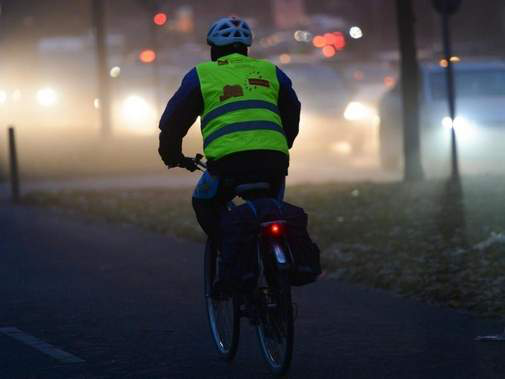
Cyclists: be visible!

Make sure the lights and reflectors of your bike are in good condition.

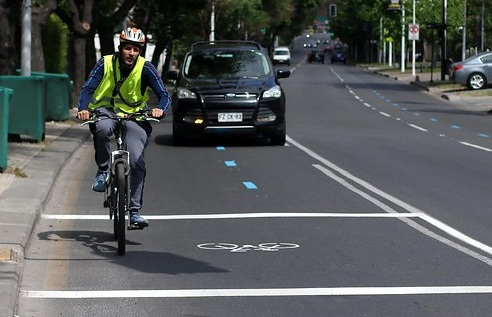
Wear a helmet and a vest or other reflective accessory.

Mandatory bike equipment:

a doorbell

two brakes

a white or yellow light before

at least 2 reflectors per wheel or continuous reflective tape on the tires

reflectors on the pedals

a red reflector

a red rear light

Motorists: be visible!

Turn on the lights when visibility conditions require.

Report your maneuvers in good time.

Adjust your speed.

Make sure windows and vehicle lights are clean (in winter cleared of snow or ice).

Take into account the potential errors of vulnerable users in traffic.

How many safety vests needed in a car?

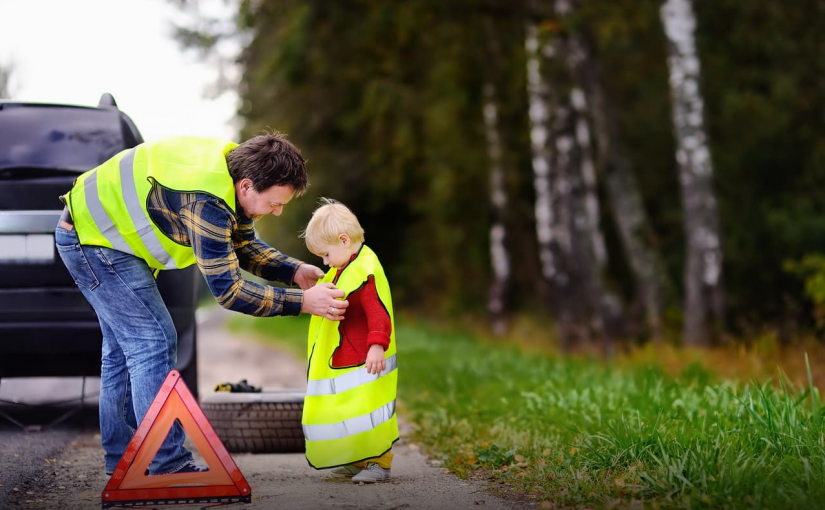
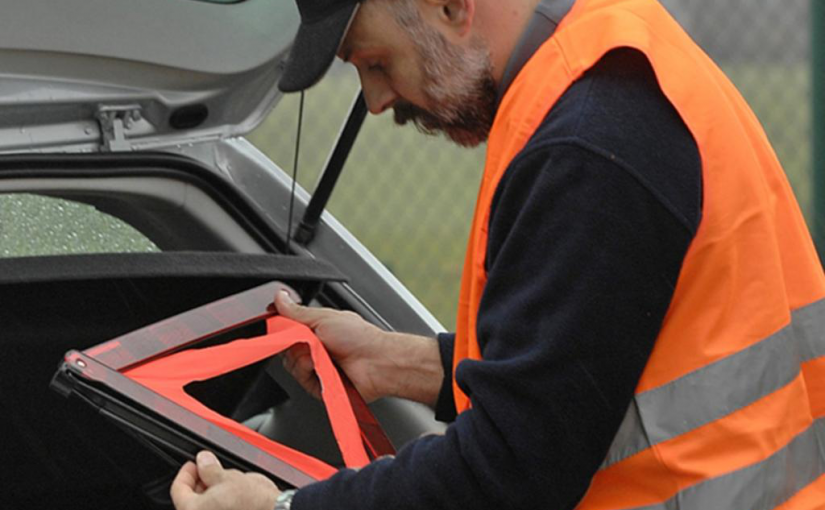
Every driver must have a safety vest in his car. This is not mandatory for passengers but still recommended.


In France, the fluorescent safety vest with reflective tape is part of the mandatory equipment to have in the car since October 2008, in the same way as the pre-signaling triangle. The yellow vest must bear the CE mark of the European Community.


The Highway Code says:


“The safety vest shall be worn by the driver before leaving the vehicle, at night and during the day, whatever the visibility conditions, following an emergency stop”.


This obligation only applies to the driver of the car. It is not necessary to have a safety vest per passenger, even if it is recommended for the safety of all.


What is the fine if I do not have a safety vest with reflective material?

In case of absence of safety vest in the vehicle, you risk a fine of 135 euros, minus 90 euros (contravention of fourth class). You may also verbalize if your vest is not easily accessible from your seat. So prefer to store it in the glove compartment rather than hide it at the bottom of the trunk.


However, unlike a rumor launched on the Internet, you do not risk anything by putting your yellow safety vest on the dashboard on the sidelines of the protest against the fuel increase of November 17, 2018.

Reflective vests will be mandatory in Germany in July

Since July, drivers will have to wear reflective vests in Germany in cars, and there is a fine for breach of duty. On the same date, environmental rules for entry into some German cities are also tightening, with cars with red and yellow emission stickers no longer allowed.


Including a mandatory vest in the car should improve the safety of drivers who, in the event of an accident or breakdown, have to get out of the car because the motorists will see them better in the surrounding vehicles. The new edit does not specify whether the reflective vest with reflective tape is orange, yellow or green. Unlike Austria, German regulations will not require a vest for each passenger, one per vehicle will suffice.


If the driver does not have a reflective vest in the car, he may be fined 15 euros during a road check. However, the German ADAC club points out that if the driver does not wear the vest  with reflective material when getting off the vehicle, the offense is not. But in that case, he is unlikely to be entitled to compensation from an insurance company if a passing car injures him.


The rules for entering some German cities have also been tightened since July. While cars with three types of emission plaques have been able to do so until now, only vehicles with a green plaque, which designates the engine with the lowest environmental load, will now be allowed to enter. The measure covers 21 cities in the Land of North Rhine-Westphalia. A similar arrangement has been in place for some time, for example in Berlin.


The type of emission plaque is determined by the number of harmful substances that the vehicle emits into the atmosphere during operation. Petrol-powered cars launched in 1993, diesel-powered passenger cars launched in 2006, and trucks commissioned in October 2006 are also eligible for a green plaque.


In the Czech Republic, it is possible to obtain a plaque at most stations of technical inspection after presenting a large technical certificate. According to the Central Automobile Club of the Czech Republic, the price of the plaque is around CZK 300, its validity is not limited in time.


If a driver entered a defined low-emission zone without an emission plaque or with a worse grade than the city permits, he would face a fine of EUR 80.

So you protect your dog in the dark

To be seen can save lives. Not just your own, but also your dog’s. Here are the tips for you and your animal to be visible in the winter darkness.


Darkness, fog, and snowfall make it difficult to detect both humans and animals. In NT’s acclaimed reflex video it is clear how crucial a reflex can be. According to traffic safety organization NTF, you can be seen already at 125 meters with reflective tape, but only at 20 meters outside. This also applies to your dog, cat, horse or other pet.


“Many people make sure that they themselves have reflective vests, but often forget the dog,” says Erik Tjäder, owner of the Arken Zoo in Norrtälje.


There are a lot of different reflex models. But the most common for just dogs are necklaces and vest. The necklace can either blink or be made of reflective material.


“The advantage of those who flash is that the dog is visible without it being hit by light,” says Erik Tjäder who, however, recommends a combination of the two for optimal visibility.


It is also important that the reflections are visible from all directions. A reflective necklace that runs around the entire neck, instead of just one side, can be a good idea.


“Then you give the driver a chance to discover the animal,” says Erik Tjäder.


He also suggests that from time to time check that the reflections really work.


They can be worn by washing and weather and may need to be replaced.

At what time should the reflective vest be worn

Last Sunday the regulations began to work. However, the fines for cyclists for not wearing the reflective vest and the lack of a decree have generated doubts and inconveniences for users.


The law of road coexistence that began to rule this Sunday, November 11, has generated several doubts and some criticism from cyclists, who have been forced to get off the road and comply with some rules such as a reflective vest, despite that these provisions were already in force in the transit law.


According to what is established in law, it is the Ministry of Transport that has to issue a regulation with “the technical specifications of the safety elements for occupants of cycles, such as helmet, reflective elements, brakes, lights and other accessories of security”.


However, this regulation has not been issued yet, so that for the moment the provisions of the traffic law in this regard continue to apply.


What’s wrong with the reflective vest?

In article 6 of the regulations for bicycles established in Decree 116 of the current traffic law, “from half an hour after sunset, until half an hour before departure and every time the weather conditions require, the drivers of bicycles traveling on a public road must wear a reflective vest, harness or belt.”


That is to say, that its use is not necessary throughout the day, but only in the schedules established in the aforementioned standard.


Meanwhile, as for the other elements of security, while the new decree is not issued, what is stated in article 5: “every bicycle must be equipped with plastic plates or reflective tape on the front and rear edges of each pedal Likewise, these will be located on the front and rear forks or, in the form of a circular arc, on the spokes of each wheel, in any case, red or orange reflective material cannot be placed on the front fork. ”


Road traffic reflective clothing in DIN standard wear

Reflective clothing makes cyclists and pedestrians more visible to motorists in the dark. When buying, attention should be paid to compliance with the DIN standard.


In winter, pedestrians and cyclists are better as visible as possible, so that motorists notice them in time. The Tüv Süd advises adding reflective material on clothing and safety accessories.


Buyers should pay attention to the standard DIN EN 13356. The surfaces on school bags, in turn, bear the designation DIN 58124. Anyone who wears a safety vest over their clothing as a cyclist uses products with the EN ISO 20471 standard. Anyone wearing clothing with such reflective tape can be seen at a distance of up to 140 meters.

safety vests

No question, safety vests are handy. But where to go with the thing in the car?


In Germany, the safety vest is not mandatory equipment for private vehicles. However, TÜV Rheinland always recommends wearing this protective reflective clothing in the event of a breakdown – not only in the dark season. The reflective material is already seen from a distance of 150 meters. People without a safety vest recognized by motorists only when they are only 80 meters away.


So that the vest is quickly at hand in an emergency, it should be stored indoors, preferably in the glove compartment, under the seat or in the door pockets. When the vests are open in the interior, they can age faster due to solar radiation. The trunk is less suitable for accommodating the vest. First, you have to walk around the car without protection to get to the vest, on the other hand, she could be covered thereby luggage.


Approved in Germany west in red, orange and yellow, which comply with the standard 71 DIN EN. For children, there are also other colors with the label DIN EN 1150. The vest is available from about two euros, for example, the ADAC or the TÜV, but also at many gas stations or accessory shops.