6 THINGS BICYCLISTS CAN DO TO KEEP OUT OF EMERGENCY ROOMS

Defensive driving isn’t just a concept reserved for automobile drivers.

It’s just as important – probably even more so – for cyclists.

“I think one of the biggest things as a bicyclist is to be a defensive rider, very focused and alert – able to anticipate what cars around you may do before they do it,” UVA Health System injury prevention coordinator Liz Cochran said. “The sooner you can detect potential conflicts on the road, the quicker you can act to avoid a potential crash.”

But that doesn’t mean cyclists here – or anywhere for that matter – can let their guard down.

Knowing the rules of the road is just one-way cyclists can protect themselves, according to UVA Health System injury prevention coordinator Liz Cochran.

According to Cochran, bike-related head injuries are the No. 1 reason for sports- and recreation-related emergency room visits for U.S. children ages 14 and under.

Here are six tips from Cochran on how bikers can better protect themselves:

1. Don’t just wear any helmet

Just because you’re wearing a helmet doesn’t necessarily mean you’re protected.

Cochran says people often buy helmets that don’t fit correctly, or even worse, they wear a helmet but leave it unbuckled.

It starts with getting the correct fit, she said.

“You can’t just go by a rider’s age,” she said. “You have to test them out to find the right size for a person’s head.

“You can start with a tape measure to measure your head, staying above your ears and your eyebrows because that’s where the helmet fit will be. Just like a pair of jeans, you’re going to have brands that vary in their sizing charts. Just because a certain size fits at Wal-Mart, doesn’t mean the same will at Target. You have to try it on and make sure it is snug all around. You don’t want any spaces between the foam tab and your head.”

And Cochran says you also have to make sure you’re wearing the helmet correctly.

“You want to put your fingers in a ‘V’ shape, like a peace sign, under and slightly in front of a bike rider’s ears and the straps should align with your fingers. The chin strap should be fitted under their chin, but should not be so snug that one or two fingers can’t fit beneath it. An easy way to test it is to open your mouth wide, like a yawn, and the helmet should pull down on the head. If not, the chin strap needs to be tighter.

“You can pull the straps on the back of the helmet to adjust it, and once it’s fastened, the helmet shouldn’t move in any direction. It should be snug, but not so snug that you can’t open your mouth.”

2. Check Your Bike

Before you go out for a ride, inspect your bike.

“So often people get on the bike and right away want to go out on the roads. And that’s great, we encourage people to bike and exercise, but you also have to educate yourself first on how to be a responsible bike rider, just like you would be a vehicle driver, “Cochran said, “and that includes checking the ABC’s of bike safety – air, brakes, chain / clean.”

“Also, you want to find a bike that fits you. If it’s too big, it’s going to be much harder to control. If it’s too small, you’re going to be putting out a lot more effort.”

3. Careful with Carry-Ons

“If you’re carrying items on a bike, you want them either in a backpack on your back or strapped on the back of the bike. You don’t want anything swinging from your arms as you’re trying to ride,” Cochran said.

That advice extends to your clothing, too.

“Wearing anything long and loose isn’t the best riding attire as clothing can easily get caught up in chains and gears and cause a crash,” she said. “Make sure shoelaces are tied and tucked in, pant legs are cuffed up, and long dresses and skirts are kept clear of the bike chain and gears.”

4. Guiding Light

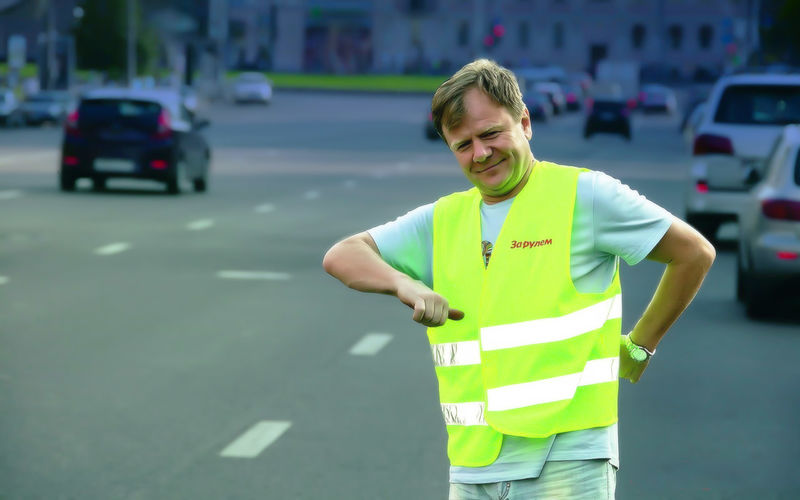
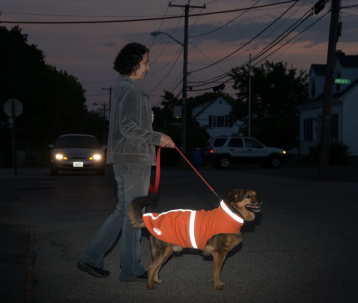
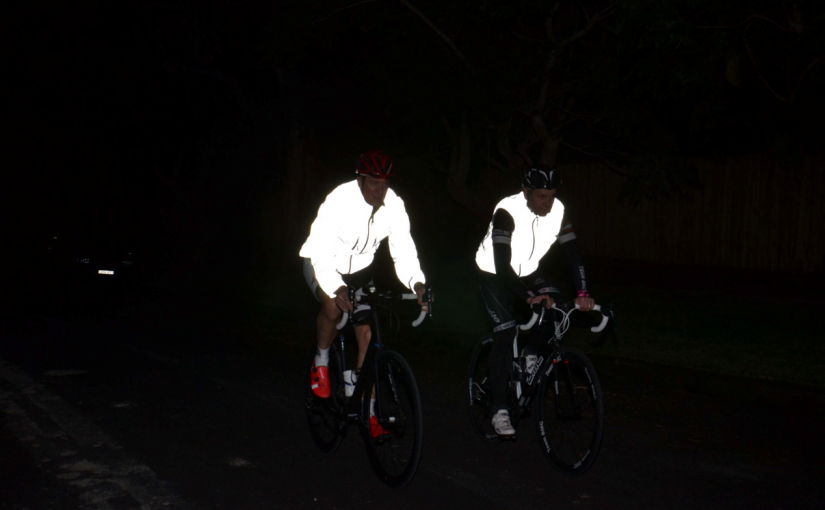
“Wear bright clothing during the day and reflective clothing or reflective vest in the evening hours, as well as having lights on your bike,” Cochran said.

5. Lose the Booze

This may seem like a no-brainer, but Cochran said the numbers suggest otherwise.

“In recent statistics, alcohol was involved in 37% of all fatal bicycle crashes,” she said. “If you’re drinking, you shouldn’t be operating or driving any vehicle, and this applies to bikes as well.”

“Anyone who works in the field of trauma will tell you, lots of injuries that come through have an alcohol-related component to them; problematic drinking habits are something we screen all injured patients for at UVA.”

6. Rules of the Road

Cochran suggests learning all you can about cycling laws via the National Highway Traffic Safety Administration and also going to your local bike shop and biking community to “pick their brains.”

“Local riders can tell you from their own experiences what area roads that are safer to ride on, or ones they would suggest avoiding,” she said. “Aside from wearing a helmet, being an educated bicyclist is one of the best things you can do to protect yourself.”
A risky month for pedestrians

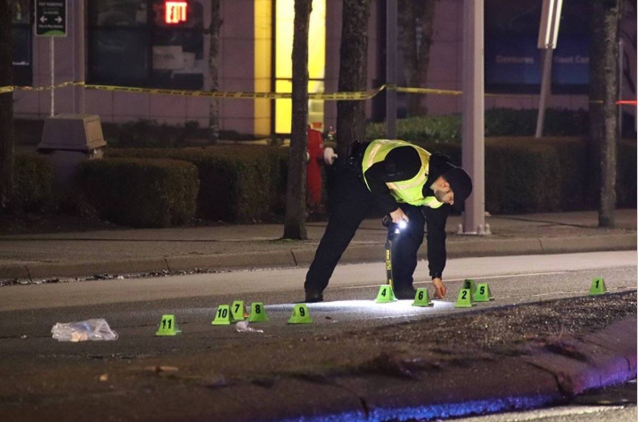
It was dark and raining Monday night, when a man wearing dark clothes crossed against the light on Fraser Highway at the intersection with the Langley Bypass.

A driver making a left-hand turn didn’t see the pedestrian in time to stop and knocked him down.

Ambulance paramedics didn’t find any serious injuries and the man declined an offer of transport to the hospital.

It was one of three such incidents reported in the Lower Mainland and Fraser Valley that night.

Langley RCMP is reminding residents that November is a risky time of year for pedestrians, who need to be aware of the potential hazards.

Just because you are in the right, doesn’t mean you are safe, cautioned the head of the Langley RCMP traffic section, Sgt. Matthew LaBelle.

“The crosswalk is not a cone or wall of safety,” LaBelle observed.

“Pedestrians need to be reminded that they have a role in assuring their safety,” he advised.

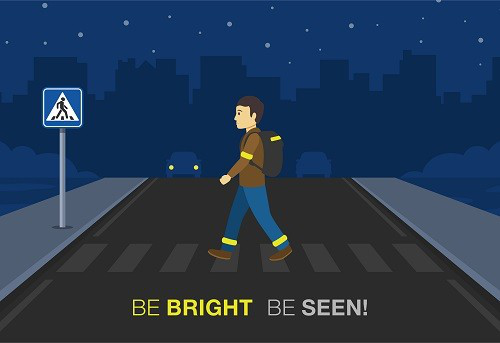
Sgt. LaBelle said “common sense” precautions can help prevent accidents, such as walking facing traffic and wearing reflective clothing or attaching reflectors.

ICBC has mounted a pedestrian safety campaign with police and TransLink to urge pedestrians and drivers to stay safe as crashes with pedestrians spike at this time of year.

ICBC stats show Langley averages 85 pedestrian-related accidents a year.

According to the insurance agency, the number of pedestrians injured in crashes from October to January nearly doubles as the weather changes and daylight hours decrease

Lindsay Matthews, ICBC’s Vice-President of Public Affairs and Driver Licensing said the risk is highest late in the day.

“Crashes with pedestrians are highest between 3 p.m. and 6 p.m. every day when most of us are commuting home from school and work,” Matthews said.

In B.C., 1,200 pedestrians are injured in crashes between October and January and 670 pedestrians are injured between May and August.

Safety tips from the RCMP in B.C.

For Pedestrians:

Wear bright colors or reflective clothing with reflective tape after dusk and before dawn;

Even if you have the right of way, be sure to look before crossing;

Make eye contact with drivers to ensure they know you are there;

At controlled crosswalks, wait until drivers stop before crossing;

If you use earbuds or headphones, make sure you can still hear surrounding noise.

For Drivers:

Slow down; roads will start to get slippery and stopping distances increase.

Change those tires (If your tires aren’t suited to the weather you can be ticketed and you can be held liable in an accident).

Pay attention to all pedestrian signals-even if you have a green light to drive someone may be crossing a crosswalk at an intersection legally.

Shoulder check; many cars with new technology warn of impending collisions, but nothing beats using your own eyes.

Pay attention to all road signs; they warn of upcoming hidden intersections and crosswalks.

Put down the phone, your call or text is not worth some one’s life.

Surrey pedestrians, please stop jaywalking

It is our collective Christmas wish, here at the Now-Leader, for people to stop jaywalking.

Is it too much to ask?

We know it ’s tempting to make a dash for it sometimes. Impatience is, after all, a human condition. But if you want to keep on being a human – an alive one, anyway – please resist that urge. So much depends on it.

Members of our staff have witnessed people making a run for it across busy streets like King George Boulevard rather than using a crosswalk fewer than 50 strides away.

Of course, sometimes pedestrians are injured or killed in crosswalks. But your chances of survival are much greater using one of these than hoping traffic will stop for you as you run for it, especially during rainy nights and mornings, and especially if you are not wearing reflective clothing with reflective fabric.

A woman died on Dec. 16 after being hit by a car in Cloverdale, at the intersection of 192nd Street and 80th Avenue. Earlier that day, another woman was injured, also in Cloverdale, while crossing at the intersection of 188th Street and 56B Avenue .

The day before, a man was killed after being hit by a vehicle in the 7100-block of Scott Road. The Surrey RCMP said he ’d been crossing the street mid-intersection.

So far this year, seven pedestrians have been killed in Surrey. Not all victims, of course, had been jaywalking. However, these seven souls gone, leaving behind grieving families and friends, underlines the risk pedestrians face in Surrey and the need for drivers and pedestrians alike to be vigilant.

According to ICBC, there were 450 pedestrian-related traffic crashes in Surrey last year, 440 in 2017, 400 in 2016, 430 in 2015 and 390 in 2014.

That makes for a five-year average of 420 pedestrian crashes in Surrey annually. The five-year average for the entire Lower Mainland is 2,300.

In the years 2014 to 2018, there were 2,110 pedestrian-related crashes in Surrey and an unbelievable 11,400 in the Lower Mainland.

As a species, we have to be smarter than this.

The new line of reflective clothing makes pedestrians “light up like a Christmas tree”

November tends to be the most dangerous month of the year for pedestrians.

Daylight savings time has just ended and drivers are still adjusting to darker conditions at rush hour. Last year there were 37 pedestrian collisions (fatal and injury) in Edmonton during November, more than twice July’s total.

Irene Dixon, the creator of Reflective Advantage — a reflective garments line that launched this week — wants to prevent future collisions by making pedestrians more visible.

“You can’t prevent every accident, but you can give yourself an advantage,” she said.

A few years ago, Dixon was startled several times while out walking her two West Highland terriers on the roads by her home near Stony Plain. She would jump into ditches and pull the dogs down with her to get out of the way of speeding cars. She also had a few close calls behind the wheel, failing to spot pedestrians, some clad in black clothing, from far away.

As a nurse working in intensive care and neurology units, she saw the broken bones, burns and head injuries coming from car crashes and how the trauma of those accidents affected patients and their families.

Searching for solutions, she found only bulky safety apparel and expensive athletic gear with tiny reflective logos on the chest. She bought a reflective vest but didn’t like the fit or feel, so she started sewing more stylish options herself. First, she made dog coats with bright, high-visibility fabric for her Westies, Piper and McDuff. Drivers slowed down, even started smiling and waving at her and the dogs, so she made more items — walking vests with pockets and scarves with reflective stripes and stars.

“When you wear this, you light up like a Christmas tree,” Dixon said, twirling a commuter scarf around her neck. The $ 20 scarves have reflective material sewn and stuck to both sides and they come in different colors and styles.

Advertising campaigns asking pedestrians to take responsibility for being seen have drawn criticism in recent years. Last year, the City of Edmonton abandoned a proposed billboard ad that would have encouraged people to wear more reflective clothing. City spokesperson Gary Dyck told the Journal the ad was nixed after it received poor feedback from a panel of citizens who comment on city policies. A provincial traffic safety campaign reminding pedestrians to lock eyes with drivers before walking also drew criticism this fall.

Dixon, well aware of these debates, said she’s not out to blame pedestrians or remove the responsibility of drivers. She knows the city has adopted “Vision Zero,” a goal to eliminate all deaths and major injuries caused by car collisions, and is adding more pedestrian signals, improving left-turn signal timing and installing more driver feedback signs in high collision areas.

“All of those things take a lot of time and a lot of money,” she said.

“In the meantime, I want to allow myself and my friends to somehow protect ourselves.”

Cranston-Based Corky’s Reflective Wear Wins Clothing Product of the Year

Cranston-based Corky’s Reflective Wear has been awarded “Clothing Product of the Year” by the Pet Independent Innovation Awards program.

“Never has safety for pets and their owners been as important as it is today. Most people walk their dogs early in the morning or in the evening. The dangers of low light, low visibility, distracted driving, and poorly lighted roads during these times is at its highest,” explains Top Dog Alan Jacober.

The Awards honor the innovation, excellence, hard work and success in a variety of pet care industry categories.

“As the pet industry continues to grow, we are seeing an evolving shift in how we treat and care for our pets. We see the pet market-focused not just on growth, but on creating tangible value for their products to help give our pets a better life. Our 2019 Pet Independent Innovation Award winners deliver on that focus, providing true value with new and innovative technology. The winners were chosen by a group of judges who are senior-level marketing and pet products professionals who have personally worked within the pet product space,” said Bryan Vaughn, Managing Director of the Pet Independent Innovation Awards.

Corky’s Reflective clothing Wear products are reflective to 1,000 Feet, weatherproof, functional and stylish. Dog Jackets and Extenders, Overcollars, Leashes and Ladies Vests.

The products are made with MiraFab, Corky’s proprietary fiber that is wind resistant, repels water, is a fast-drying micro polar fleece, breathable, maintains body temperature, 3-layer bonded interlock, machine washable and easy to care for and has high visibility reflective tape that can be seen up to 1,000 feet.

Corky’s Reflective Wear’s line is available in many pet specialty stores across the U.S. in 6 colors: Lab Black, Healer Blue, Hunter Green, Doggone Red, Oh My Orange and Precious Pink from XXS – XL.

The products are as follows:

The Overcollar is a simple, practical solution to a common safety problem. Regular collars are often hidden by hair or fur and can’t be seen. This goes “over-the-collar” in seconds providing a high level of visibility and an added level of safety for both the dog and its walker.

“Sportswear for dogs’ describes the line of jackets that have a great look, technical and functional features and are the safest, highest visibility protection for dogs and their owners on their walks. (Complete with a built-in Overcollar for added safety.) And, another very innovative creation is a Jacket Extender is available that adds up to 5 “for ‘dogs who need a little extra room!”

Reflective Leashes have all of the safety elements as the rest of the line with ‘LeashSafe’ for quick-hold safety to easily control your dog in crowded areas, crossing a busy street or in high-stress situations.

Ladies Training Vests combine fashion and function for year-round safety plus weatherproof properties, 2 zippered pockets, a cell phone pocket and a large zippered pocket in the back for treats or storage.