Big police action kicks off

It is an old year and many today will embark on a trip, visiting family, organized New Year’s Eve, and some people will go further, whether at home or abroad. Also, last-minute shopping can cause additional stress, resulting in a lack of concentration and nervousness in traffic, with traffic jams in shopping malls.

Also, increased traffic and congestion are expected on all major thoroughfares, as well as at border crossings.

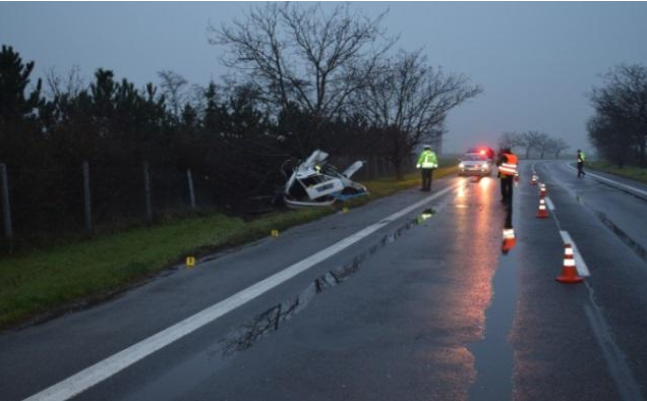
Unfortunately, in the Old Year last year and the first hours of New 2018, we recorded an increase in the number of traffic accidents involving fatalities, more specifically in four road accidents five people were killed.

For this reason, we would like to remind you of the tips for drivers, which we always repeat during the holidays when there are crowds and congestion:

Don’t rush, take the time and go on a journey sooner rather than cause a traffic accident,

Prepare your vehicle and yourself for the journey, especially if you are going for the long haul,

Get up-to-date on road conditions and traffic flow, as well as weather conditions that may affect you while traveling,

Observe traffic rules and regulations, do not initiate risky vehicle actions (e.g., off-peak traffic, vehicle column overtaking),

Adjust the speed to the road conditions and keep to its limits,

Keep the distance you need when moving behind another vehicle,

Pass pedestrians and exercise caution and slow down when approaching pedestrian crossings.

Tips for drivers who have consumed alcohol:

Leave your car parked properly and walk away – it will benefit you and you will not endanger anyone,

Use public transit,

Use taxi services because it will be far safer and cheaper,

If you are in the company, arrange in advance who will stay sober and drive back,

Ask someone sober to drive you,

Do not sit behind the wheel for at least 24 hours after drinking a large amount of alcohol,

While driving under the influence of alcohol, you are not only endangering yourself but also other road users,

On nights of high risk (weekend), drive slower and more cautiously, whether you drink or not,

Remember that no reason is warranted for operating a vehicle under the influence of alcohol.

In addition to the driver, we also have some tips for pedestrians and cyclists:

Specifically, in winter, when days are shorter and visibility is often reduced due to weather conditions (fog, cloudy, precipitation), pedestrians are more difficult to spot for drivers.

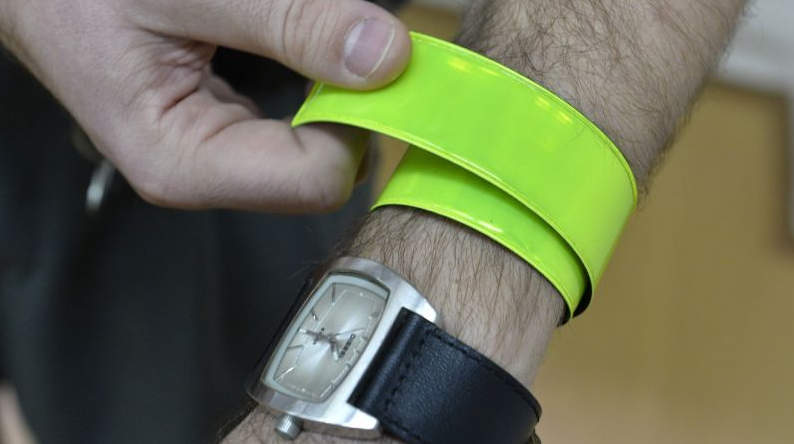
Therefore, we advise everyone, especially older pedestrians, to wear lighter clothing or at least one garment in a lighter color to increase their visibility and thus directly affect their traffic safety. In addition to lighter clothing, we also recommend the use of reflective details (reflective vests, reflective hand straps with reflective tapes or socks) for both pedestrians and cyclists, whose visibility is also reduced in the winter. Bicycle traffic has declined during the winter, however, a significant number of people continue to use it as a means of transport, which is why unlighted bikes and cyclists without reflective clothing are at increased risk of road traffic accidents.

The police have acted intensely throughout December, which will continue today, as well as throughout this week, and will focus its activities on preventing and sanctioning the most serious offenses, in particular, the so-called “offenses”. The “four major traffic killers” (alcohol, speed, seat belt, and cellphone) and, according to repeat offenders, repeat offenders.

In addition to the police, motorists, like all other road users, with their responsible behavior, can also contribute to increasing the level of road safety.

Highway Tips: What to do in the event of an accident

Although traveling by road is statistically one of the safest ways to travel by car, it is essential to be careful about unforeseen circumstances and unsafe drivers.

In recent weeks, we have witnessed several highway accidents where high speeds make it difficult to avoid tragic consequences.

Here are some tips to help you make your trip as safe as possible:

Turn on the dipped beam and take off your sunglasses before entering the tunnel. Pay attention to traffic lights and other traffic signs in the tunnel.

Drive at the permitted speed. Keep track of the security devices in the tunnel and places such as emergency exits and SOS phones.

Stop only in case of extreme need and at extensions.

Before traveling on the road and while driving, keep track of the weather forecast and traffic information.

Keep track of messages on traffic info displays on individual sections of highways and notifications of possible detours.

You respect the traffic signage that indicates a detour, as it will take you back to the highway again and towards your desired destination.

When driving on a wind-driven section, strictly observe the variable speed-limiting light signs and maintain a safe distance between vehicles.

When engaging in highway driving, in all cases (tolls, loops, landings), be careful and follow the traffic signs so that you do not find yourself in the opposite direction of any part of the highway.

When driving on a highway, be aware of the possibility of encountering a vehicle moving in the opposite direction, so it is advisable to check the traffic lane ahead of you, in addition to checking vehicles moving behind you.

Keep up to date with traffic information on the road, which will give you timely insights about a possible highway accident on the highway, as well as important messages and tips for safe driving.

Observe obligations and restrictions through light-variable signage and messages on information portals.

If you get traffic information in the opposite direction, reduce the speed to 40 km / h on the section of the highway you are on, and proceed with caution in the right lane without overtaking with all four direction indicators turned on. Stop the vehicle at the first stop along the highway and wait for information on the end of the hazard.

If you have spotted a vehicle traveling in the opposite direction on a highway, report the information immediately to the police.

Only when you are informed that the incident situation has ended do you continue your normal highway journey.

Procedures in the event of a traffic accident

Turn on all four direction indicators and, with extreme caution, stop your vehicle in the stop lane a safe distance. Turn off the engine, stay calm and calm.

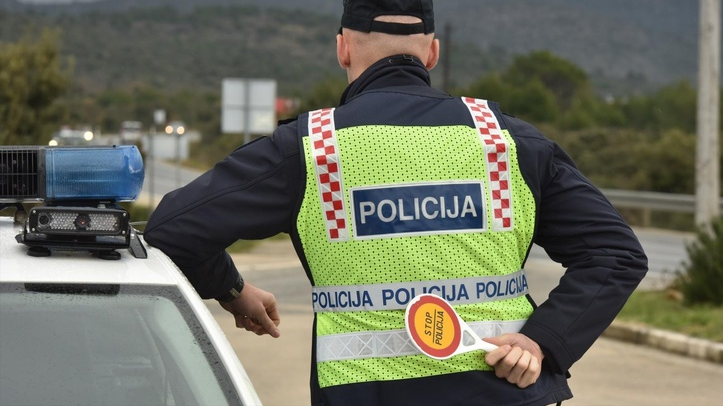
Wear a safety reflective vest with reflective tapes and secure the crash site with a safety triangle, if not already done. Notify the police immediately.

Do not move injured persons unless they are in immediate danger of fire or explosion.

Provide first aid to injured persons in a car accident, within your knowledge and ability. Stay on the scene until police arrive.

Highway assistance

In the event of a vehicle breakdown, if there is no possibility of stopping in the parking lot along the highway, stop the vehicle in the stop lane (or SOS extension or resort) just off the edge of the roadway and switch on all four direction indicators.

Have all passengers leave the vehicle on the right and away from the car and lane. Do not stand in the lane!

Wear a reflective vest with reflective material and place a safety triangle at the prescribed distance to mark a stopped vehicle (the recommended distance is 100 meters on the highway).

Whether or not you have a subscription, call the on-the-go help desk.

In case the driver is unable to remove the car from the highway due to a breakdown of the vehicle, a specialist service will be responsible for this.

Keep your distance !!!

Driving too short a safety distance is statistically one of the most common causes of road accidents. Most of this pattern is also related to speeding.

According to the traffic rules of the Law on Traffic Safety (ZOBS), the driver is obliged to keep the vehicle at such a distance from other vehicles in traffic that, given the speed of movement of the vehicle and other traffic circumstances, it does not cause danger and does not interfere with other drivers.

Most drivers drive too close because of their lack of knowledge about the length of their vehicle’s stopping distance about changes in speed and road conditions.

What is a safe distance?

The safety distance is the rule: a driver driving another vehicle in the same lane must drive at a distance not less than the distance traveled by that vehicle in two seconds unless otherwise specified by a traffic sign.

On wet pavements, the distance should be increased to four seconds and in winter conditions to a minimum of 6-8 seconds.

On autumn roads do not forget about reflective elements

To maintain road safety in the autumn, police recommend that pedestrians use reflective materials. On the social network, the Police Force of the Slovak Republic points out that a pedestrian walking along the side of a road should have these elements on the side of the body seen from the road, not on the side of the road. Reflective tapes are best placed close to the knees, belt level and shoulder, cyclists also on helmets and bicycles.

“In addition to wearing the helmet and reflective fabrics on clothing, cyclists should also ensure that the bicycle is properly illuminated and lights are positioned. In bad weather, ice and snow, it is advisable to use other means of transport,” police said.

The pitfalls in the autumn are waiting for drivers. “On a wet road, a car can become unmanageable. To do this, remove the foot from the throttle and depress the clutch. Align the steering wheel, hold it with both hands and not risk overtaking,” recommends the police.

If there is fog, the speed should be reduced and the distance between the vehicles increased. Drivers should turn on the fog lights. However, if they are standing in the column, it is enough for them to do so first and last in line not to blind other drivers.

If drivers are at risk of encountering game, don’t hesitate to avoid the obstacle at high speed. Police warn that the consequences of shear may be greater than the crash itself, especially when driving on a highway.

10 road rules you must follow this fall

Summer has said “no” to the sunny and warm day, giving the relay to the next season. In autumn, lower temperatures are often associated with ground frost, fog, and reduced visibility.

All road users must be prepared for difficult road conditions by more frequent fogs, rain and, as a result, on wet or icy roads. It is better to be prepared than surprised, so the police are bringing ‘ten’ useful tips that will help to drive safely and reach a happy destination.

1. The most common mistakes of pedestrians – sudden entry into the road from the sidewalk without looking around, poor estimation of the distance and speed of the vehicle, crossing off the passage (often even cross four lanes), underestimating reflective tapes on clothing.

The right response – to anticipate, to cross the road at designated locations, to avoid risky sections, not to climb over railings, not to risk. The obligation of pedestrians walking on the side of the road or on the edge of the road to wear reflective elements or wearing reflective safety clothing not only outside the village but also in the village in low visibility.

2. Police Recommendation – Use reflective elements on the side of the body that faces the road (not the shoulder). Reflective items should be placed best close to the knees and at waist level, on the shoulders, cyclists also on helmets and bicycles. Reflective stickers stick to shoe soles, bikes, skates, helmets, scooters, school bags, crutches or strollers. Children’s clothing, school bags, and accessories equipped with reflective and fluorescent safety features.

3. The most frequent mistakes of cyclists – without lights, without reflective elements, cycling outside the village without a helmet (under 15 years also in the village), on the wrong side of the road and driving in groups side by side and driving under the influence of alcohol.

The right response – to keep track of what is happening around you and always make sure of safe passage, to give you a visible and timely signal of your hands-on changing direction, use of helmets and protectors, reflective elements.

4. Police recommendation – if parents take a child on a bicycle trip, the child must always be in front of them to be able to influence their driving by giving them a warning. Care must be taken to ensure that his health is adequately protected – by a helmet, limbs, reflective elements on clothing. In case of bad weather (iceberg, snow) use other means of transport.

5. Aquaplaning – there is more water between the tire and the road than the tread can handle, the car “floats” and becomes unmanageable.

Correct response – leg out of gas, depress the clutch. Align the steering wheel until the tire touches the road. Hold the steering wheel with both hands and do not risk overtaking.

6. Fog – difficult driving conditions with reduced visibility, wet road.

Correct response – reduce speed, increase the distance between vehicles. Switch on the fog lights, while driving in the columns, the first and the last in the row are sufficient to avoid blinds of other drivers.

7. Beast – risk especially at night and in the morning, unexpectedly and unpredictably.

The right response – avoid the obstacle at high speed. The consequences of skidding may be greater than the collision itself, especially when driving on a motorway.

8. Agricultural machinery – dirty road from mud and leaves, increased risk of skidding.

The right response – anticipate, reduce speed, pay particular attention to preventing heavy machinery.

9. Fruit pickers – trees on the roads attract “pickers”, comfortable bikes on the road, bikes, running children and adults in dark clothes.

The correct reaction of drivers – increase caution, monitor the situation, reduce speed.

The correct reaction of pantographs – reflective vests, belts, caps, whatever makes them visible to the driver and ensures that their “vehicles” do not endanger others.

10. Police recommendation – in difficult weather conditions to predict in particular, adjust speed to weather and your abilities, monitor the situation especially around stops, schools and shopping centers, where the movement of pedestrians and cyclists is increased. Give them a preference where they have it.

Road Traffic Code Stricter, Fines and Violations Collected

Strengthening the Road Traffic Code, applying the principle of proportionality between the risk of infringement and its impact on road safety and the grouping of fines and infringements, the Ministry of Transport proceeds with the draft Law on Passenger Traffic Regulations.

According to the ministry, the infringements of the KKO are not a means of collecting fines, but with the new KKO, the imposition of fines has another conceptual meaning.

The main changes to the new CMC are the following:

Application of the principle of proportionality between the risk of the infringement and its impact on road safety

 Rating offenses according to their risk to:

 1. Low Risk (E1)

 2. Medium Risk (E2)

 3. High Risk (E3)

 Further and irrespective of the category of risk, the above infringements may be classified in the following categories:

 1. Very high frequency of accident (S1).

 2. Anti-social behavior on the road (S2).

 Direct removal of license plates and driving license for 60 days in cases of:

 A. Using a cellphone without the use of a headset or without placing a cellphone in a dedicated position for open listening.

 B. Preventing Disabled People (Disabled) Ramps or Parking at Exclusive or General Parking Facilities.

 C. Use of the emergency lane (ESA)

 Direct removal of license plates and driving license for 60 days in cases of:

 A. violating the provisions on the use of a seat belt or a protective helmet

 B. violating the provisions on the use of special means of restraint and protection in the transport of children

 C. Throwing objects or substances that may cause a fire, such as a cigarette.

Direct removal of license plates and driving licenses for 30 days on heavy-duty drivers who are constantly moving in the left lane or using it for overtaking.

In the event of a repeat offense, the license is removed for a double period and the offender is subject to review for re-issuance.

Registration of the removable plates in a computerized system of the Ministry of Infrastructure and Transport.

The sanctions, according to the ministry, should be touched by all citizens to be proportionately burdened and administrative measures to deter everyone from today.

One fine for everyone and a three-fold increase, through the Treasury, depending on income.

Horizontal reduction of 40% of all fines, except for alcohol-related offenses, the P2 license plate, and the red traffic light, as well as the violations of the provisions governing vehicle access.

Rules for 4-wheel motorcycles and outdoor activities vehicles

Prohibition on public paved roads on light and heavy four-wheeled motorcycles as well as on outdoor vehicles designed for use on the road or across the road.

The regulatory framework for bicycle traffic

Road markings with bicycle signs

Horizontal road markings: longitudinal stripes, wide stripes, special stripes, reflective tapes.

Enhancing road safety

Holders of any category of driving license, who have reached the age of 75, are required to pass a qualification and conduct test for each category they wish to renew. The renewal lasts for 5 years and then the process is repeated.

Another category included in the draft law is the changes to the Road Traffic Code. What are our goals? Our goals are to say that we do not have a road traffic code which is a means of payment, but we do have a road traffic education code. We must pass this on to our citizens, to our fellow citizens, to the drivers of every medium, and we strive to achieve this with very significant changes.

We want to make an effort together with citizens to build new code of social behavior and values, we must all realize that a bad habit can cost the life or health of a fellow citizen. We need to realize that the stress and rush of everyday life cost us the daily life of a fellow citizen who is denied accessibility, especially for people with disabilities.

And we have to create a system that is understandable to everyone. Today we have a road traffic code with hundreds not to say thousands of violations. Each infringement has its own fine, so it is not understood which infringement is dangerous, very dangerous, less, which costs the most in our daily behavior in society. The same people we go to in the Mediterranean and Kifissia, we go to Eleftherios Venizelos airport.

The State must create that framework, the institutions, the infrastructure that the citizen will respect in the public sphere. But we all need to realize the bad habits we have. And of course, let’s move on to the education of the Road Traffic Code, our road education and conscience.

Our goal is to fulfill the obligations of the Ministry of Transport, namely educational material and to educate people on training and lessons, brochures, interactive games. A lot of work has been done in the Ministry of Transport on these issues and we should in the next school year, that is our goal, to start in all elementary classes and in most of the country to do such lessons.

It is in this logic that the imposition of fines that we want to acquire with the new traffic code has another conceptual content and is released from our mind by its thoughtfulness. The fine is not an end in itself for traffic offenses, our priority is prevention, conscience and the cultivation of road education.

I wish we had zero revenue from fines, that is to say, no violations. Let us all realize what our own negligence, our own transgression, can cost our fellow citizens.

In this context, we codify and classify offenses that have not existed so far in three categories: Low-risk, medium-high and high-risk. This classification is foreseen to be made following the recommendation of the statutory competent Road Safety Committee that exists and operates.

There are also two additional categories, one very high frequency of accidents, one antisocial behavior and the other. In these last two infringements, any infringements classified there by the competent Commission, there will be no fines, no fines, no driving license for 60 days.

Some of the violations provided for in the draft law are the use of a cell phone, without the use of a headset and the placement of a cellphone in a special place for an open hearing.

Preventing the passage of people with disabilities, parking in dedicated general parking spaces for people with disabilities, and using the emergency lane. Let me tell you that even in Constantinople which is a city of over 15 million, the LEA is open, and we have not been trained in it in the city.

We believe that these kinds of violations are violations that have to do with our quality of life, have to do with the potential neglect we have in our daily lives or the bad habit as it is for us to smoke too much, it is very easy to throw it away. your cigarette out the window, but you are most likely to burn a man and get killed by the engine behind him, right? Beyond pollution.

The same applies to the provisions on the use of a seat belt and a protective helmet, the use of special means of restraint and protection during the transport of children, so there are zero penalties, it is not a matter of fines for these infringements and administrative measures that you said.

The same applies when heavy vehicles drive only on the left lane or use the left lane for overtaking while there is traffic on the left lane. It’s something we all live on the highways. There, the license plates and driving license are removed for 30 days and the driving license is also removed for a double period.

In all these cases, in the event of a second relapse other than removal, it is obliged to review and re-issue the driving license.
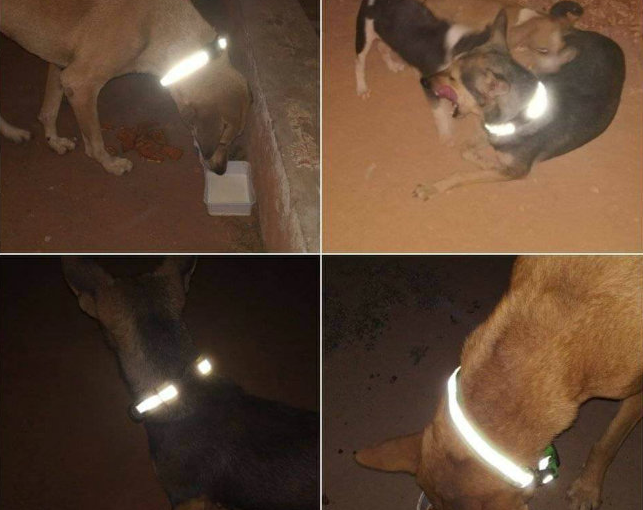
400 dogs with reflective collars to prevent collisions

In an attempt to save dogs from falling victim to traffic accidents, a Mangaluru-based animal rescuer has set out on a mission to tag the animals with reflective collars. 31-year-old Tauseef Ahmed, an MBA graduate, and a realtor have come to be known as Mangaluru’s animal rescuer. He has already tagged 400 dogs with the reflective belts in the coastal city, he says.

An activist with the city-based Animal Care Trust (ACT) in Surathkal for over a decade, Tauseef says he wanted to prevent accidents and reduce the number of deaths of animals. “Based on my observations, I gathered that most of these accidents occur during the night time due to the lack of visibility of the stray animals. Especially close to the highway, there is an unaccounted number of deaths of these animals on the road,” he says.

Last year, Tauseef was the youngest recipient of “Best Street Care and Rescue” award at India for Animals (IFA).

The belts work similarly to the reflective signs on the road. When direct light (from vehicles) is emitted on these strips, it reflects the driver. The activist hopes that these reflectors will catch the attention of the drivers from about 50 meters away and make them slow down. As per the 19th Livestock Census (Karnataka) in 2012, Dakshina Kannada has the highest number of dogs at 1,46,510.

“The reflector belt on dogs not only saves the lives of these animals, but it also saves the lives of the drivers,” Tauseef says. He points out that there are multiple incidents involving stray dogs and two-wheelers in which both the vehicle topples, injuring both the rider and the animal. A simple reflector can aid in preventing such accidents, he added.

Pegged at the cost of Rs 40, Tauseef says he used his savings to buy about 500 belts from Indore. “We have already distributed them to a few residents and animal lovers to identify stray dogs and protect them. Inspired by the initiative, few locals have also taken into sponsoring ‘stray’ animals with belts,” he says.

Born and raised at Kudremukh in Chikmagalur district, Tauseef moved to Mangaluru about 13 years ago. After growing up in a place where animals of all kinds were cared for, including dogs, cats, cows, and elephants, he was shocked to see the numerous animals killed in road accidents.

Initially, Tauseef wanted to tag cattle with reflective tapes as well since cows are also frequent victims of road accidents. However, he says, “I was concerned if they will be misused by the perpetrators to identify cattle for meat purposes.”

Tauseef works go beyond just reflective collars as he tried to treat injured animals in the city as well. The activist says he spends about 30 to 40 percent of his salary for animal treatment, including buying medicines or injections. “About 80 percent of cases are treated on-site,” he says, “If the cases are severe, then with help of a team from ACT, we take the animal to the hospital for further treatment.”

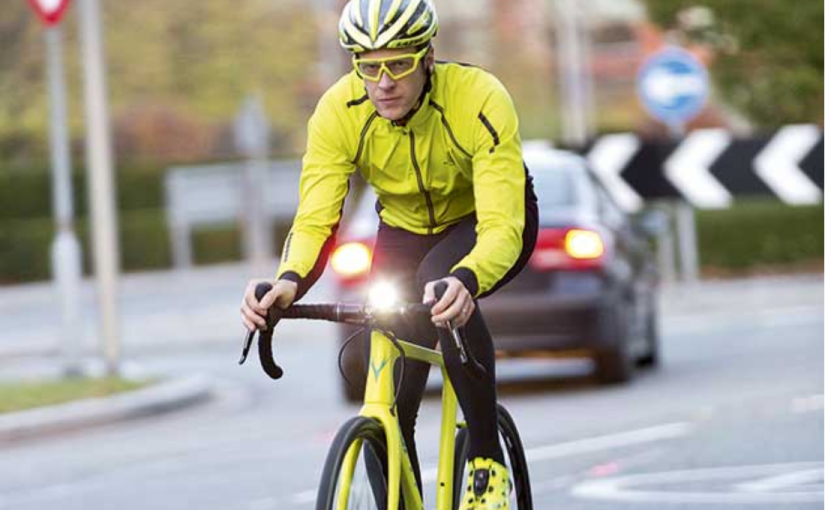
What is the evidence that wearing hi-vis clothing makes you a safer cyclist?

Roads minister suggests making bright kit mandatory for cyclists in Britain, but what’s the evidence to back up the claim that this could help increase safety?

For several seasons now hi-vis has been fashionable for bike wear. But last month roads minister Jesse Norman suggested that the government’s wide-ranging review of cycle safety would consider if cyclists should be compelled to wear high-visibility clothing if there was evidence for it.

What evidence is there that supports wearing hi-vis clothing?

There’s not a huge body of evidence but there was a Danish randomized trial involving 6,793 cyclists, published in scientific journal Safety Science in August this year.

It found a 47 percent reduction in incidents involving other road users where the cyclist was injured when cyclists were wearing a hi-vis jacket with reflective tapes.

So, does hi-vis clothing work?

It’s not quite that simple. The limitation of hi-vis clothing is that fluorescent colors work by converting UV light in sunlight to something we can see so they’re bright in daylight, but street lights and headlights do not give off much UV light, so it makes little difference in darker conditions.

A 2006 review by health network Cochrane of 42 studies found that drivers were more likely to see pedestrians and cyclists in fluorescent clothing during the day.

It also said that the use of lights or reflective clothing improves cyclists being seen at night.

More recently, in 2010, a study in the Journal of the Australasian College of Road Safety detailed a series of controlled experiments with cyclists in different clothing to see which was most recognizable to drivers at night.

It found only two percent of drivers recognized cyclists in black clothing; this rose to 15 percent for those in a hi-vis vest but reached 90 percent for cyclists in a reflective vest and ankle and knee reflectors – the movement of the cyclists’ legs aids being seen.

However, Cherry Allan, campaigns and policy coordinator at British organisation Cycling UK, points out: “The research suggests that it may help drivers to spot pedestrians and cyclists more readily, but there was no evidence by how much and it was impossible to say whether that made them safer, as spotting them was one thing and driving safely around them another.”

What else can be done?

A 2013 Danish study in Accident Analysis & Prevention found cyclists who use flashing daytime lights had 47 percent fewer collisions with other road users, so running them seems a good idea.

It is also perhaps instructive to heed the results of a 2017 study in the same journal that found drivers who are cyclists tend to be better at spotting cyclists, so perhaps training is the answer.

Dr. Graham Hole, senior lecturer in psychology at the University of Sussex says: “Those who advocate hi-vis clothing think of it in terms of cyclists being small and therefore hard to see but the real problem is when someone pulls out in front of a cyclist.

“Under those sort of conditions cyclists are very large on the retina of the person who is pulling out. It’s not that the person is hard to see in terms of physical characteristics, it’s that people are not expecting to see them.”

Students in JD Lever Safety Patrol become official with new safety vests

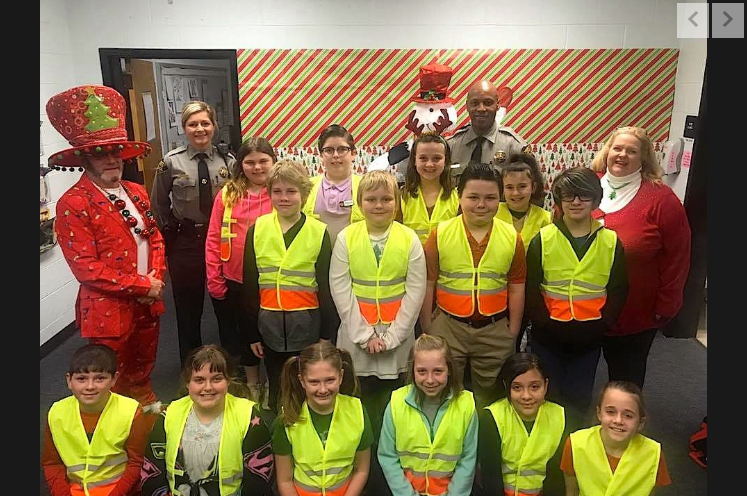
Local police deputies were at JD Lever Elementary School on Thursday morning to meet with students who are part of the school’s Safety Patrol, giving them supplies to help make them more official.

The Aiken County Sheriff’s Office joined with SAFE KIDS Aiken to provide students with the JD Lever Elementary Safety Patrol with safety vests, said Sgt. Mary Frantz, with the Sheriff’s Office.

The students also were each sworn into the Safety Patrol officially.

“I heard that JD Lever had a Safety Patrol, but that they did not have any vests,” Frantz said. “SAFE KIDS Aiken donated money to get vests with reflective material to the kids. They work very hard, going above and beyond what other kids at their school do. These are the students who get to school early and have responsibilities like raising and lowering the American flag each day. “

Most schools with safety patrols acquire equipment like safety vests with reflective tapes from AAA but can cost the schools a lot of money.

“When I learned how much a school has to pay AAA to get stuff, I was shocked,” Frantz said. “So, we decided it would be more fun if we do not buy gear from AAA and create our program.”

Trophies Unlimited made and donated badges, which say “JD Lever Elementary Safety Patrol” with the word “Deputy” and each has a picture of the school’s mascot, a lion, in the center surrounded by an outline of a star.

The badges will only go to those students who show leadership skills, Frantz said.

Over the next month, the students will each be evaluated by deputies on how they perform their duties, how they treat others, their grades, and their leadership skills. Based on the evaluation, each patrol officer who shows all of these skills will be issued a badge, she said.

“I just wanted the kids to know how proud we are of them and appreciate what they do,” Frantz said.

The new motorcyclist standard begins to apply

The Municipality of San Miguel de Tucumán sets in motion the decree that forces motorcycle drivers to use reflective garments to be more visible. “The measure is positive, but when the minutes are filed, the fines cannot be applied,” said one expert.

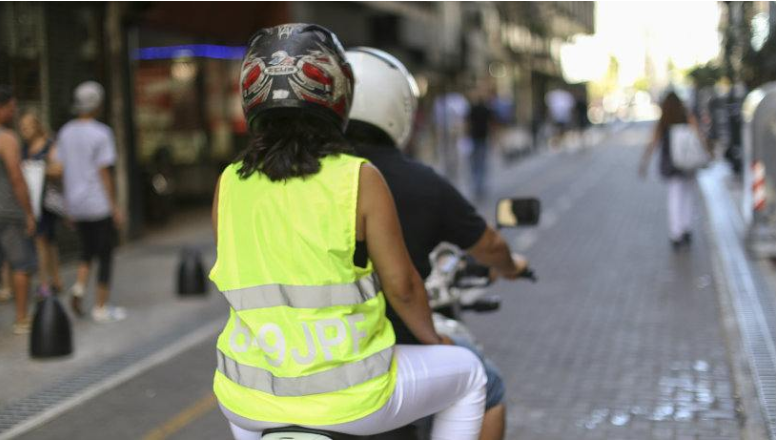
This Wednesday the Municipality of San Miguel de Tucumán will enforce the decree that forces motorcyclists to circulate in the capital to wear reflective vests.

The controversial measure, rejected by the drivers of this type of road, was a decision of Transit and Transportation, by Enrique Romero, with the intention that the motorcyclist is more visible to other drivers.

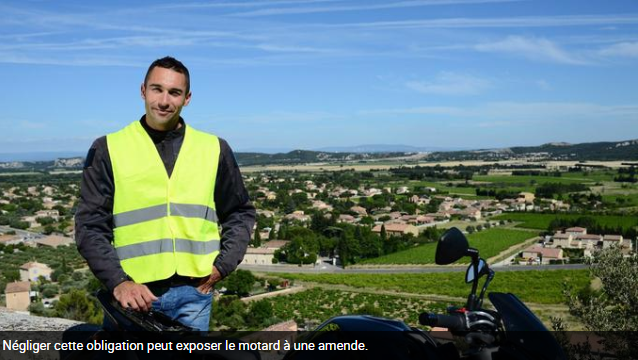
The resolution establishes that the vest should be yellow, with reflective tapes. In case of not having the piece, drivers must use shoulder straps or wear a garment with high visibility material. Also, if they use motorcycles with delivery boxes, they must adhere to reflective material.

Positive but poorly applied

Jorge Rodriguez Robledo, lawyer specialized in Traffic issues, explained to eltucumano.com that the initiative is positive within the security measures, although its application is erroneous since it lacks regulation. “When they file the minutes, the fines cannot be applied,” he said.

“It is essential that prevention and awareness actions are generated on the public road. This administrative resolution, which arises from the will of the municipal transport undersecretary, cannot have any application,” he said, adding:”He says that this must be mandatory, which is not bad, it is a positive action that adds up to security measures, but does not have regulations so that a lack judge can apply a sanction. The judge does not have the measure in the municipal code of fault, and does not come as a municipal ordinance but comes from the will of an official,” said the lawyer who compared this measure with the obligation of motorists to use the low lights.

“This will lead to the same thing that happens when the use of low lights is mandatory. All infractions for not using the lights in San Miguel de Tucumán is null and void. It does not have regulations so that a judge of fault can impute it,” he clarified.

Rodríguez Robledo stressed the importance of making this type of change through the Deliberative Council, in charge of debating all the issues that involve the neighbors. “When you want to regulate a behavior you must do it through a municipal ordinance, through an internal debate in the Deliberative Council. What Romero should do is present an ordinance project. Its forms confuse society, and as it is managed by the mayor develops those resolutions that do not affect the community,” he said.

“The vests are perfect because they allow seeing 150 meters the presence of the driver, of that motorcycle. It is a positive norm. What you have to generate is that pedestrians and drivers are visible. The way it is done is not correct. It does not comply with the formalities,” concluded the specialist.

Vulnerable users – Think!

Seeing and being seen is essential in road traffic.

With the change of the time last weekend, many pedestrians move at nightfall. It follows an increased risk of the accident since often the drivers do not see them well or notice them only at the last moment. Road Safety Luxembourg ASBL, the Ministry of Sustainable Development and Infrastructure and the Police Lëtzebuerg recall some tips to reduce the risk of collision:

Pedestrians: Be visible!

Wear clothing with reflective material, armbands, jackets, reflective tapes, umbrellas and reflective pads – all accessories for long-distance viewing by motorists.

Walk-in in front of traffic on country roads and wear the mandatory safety vest.

Consider the speed and distance of approaching vehicles before entering the road. Make sure you are seen by motorists.

Put a reflective collar on your dog.

Joggers: be visible!

Wear reflective armbands and wear clothing with integrated reflective elements.

Wear a safety vest that is mandatory if you take the road out of town.

Cyclists: be visible!

Make sure the lights and reflectors of your bike are in good condition.

Wear a helmet and a vest or other reflective accessory.

Mandatory bike equipment:

a doorbell

two brakes

a white or yellow light before

at least 2 reflectors per wheel or continuous reflective tape on the tires

reflectors on the pedals

a red reflector

a red rear light

Motorists: be visible!

Turn on the lights when visibility conditions require.

Report your maneuvers in good time.

Adjust your speed.

Make sure windows and vehicle lights are clean (in winter cleared of snow or ice).

Take into account the potential errors of vulnerable users in traffic.