The best reflective element is according to police vests

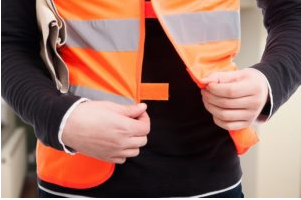
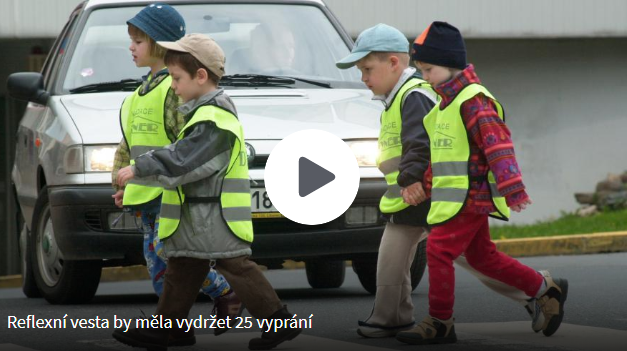
or almost a year, pedestrians moving outside the village must wear a reflective element in the dusk and the evening. According to the police, bright safety vests are best visible. But the results from the test rooms, where Czech Television has been, show that many of them lose their light intensity after a few washes. People do their duty, but they are not easier to see.

The requirement is that the waistcoats can withstand 25 items of washing, said the laboratory of the Textile Testing Institute (TZÚ) Ivana Tichá. Although the tested vest declares that it can withstand 50 washes, signs of wear have been visible for the first time.

According to the head of the certification department of TZÚ Svatava Horáčková, the material of the vest is unsatisfactory because it is very sparse: “Even after the first wash, the reflective belt shows damage.” According to her, the vest would not pass the test. After ten items of washing, it would be almost unnecessary in the field.

“These fluorescent bands are prone to wear during washing and maintenance,” Horáčková explained. According to her, materials are also destroyed by abrasion or bending. In the institute, they also simulate the friction of the vest that occurs when the pedestrian moves. However, none of the tested samples were satisfactory.

Every third vest did not pass during the last inspection of the inspection

There are no limits to the material properties of children’s clothing, brilliant color is only an advantage in these cases. On the contrary, strict parameters are prescribed by law for work clothes, for example for reflective vests with reflective tapes.

According to reflection experts, one of the most important data is the CE mark. “There are vests that do not have the brand and look very similar. But they cannot be guaranteed that the reflective properties are in order,” warned Karel Škréta, an authorized employee of the Occupational Safety Research Institute.

However, even the vest from the stand that had this mark did not pass the test at TZÚ. The Czech Trade Inspection Authority carried out the last inspection action on these goods in 2012. It found faults with every third producer.
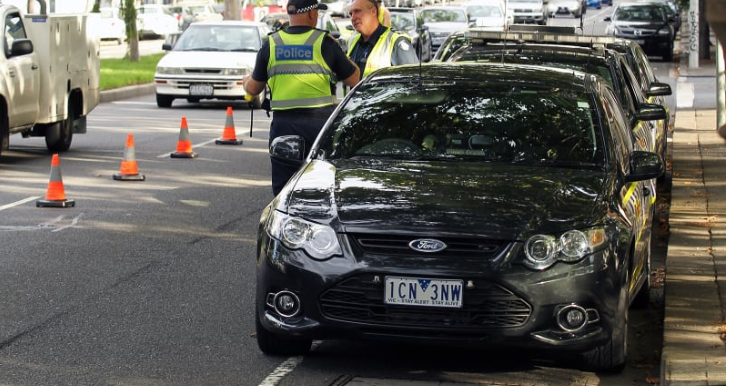
Do police need to wear high visibility reflective vests when on duty?

Everybody has heard the urban myth about the driver who escaped a speeding fine because the police officer that issued his ticket wasn’t wearing a high visibility vest for Occupational Health and Safety (OH&S). So, with CarAdvice reader Trent e-mailing us with that exact question this week, we set off to investigate.

Q: Hi guys. I love the site! Keep up the great work. I’m from Victoria and a friend told me recently that police can’t issue you with traffic infringements if they are not wearing high visibility reflective vests for safety. Is this right?

A: Good question, Trent. It’s one that has been doing the rounds for some time — where the individual fought a speeding fine because the police officer wasn’t wearing a high visibility reflective vest.

To get a definitive answer, we touched base with the Victoria Police to see what the ruling is in your state.

Victoria Police senior media officer, Ben Radisich, told CarAdvice:

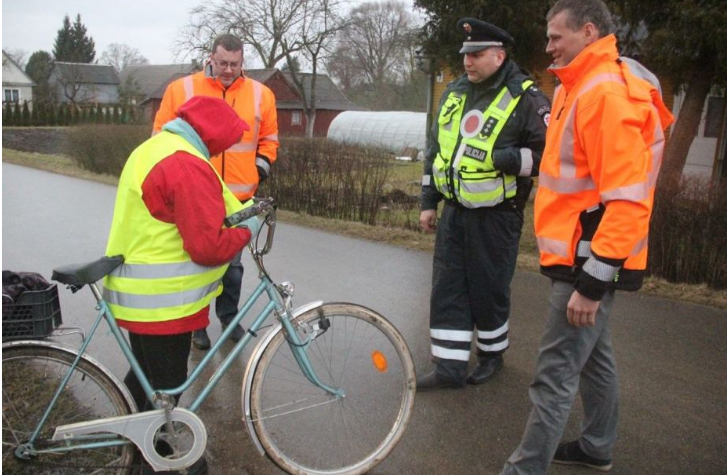
“Members must wear a high visibility vest when performing a role where the primary function is road policing duties or when on roads near moving vehicles. Members will not be required to wear a high visibility vest:

Wherein the assessment of the member, wearing the vest with reflective material represents a serious risk to health and safety (such as responding to an armed offender or siege situation); or if authorized by a supervisor on a specific occasion, for specific duties or planned operations.

If members assess that wearing the high visibility vest on roads represents a serious risk to health and safety they must be able to justify such a decision if required to do so.”

So there you have it, Trent. Generally speaking, police officers must wear high visibility reflective vests with reflective tapes when performing duties outside of their vehicles.

But, that doesn’t mean it’s okay to break the law and use technicalities to get around infringement notices.

For safety while boozing: every age is in demand

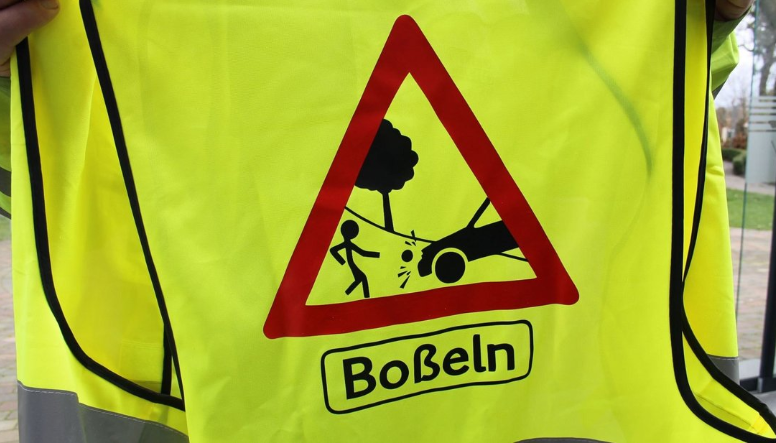
With reflective adhesive film and special safety vests for Boßelgruppen, Verkehrswacht wants to make people’s enjoyment, which often involves alcohol, safer. The non-profit association provides both of these free of charge via its office in Papenburg. A comment.

An offer that all ages should use – regardless of whether or not something has happened in the past few years or decades when booing with friends or neighbors. Because unfortunately far too often dispense in particular older Boßelspieler on such security measures, true to the motto “It has still gone well”. At any rate, restaurateurs report that. These players should keep in mind: The one time may be the last, namely when an accident ends fatally. And who would have thought that younger Boßel players seem to be more sensitized to safety vests with reflective tapes, flashing lights or reflective adhesive film?

It would be even better if it did not remain with material security measures, but it would also come to personal. This means that at least one member of the group remains sober.

CHEAP ADVERTISING GADGETS FOR BUSINESSES? REFLECTIVE!

Nowadays, enterprises, institutions, and companies are facing a difficult task, which is to stand out with their services or products against the competition. It is enough, however, to undertake proper marketing activities and meticulously implement the adopted strategy to achieve success. Advertising gadgets provide invaluable help in this regard.

Let’s be honest: who among us does not like to receive gifts? Even a small gift can improve your mood. And if this is a useful little thing, joy is double. Marketers most often reach for promotional gadgets such as pens, notebooks, and lanyards. Unfortunately, this type of gift is already highly overrated and may not bring the expected results. The recipient will quickly throw them into the drawer, and the print on them will not even be memorable. Therefore, the choice of advertising gadgets needs to be well thought out so that their distribution will bring the desired result.

Why do you need company gadgets?

Company (advertising) gadgets have one basic task – they are to make the recipient use them regularly, and thus remind themselves of the existence and activity of the company from which they received them. Therefore, before we choose advertising gadgets for companies, we need to think about what our customers may find useful and what they will throw away in the trash. The gift must be functional enough to evoke good associations. The company logo should be placed on it in a visible place so that the recipient and the people around him can remember it as soon as possible.

Advertising gadgets that people use? Glare!

Printed company gadgets are one of the most popular marketing tools used by enterprises. Many studies have already proved their effectiveness, which is why companies have been giving their clients small gifts such as pens and notebooks for years. Each company excels in this type of thing because of its wide availability and relatively low price, so to attract the customer’s attention you need to choose something that is not yet so common. A good idea is not only anti-stress gadgets but also printed glare. In addition to the advertising function, they play an additional, useful role.

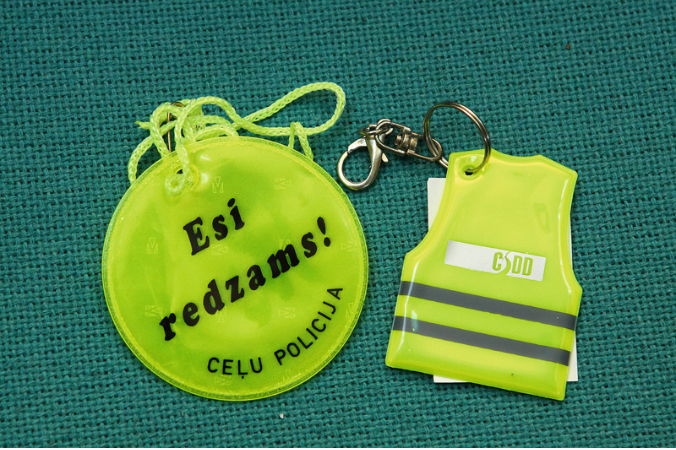
Reflective gadgets handed to clients at conferences or fairs show them that we care not only for our company’s offer to be remembered, but also for improving their visibility on the road after dark, and thus, increasing safety. In addition to standard reflective products such as self-locking bands or key rings, printed reflective vests can be a hit.

Reflective vests with reflective materials are not only a mandatory element of the car’s equipment. It is also outerwear that should be worn when we are planning a walk after dark or night cycling. It is also a product to be supplied to children. Given the widespread use of printed vests, this is a thing that works great as an advertising gadget.

A reflective vest with a print from a marketing point of view has the largest advertising space. There is enough space on the back of the vest to place the company’s logo or go a step further and print a catchy slogan referring to its activity, which will be remembered not only by the owner of the vest but also by people who will see it.

Wearing reflective vests with reflective tapes has long ceased to be seen as an unpleasant duty. More and more people are beginning to realize how important glare are reflectors and how effectively they can protect them from danger. That is why the choice of vests for promotional gadgets is the most hit. By giving your customers practical company gadgets with the logo, you can be sure that they will not go to the bottom of the drawer, but will be used daily, which means that many people will see them, which will translate into better sales.

How about a bee raincoat for children’s traffic safety?

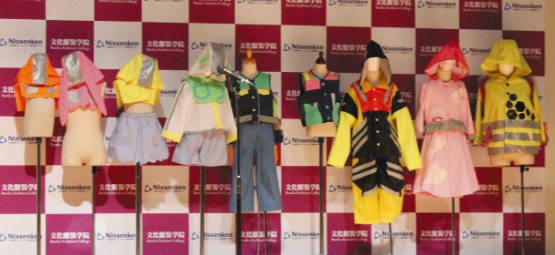
Under the theme of “Protecting children from traffic accidents with fashion,” students at the Bunka Fashion College, a vocational school, created stylish “child safety clothes” that are easy for drivers to see. On the 5th, there was a final review meeting at the same school, and “honey bee raincoat” was selected as a Grand Prix from works using fluorescent fabrics and reflective tapes.

Fabric for work clothes transforms for children

Rainwear with the image of Sentai Heroes and vests for men and women combining denim and fluorescent fabrics. At the judging committee, 10 teams from first-year fashion engineering basic courses presented their work.

Clothes using reflective fabrics and fluorescent fabrics are called “high visibility safety clothes” and there are official standards for adults such as vests worn by road workers, but there are many color and design restrictions, It is difficult to apply for children.

From May this year, students took lectures and conducted market research to work on clothing design and production. A popular vote was held by visitors at the cultural festival last month, and the top 10 teams faced the judging.

Represent the bee stripe pattern with reflective material

In the review, 11 experts inside and outside the university, such as traffic safety education organizations and apparel officials, comprehensively evaluated points such as “I want to wear and I want to wear” in addition to safety and fashion.

Grand Prix raincoat designed bee color and shape. It is a conspicuous color of yellow and black. The waterproof cover on the back that can cover the school bag has an image of transparent wings and a flower on the bottom. Leader Momoka Kudo (19) said, “I wanted to make use of the features of bees, such as the roundness of the buttocks and stripes, in the design. It was difficult to sew the reflectors together.”

Commitment is the second year this year. The school was sponsored by the Nissenken Quality Evaluation Center, which promotes the spread of safety clothing.

The spikes of cyclists and road safety specialists are still crossed

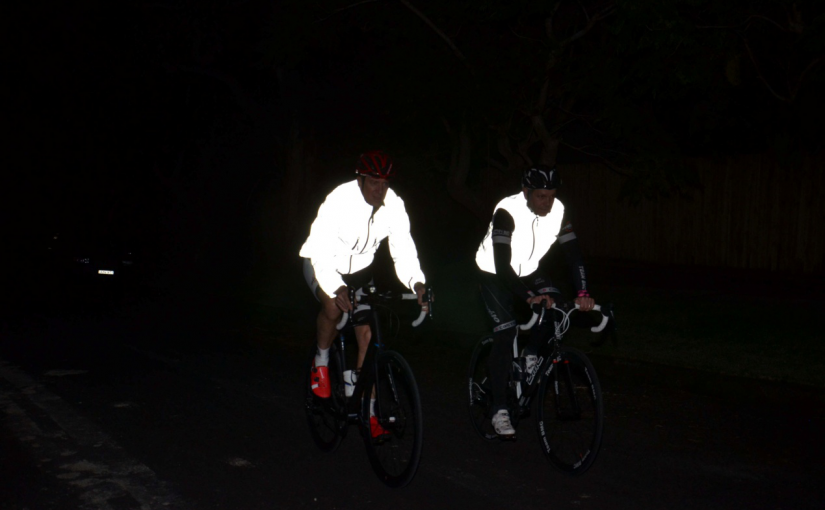
For four years, cyclists have been on the road with reflective vests or headlights on for the day. The rules quite old and dissatisfaction is still going on, but traffic safety specialists do not promise to come down. Like cyclists. Old changes Increasing the number of bicycles in cities is one of the cornerstones of sustainable mobility plans currently being prepared by Lithuanian municipalities. Many of them are likely to have phrases such as promoting clean vehicles and building infrastructure for them. Cities are trying to show, through a variety of means, that they want to become more attractive to those who drive an alternative vehicle, such as straight cycle paths, lines where they cannot be drawn, and bicycle signs. Action is underway, but by observing such work, the cycling community is pointing the finger at adopted laws and regulations governing road safety, which, they say, only make cycling worse and sometimes even discourage them from choosing this vehicle. The biggest misunderstanding cyclists cite in a 2014 government decree is the requirement to wear a high visibility vest with light reflectors or turn on white light on the front of a bicycle and a red one on the back of a bicycle during daytime driving. The combination of these three measures is a must for a cyclist when he is moving in the driveway during the dark hours of the day. Even angrier was the ban on crossing the carriageway when using pedestrian crossings.

Marius Kučinskas, an active cyclist, surveyed the social network Facebook group “Lithuanian Cyclists’ Society”, asking cyclists whether they are following the changes to the KET that took effect on October 1, 2014. When asked whether cycling through pedestrian crossings, the vast majority of cyclists answered yes. Ask whether the cyclists wear a vest or turn on the lights during daylight hours, 64%. Of those surveyed, 36% said that they travel without reflectors or a vest. claimed to have used at least one of the above tools. It is true that when looking at the results of respondents from different cities, there are differences in approach. In Vilnius, as much as 57 percent. cyclists are reluctant to wear reflective vests with reflective tapes and turn on lights; Kaunas cyclists also claimed daytime running with lights on or wearing a vest. M. Kucinskas says that this is not a representative survey, but it reveals the general attitude of cyclists towards the changes imposed on them. “I have repeatedly appealed to the Ministry of Transport to discuss changes to these rules, but the ministry’s specialists are silent on the possibility of proposing to the Government to amend a ruling made four years ago, arguing that such a change was necessary and contributed significantly to safer cyclists participation in traffic, “said M.Kucinskas. The same was confirmed to the newspaper by Vidmantas Pumputis, Senior Advisor of the Road Transport and Civil Aviation Policy Department of the Ministry of Transport and Communications. “No changes are being planned to this KET point,” he commented laconically. However, active cyclists do not stop pedaling and letting their hands down – they have put forward their suggestions to several members of the Seimas and hope that their views will be heard. As the aforementioned amendments to the KET were adopted by a Government resolution, they may be rendered irrelevant by the Seimas by adopting the relevant amendments to the Law on Road Traffic Safety. As the ruling is against the law, it should be amended or waived. Everything about safety Stasys Brundza, a Member of the Seimas last year, says he doesn’t understand cyclists’ reluctance to ride with lights on or wearing reflective vests. “After all, such decisions have been made to improve the visibility of cyclists on the road. Even when subjected to the weather, cyclists do not park their vehicles in pantries or balconies, and visibility is now extremely low, making it much easier for drivers to spot with light or bright reflective clothing. Is it so difficult to buy a light bulb costing several or ten euros to contribute to your safety and that of others on the road? ” the former MP did not hide his surprise. There’s another reason why cyclists should ride with lights on and vests on, so the driver can identify them as faster-moving road users, he said. “In poorer weather conditions, cyclists can confuse a cyclist with a pedestrian – cycling and pedestrian heights are quite similar, and speeds vary several times, so the driver, just after looking into a pedestrian circle, should understand how fast they are moving and not in between, like cyclists,” Brundza shared his thoughts.

Helmets for everyone?

He also said he did not understand why it was not accepted for many years that all cyclists should wear helmets. They are now mandatory for cyclists and cyclists under the age of 18, according to KETs, and only recommended for those over 18. “Foreign scientists have long proven that about 50% of cyclists who have been involved in accidents have head injuries that could have been avoided if cyclists were wearing helmets,” the MP said. Cyclist M.Kucinskas, who communicated with the daily newspaper, said that such regulation would also seem appropriate and necessary for him. The brand would also recommend the use of helmets for scooters, who are increasingly found on city streets.

Reminded scooter drivers of where they can go and when to use a helmet

Cyclists and scooters rush through the city streets and sidewalks as the weather warms. Although the latter vehicle has taken to the streets until recently, it has become one of the favorites. However, it is noteworthy that frequent scooter drivers still forget that it is not only a vehicle for entertainment but also a vehicle, and its drivers must comply with all Road Traffic Rules (Road Traffic Rules).

Scooters, especially electric scooters, are often seen as a pastime by city dwellers, but Laurynas Jovaišas, the chief inspector of the Lithuanian Transport Safety Administration, reminds that people should remember that the requirements of the KET for bicycle riders combustion engine or electric motor, of an output not exceeding 1 kW and capable of a speed of not more than 25 km / h.

How to ride a scooter As with conventional or electric bikes, scooter riders need to be aware of and adhere to all KETs. Electric scooters can be used to cycle along bicycle lanes and lanes or, if they do not, to sidewalks or the right of the road. Electric scooter drivers must keep as close to the right edge as possible while moving in the driveway, only when turning left, turning, overtaking, or when only the right lane is allowed from the first lane.

In all cases, the scooter driver must pay attention to the KET and ensure pedestrian safety when riding the sidewalk. For example, a pedestrian scooter can only drive at pedestrian speeds of up to 6-7 km / h. speed.

When deciding to ride a scooter, it is advisable to first wear a helmet and other protective equipment, and first test the acceleration of this vehicle before driving. The choice of wearing a helmet or not is indeed restricted to persons of legal age, and those under 18 years of age must always wear a helmet. Also, when driving at night, the scooter driver should turn on the white lights on the front of the scooter and the red lights near the rear wheel. Scooter drivers must wear a bright-colored safety vest with reflective tapes, both at night and during daytime driving. Please note that the scooter can only be used on the driveway if its brakes and acoustic signal are in good working order.

Not All It is true that electric scooters, by their technical characteristics, can be classified as mopeds. If the vehicle is capable of a speed of between 25 and 45 km / h and has a maximum net power of between 1 kW and 4 kW, it is classified as a moped.

Such vehicles must be registered, have valid roadworthiness tests and civil liability insurance, and must be licensed by AM or any other relevant category. Those who disregard the order and do not have the necessary documents would be subject to administrative liability. Information prepared in cooperation with the Lithuanian Road Administration under the Ministry of Transport and Communications.

Cyclists required to wear a reflective vest

Lithuanian police point out that in recent days there has been a misrepresentation of 2014 in the public sphere. July 1 some provisions of the Republic of Lithuania Law on Road Traffic Safety have come into force.

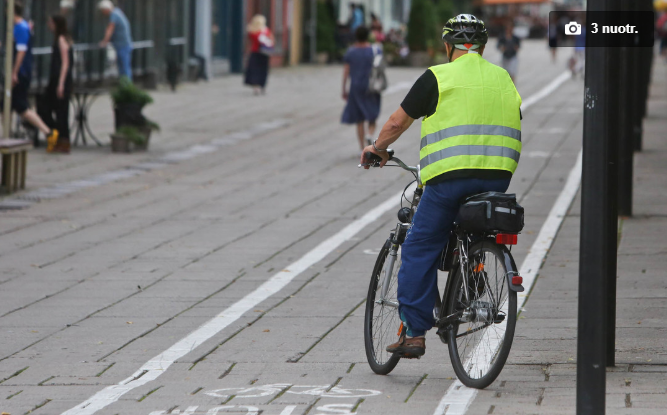
This concerns Article 17 of this law – Requirements for bicycle riders. Cyclists must wear a bright-colored reflective vest with reflective tapes during daylight hours or have a white light at the front and a red light at the rear. It should be noted that this requirement applies only to the carriageway. When cycling, side walking or sidewalks (this innovation for sidewalks is part of the newly drafted Road Traffic Code), you do not need to wear reflective vests or ride with bicycle lights on.

Article 2 (55) of the Road Safety Law defines the term “bright-colored vest with reflective elements”. This is not only a yellow, orange or red vest but also another garment of the upper body (neck to waist) with reflective materials visible to other road users from all sides. By deliberately silencing these details, the public is encouraged to oppose these measures to improve traffic safety.

Bicycle path infrastructure in Lithuania is not yet well developed, as in most of the old EU Member States, where the main bicycle traffic is done by bicycle paths, not the driveway. Also, in such countries, road users themselves are actively concerned with their safety, which makes it a common practice for them to wear a brightly colored vest and safety helmet.

Police recalled that 9 bicycle drivers have already been killed in traffic accidents in Lithuania this year, including 7 in daylight hours, injuring 160 of them, including 135 in daylight hours. Police officers believe that the health and life of every person are more important than certain constraints or inconveniences, in the interests of road users.

Don’t change your healthy lifestyle against road safety

Cycling and jogging are the most popular outdoor activities in Latvia. However, only slightly more than half of them use means to be noticeable on the road and reduce the likelihood of being involved in a road accident. Active citizens have been shown to take greater care of children by providing them with reflective vests and reflectors, while not paying as much attention to their safety.

The survey shows that 68% of active people in Latvia are engaged in cycling and 37% in jogging. Hiking (33%), dog walking (15%) and Nordic walking (5%) are also popular activities. The main reasons for these activities are people maintaining themselves in good shape, improving their health, and the bicycle is also used as a way of movement.

More than half (52%) of active people engage in outdoor activities throughout the year, regardless of the weather, while 39% opt for the warm and dry months of the year. Most, or 63%, of those surveyed, do these activities in the evening after work, and almost a third in the morning.

Less than one third, or 31%, use high visibility reflective vests with reflective tapes to enhance their safety. The most popular means are the use of luminaires (53%), the use of reflectors and other reflective accessories (46%), but 4% of the respondents rely on the reflective materials in their clothing.

Statistics from the Road Traffic Safety Directorate (CSDD) for 2018 report that 625 cyclists and 867 pedestrians were injured in road accidents in Latvia last year. By contrast, the number of fatal cyclists in 2018 was 9 and the number of pedestrians was 51. Lack of visibility is mentioned as one of the main causes of accidents, resulting in drivers noticing the cyclist or pedestrian too late.

How to choose a school bag?

From September, our child will have a daily companion bag, which, if wrongly chosen, can cause shoulder and back pain.

Quality instead of fashion

It may be tempting to get a cheap but more fashionable backpack during your bag deals but don’t. The life of such a bag will probably be only a few weeks, maybe a month, and then we have to look for another bag. So it’s better to invest now and land on a durable, quality piece. Let’s see if the material it is made of is strong enough. Doesn’t it disappear somewhere? Will, it does not easily separate along the stitches/perforations? The zipper should always be covered with fabric to protect it from the rain!

Size matters

If the size of the bag is not good, the child will be misplaced while wearing it, which is a direct way to back and shoulder pain. Therefore, when choosing a school bag, the most important consideration is perfect size and comfort! Here are some practical tips for doing this.

1. Select the appropriate size: The width of the bag should be approximately the width of the child’s back. In short, a young child should not carry an adult backpack. The upper part of the bag should ideally start 5-6 inches below the shoulder and end at the waist or slightly above the waist.

2. An ergonomically designed, well-ventilated back is important: It protects the small spine and does not sweat in warm weather.

3. Wide, padded, adjustable shoulder strap: This is important for comfort and weight reduction. It is important that we adjust the shoulder straps to equal lengths and that our child does not carry his/her schoolbag halfway.

4. Looking for a multi-pocket, multi-compartment bag: This helps ensure better weight distribution. Heavier books or objects should be placed close to the child’s back and lighter ones should be placed in the front pockets. Of course, it is not the last one in terms of organization.

5. The weight of the bag should never exceed 15% of the weight of the child: The bag and its contents should remain below this value. This means a maximum of 6 pounds for a 45 kg child. The newest models weight less than 1 kg.

6. Stable soles: For the underwear especially, but also for older children, it is advantageous to have a hard plastic soleplate so that it can be placed firmly on the floor and the books are better placed inside.

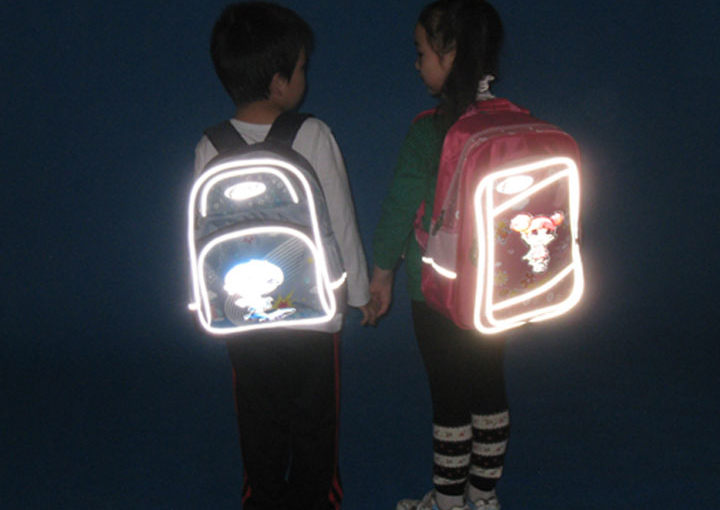
7. It does not hurt to have fluorescent reflective materials or reflective tapes on it: It is essential for the safety of our child when traveling alone in the rain or fog.

8. Before You Buy Try It Out: Take some of the things your child will normally carry in the bag, put it in the piece of choice and check the weight distribution.